

Year-Round Scrub Wardrobe Essentials for Every Shift
Written by Heather Wall
A practical year-round scrub wardrobe starts with dependable tops and pants, coordinated sets, seasonal layers, supportive footwear, and useful accessories. Most healthcare professionals need one clean set for each scheduled shift, plus one or two backups for spills, schedule changes, or delayed laundry.
Build around versatile core colors, then adjust comfort with fabric, underscrubs, and outer layers. This approach works for nurses, students, doctors and other healthcare workers across changing temperatures and work environments.
Year Round Scrub Wardrobe Checklist
· Core solid scrub tops in two or three approved, versatile colors
· Comfortable scrub pants in the fits that suit your role and movement
· Coordinated scrub sets for quick, polished outfits
· One or two printed scrub tops if workplace policy permits
· Long-sleeve underscrubs for cool units and cold weather
· A scrub jacket, warm-up jacket, or vest for removable warmth
· Lightweight or moisture-wicking scrubs for warmer conditions
· Stretch and wrinkle-resistant options for long shifts and commuting
· A lab coat if your school, employer, or clinical role requires one
· Supportive healthcare shoes and enough compression socks for the workweek
· Practical accessories such as badge reels, badge holders, and scrub caps
Build the Foundation with Scrub Tops and Pants
Choose Core Scrub Tops in Versatile Colors
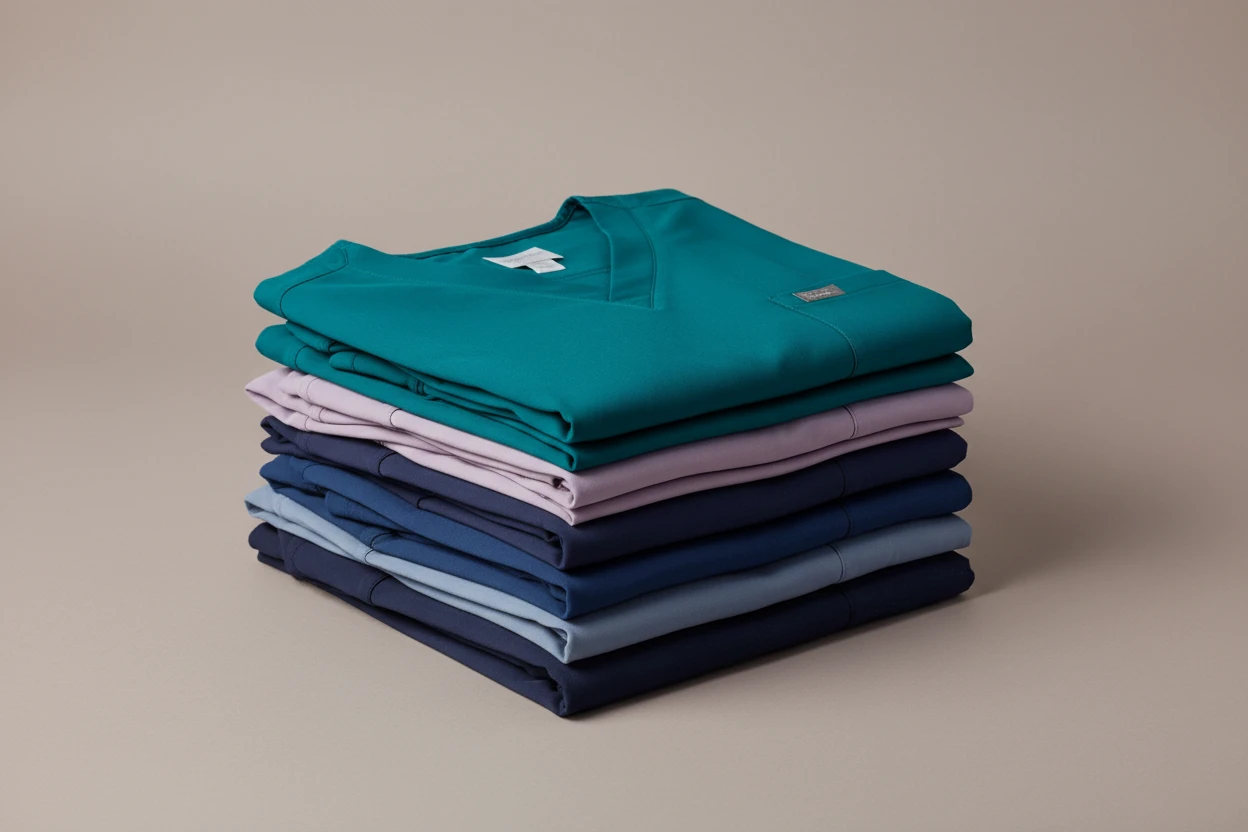
Begin with solid scrub tops in colors permitted by your employer or nursing program. Navy, black, pewter, royal blue, ceil blue, wine, and hunter green are versatile options, but departmental rules come first. Two or three approved colors make tops, pants, and jackets easier to coordinate.
Check the neckline, sleeve length, and pockets. A chest pocket can hold a pen, while lower pockets suit frequently reached items. Avoid carrying so much that the top pulls or restricts movement.
Select Comfortable Scrub Pants in More Than One Fit
The best pant fit depends on your work, footwear, and comfort. Straight-leg pants offer a familiar shape. Joggers use fitted cuffs that keep hems closer to the ankle. Cargo pants add storage, while flare scrub pants provide a wider leg opening.
Before choosing, squat, sit, climb stairs, and reach. Confirm that the waistband stays secure and the inseam works with your shoes. Petite, regular, tall, maternity, and plus-size options can improve fit. Choose enough secure pockets for what you actually carry.
Keep Coordinated Scrub Sets Ready
Coordinated scrub sets simplify early mornings and create a consistent appearance. Keep several matching combinations together, then mix solid separates within an approved color family. When buying pieces separately, compare the exact color and fabric because similar shades can differ.
Printed scrub tops add variety where policy permits. Pair a print with solid pants that repeat one color from the pattern, and check the dress code before wearing character, holiday, or novelty designs.
Add Layers for Changing Temperatures
Use Underscrubs for Lightweight Warmth
A fitted long-sleeve underscrub adds warmth without bulk. Choose a breathable style that fits beneath the scrub top without bunching. Its color should follow your employer’s uniform policy.
Choose Scrub Jackets Warm Up Jackets and Vests
A removable layer helps when temperatures change. Scrub jackets and warm-up jackets cover the arms, while vests add warmth without covering sleeves. Choose a fit that permits reaching and does not interfere with hand hygiene or assigned tasks.
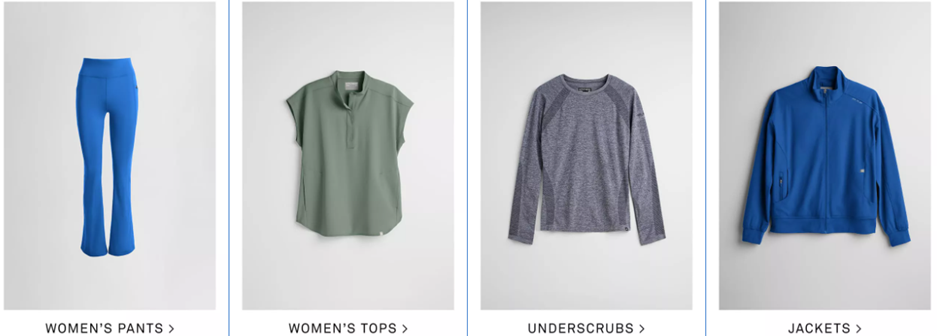
Uniform Advantage has categories for underscrubs, solid and printed jackets, vests, and lab coats. Add a lab coat only when it is required or appropriate for your role. Confirm the approved length, sleeve style, embroidery, and laundering rules first.
Choose Fabrics That Work Through Every Season
Lightweight and moisture-wicking scrubs may suit warm weather, active roles, or hot work areas. For cooler conditions, use breathable layers. Stretch supports bending and reaching, while wrinkle-resistant scrubs may look neater after commuting or hours of wear. Read the fabric content and care label because performance and washing instructions vary.
Scrubs should allow full movement without dragging or exposing skin when you bend. Try them with your usual underscrub, jacket, socks, and work shoes.
Complete the Wardrobe with Footwear and Accessories
For healthcare shoes, choose the right size and width, a stable fit, and an outsole appropriate for your workplace. Follow requirements for closed toes, materials, and color. Replace shoes when the cushioning, tread, or support is worn.
Compression socks may help meet personal comfort needs during long periods of standing, but the right compression level varies. Seek medical guidance if you have circulation concerns, swelling, diabetes, pregnancy-related needs, or another relevant condition.
Choose accessories that solve a work need. A badge reel keeps identification accessible, while a scrub cap can contain hair where permitted or required. Select cleanable items that will not catch on equipment or interfere with care.
How Many Scrub Sets Do You Need
Plan for at least one clean scrub set per scheduled shift and add one or two backups. A simple starting guide is:
· Two or three shifts per week: three to five scrub sets
· Four shifts per week: five or six scrub sets
· Five shifts per week: six or seven scrub sets
· Clinical rotations with changing color requirements: enough sets for the current placement, plus one approved backup
Your laundry schedule matters. Add sets if you wash only once a week, work back-to-back shifts, or keep separate scrubs for different facilities. You may need fewer if you work part time and wash between shifts. Keep one complete backup outfit in a locker or work bag when possible.
Seasonal Scrub Recommendations
Spring
Use breathable core scrubs with a light warm-up jacket for cool mornings and warmer afternoons. Spring is also a practical time to inspect older uniforms, replace worn pieces, and add a workplace-approved print or fresh solid color.
Summer
Prioritize lightweight or moisture-wicking scrubs and avoid unnecessary layers. Keep a light jacket or long-sleeve underscrub available for heavily air-conditioned units. Choose fabrics that remain comfortable during active shifts and follow the care directions after frequent washing.
Fall
Bring back long-sleeve underscrubs, scrub jackets, and vests as temperatures drop. Earth tones, deeper core colors, and approved seasonal prints can add variety without requiring an entirely new wardrobe.
Winter
Layer a fitted underscrub beneath your regular top and add a scrub jacket or vest that can be removed indoors. Keep outdoor coats separate from clinical clothing when workplace policy requires it. Warm socks and weather-appropriate commuting footwear can make the trip more comfortable, but change into approved work shoes before the shift if needed.
Easy Outfit Combinations
· Everyday shift: solid scrub top, matching straight-leg pants, healthcare shoes, and badge reel
· Active shift: stretch top, jogger or cargo pants, supportive shoes, and secure-pocket accessories
· Cool unit: coordinated set, long-sleeve underscrub, and removable warm-up jacket
· Approved print day: printed scrub top, solid pants drawn from the print, and a solid jacket
· Role-specific outfit: coordinated scrubs, required lab coat, compression socks if appropriate, and approved footwear
A limited color palette makes these combinations easier. If most tops and outer layers coordinate with two core pant colors, you can create more outfits from fewer pieces.
Care for Scrubs So They Stay Work Ready
Follow the garment label and workplace laundering instructions. Empty pockets, close fasteners, and treat stains promptly with a fabric-safe method. Wash workwear separately when required and dry it according to the label. Retire garments with persistent stains, thinning fabric, broken closures, or an unsafe fit.
Build a Wardrobe That Fits Your Work
Build your year-round scrub wardrobe around your schedule, dress code, climate, and tasks. Start with enough coordinated sets for the week, then add seasonal layers, shoes, and accessories as needed. Uniform Advantage categories for tops, comfortable scrub pants, sets, underscrubs, jackets, vests, lab coats, footwear, compression socks, badge holders, and scrub caps can help you complete the checklist.
Frequently Asked Questions
How many pairs of scrubs should a nurse own?
A practical starting point is one set per scheduled shift plus one or two backups. Someone working three shifts may need three to five sets, while someone working five shifts may prefer six or seven, depending on laundry frequency.
What scrub colors are the most versatile?
Navy, black, pewter, royal blue, ceil blue, wine, and hunter green can coordinate easily, but the most useful colors are the ones approved for your role, department, or school program.
Should scrub tops and pants be the same brand or fabric?
They do not always need to match, but pieces from different brands or fabric collections may vary in color, texture, and fit. Compare exact color names and fabric content before creating a mixed set.
What should I wear under scrubs in winter?
A fitted, breathable long-sleeve underscrub can provide warmth without excess bulk. Add a removable scrub jacket or vest and make sure every visible layer complies with the workplace dress code.
Which scrub pant style is best for long shifts?
The best style is the one that stays secure, allows full movement, works with your footwear, and provides the pockets you need. Try straight-leg, jogger, cargo, and flare fits before choosing your main rotation.
Author Bio: Heather Wall, AVP, Paid Media Marketing, Uniform Advantage