


5 Hard Truths About Core Web Vitals Most Brands Learn Too Late
Authored by: Trevor Stolber
Everyone wants a good Core Web Vitals (CWV) score but there are some hard truths which might well change the way you think about them, and even make you reevaluate your whole development process.
The Hard Truths of Core Web Vitals (CWV)
- They just don’t move the needle very much
- Chasing a 99%+ Page Speed Insights can actually break your site
- There is testing then there is the real world CruxVis
- Good CWV practices are squandered with bad hosting
- CDNs and good hosts hide all manner of CWV sins
They just don’t move the needle very much
When Google announced the inclusion of Core Web Vitals (CWV) as part of their Page Experience Algorithm, as ranking criteria and gave the dev and SEO communities a 6 month heads up (unheard of with algorithm updates) most of us, my self included, considered this to be a very significant development.
The reality is, they just don’t move the needle much. If all else is equal, having better CWV will put you above the otherwise equal site. I have not seen any case studies where CWV alone moved the needle in a meaningful way.
Now, I am not against optimizing for CWV and improving them for user experience, that clearly matters, but doing it with the expectation that you are going to rank better is just not something that I have seen meaningful improvements for.
Chasing a 99%+ Page Speed Insights can actually break your site
I have seen people chasing a 99% page speed insights score and getting awesome CWV numbers, but it completely breaks their site in the process.
There are some tools that load a basic frame and then don’t really actually properly load or render the site until a user interaction. You get an awesome score – but guess what Google renders and evaluates you on – thats right a blank site with awesome CWV scores! Doesn’t help you rank very well when there is no content to analyze.
In achieving a good CWV score you can break your site. Be very careful about any tricks used ot get a good score.
There is testing, then there is the real world CruxVis
Like the tools that fake a good CWV score, there is a closed testing environment, often done on a system where the site has been viewed, loaded, cached and rendered dozens of times on an edge node that already has all of the resources and has an optimized copy for the requested screen size and device type.
Like many tests and design vs user behavior, the real world is a different place to your testing environment.
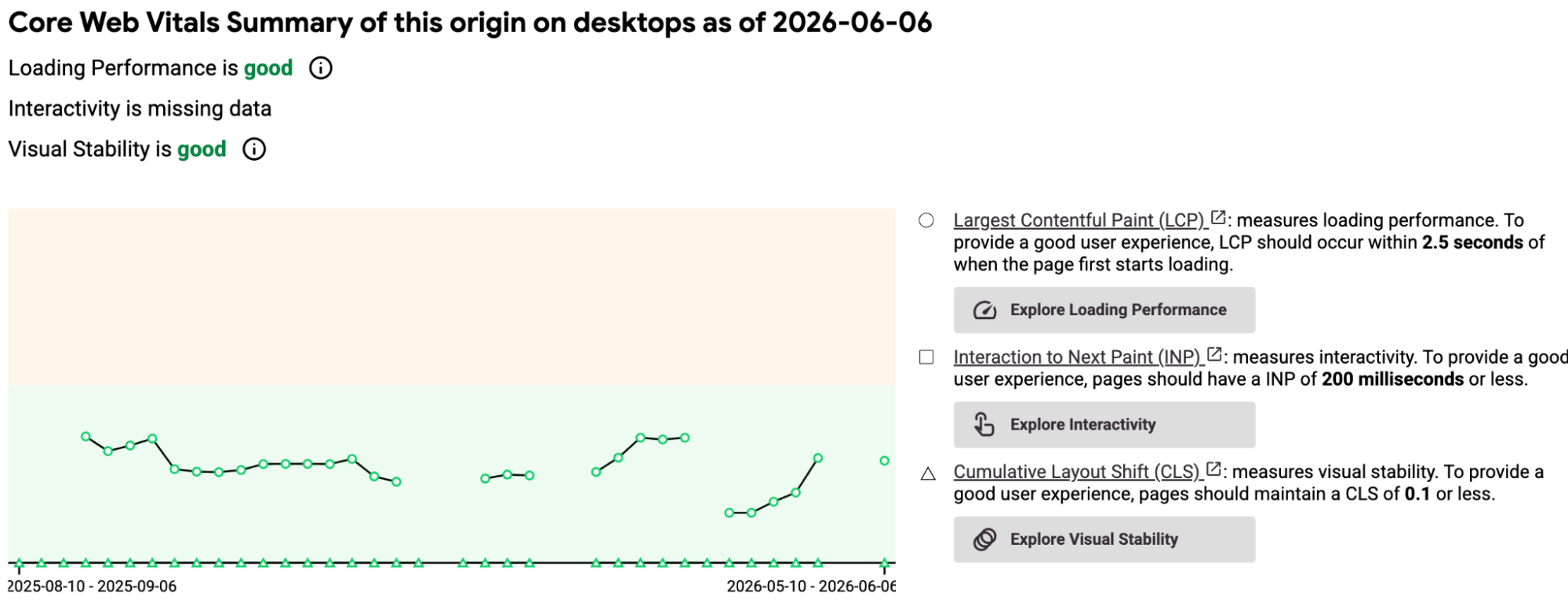
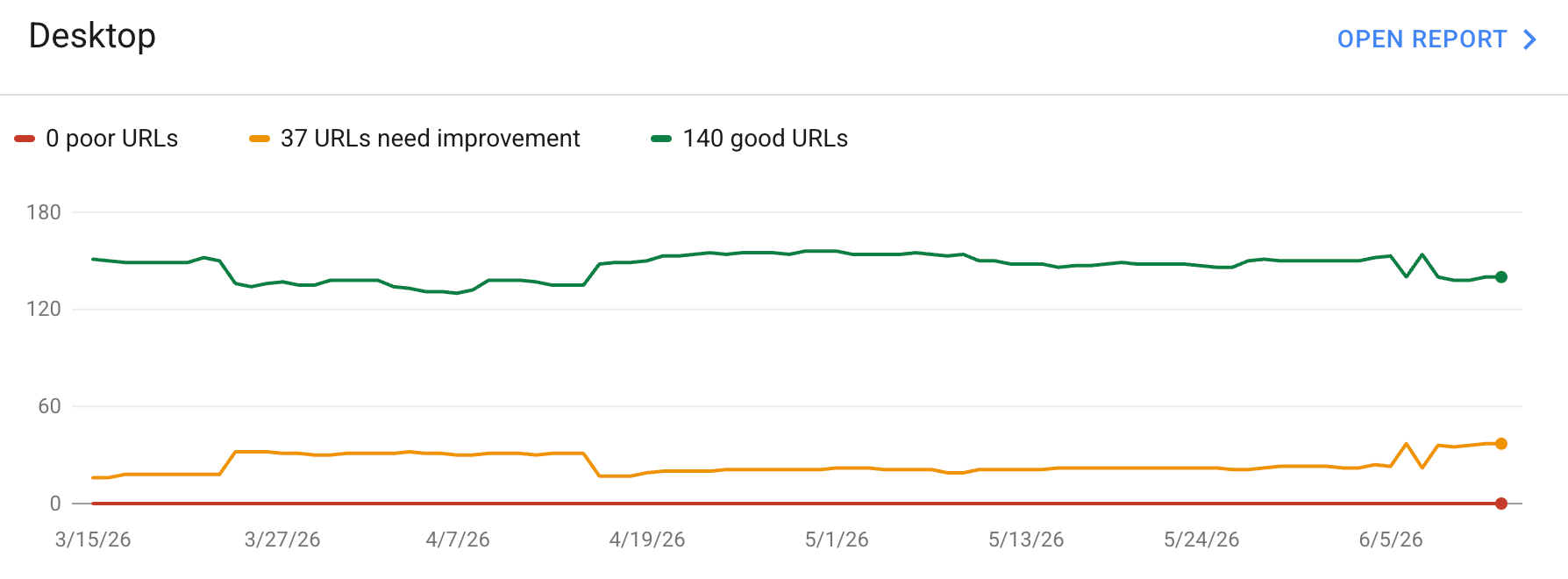
There are several places, including Google Search Console and CruxVis – Google’s Chrome User Experience Visibility report, available for most sites and pages with sufficient real-world data, where you can get the performance of your site.
The real world performance is often quite different from your testing results, be aware that this is real world performance which is what matters most.
Good CWV practices are squandered with bad hosting
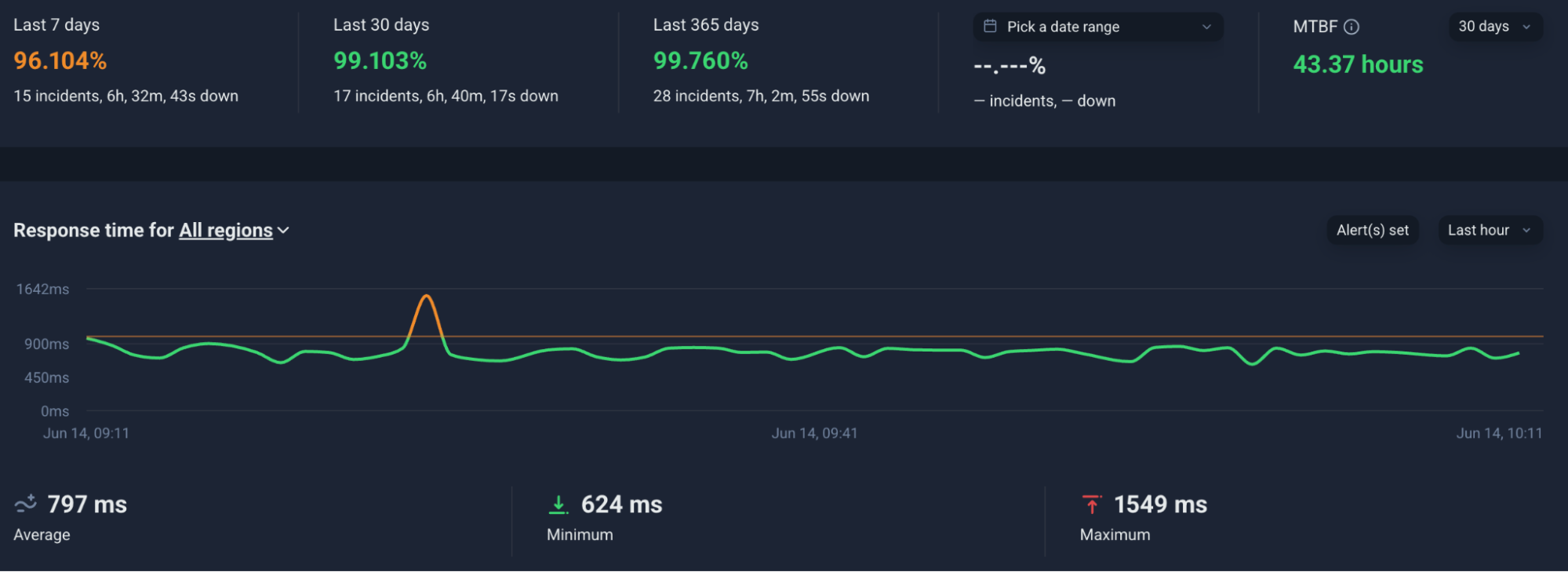
You can have the best design and optimized CWV parameters, yet with a bad host that is slow to respond and a heavily loaded DNS that can all be completely squandered and your efforts go to waste.
This is why uptime monitoring is very important. If resources take 200ms+ to be received then its really hard to get great behavior for CWV.
CDNs and good hosts hide all manner of CWV sins
Most modern CDNs (Content Delivery Networks) and web hosts have clever caching and optimized delivery mechanisms. A good CDN has a preloaded and prerendered version on a local node close to the requests, they know the device and screen size so rather than having to send lot sof requests back and forth they are able to deliver an optimized copy with all of the right image sizes and resources almost immediately.
The CDN masks a lot of CWV sins, meaning that the optimizations you did that looked good in testing might not actually make as much of a real world difference as you thought they might.
Summary
In summary, paying attention to CWV is part of any professional web development and management process. They are not as impactful as many had thought they would be and they are masked and modified by the delivery end method.
So, pay attention to them with the real world performance, not closed testing, fix the big-hitting most egregious issues but don’t get stuck on them.
Refnces & Resources
Author Byline
Trevor Stolber is the Founder of STOLBER Digital LLC. With nearly 30 years of experience in SEO, search marketing, and digital analytics, he helps businesses improve their visibility across search engines and AI-powered platforms through data-driven strategies and technical expertise.