

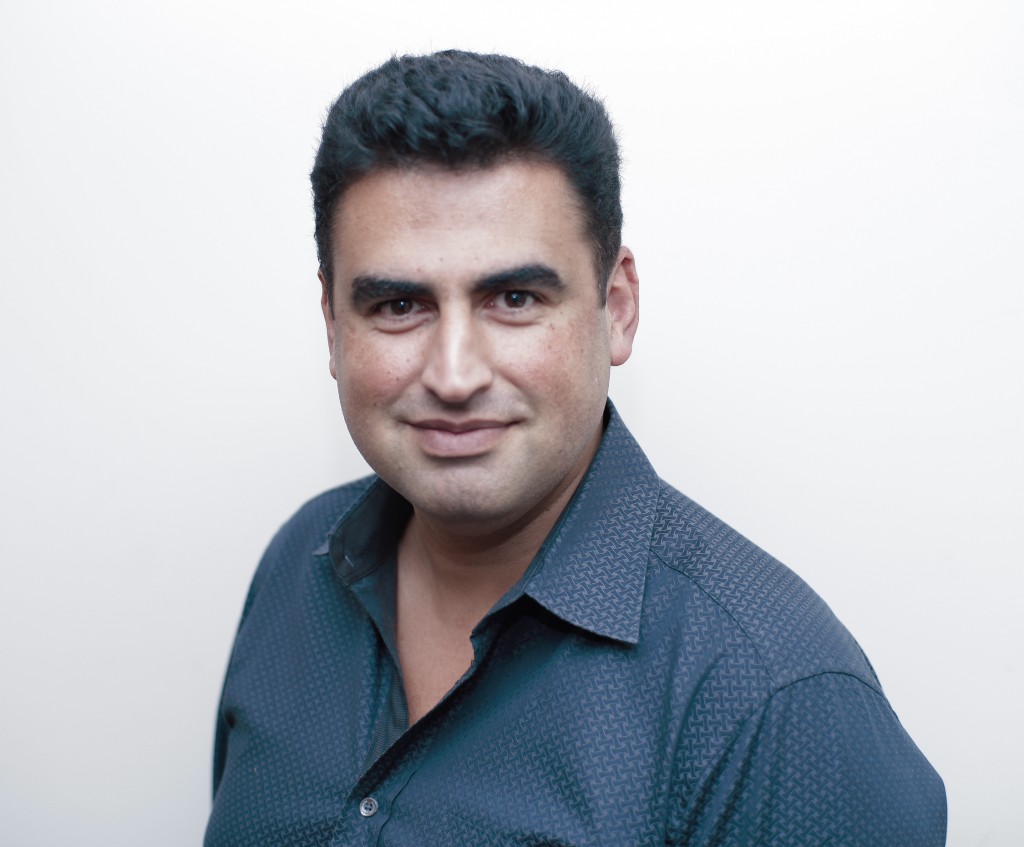
This interview is with Gabriel Shaoolian, CEO and Founder, Digital Silk.
For Connectively readers, can you introduce yourself and share what you focus on day to day as the CEO and Founder of Digital Silk in the marketing and advertising space?
I’m Gabriel Shaoolian, CEO and founder of Digital Silk. I started out in 2001, working from my apartment with a laptop. I founded Blue Fountain Media, then DesignRush, and today Digital Silk works with brands like Microsoft, NASA, and Procter & Gamble.
Although I can still do a little bit of everything, most of my time is spent finding the right staff. But at the end of the day, my real job is to make sure our clients know who their customers are and why those customers buy from them. It doesn’t matter how well designed your website is if you can’t answer that.
Knowing your client is the foundation I’ve established for Digital Silk.
What key experiences shaped your path to leading Digital Silk and adopting a strategy-first philosophy for web design and online branding?
I never planned to do all of this. While studying at New York University, I was on the pre-med track and planned to become an endocrinologist.
I enjoyed teaching kids about biology through different characters, and that eventually became Biowars. To bring this concept to life, I had to learn Photoshop, which marked the beginning of my web design career.
While most agencies talked about theory without delivering real results, I pitched brands with live strategies instead of wasting time. That’s how I landed P&G, for example, and realized there was a market waiting to be explored.
When a new client books an initial consultation for a custom website at Digital Silk, how do you structure that conversation to surface the real business problem and growth levers?
I spend considerable time listening to the client as much as—or more than—selling to them. It’s important to understand their story, their customers, and their funnels; then I can create a plan.
Most companies can’t provide clear answers to these questions, and, regardless of how well-designed our solutions are, they won’t produce results.
If a client doesn’t understand their business strategy at this point, I prefer to slow down the project to create something more realistic. This has helped keep clients working with us for many years.
In your process, when an SMB requests a project quote for a custom web build, what specific inputs do you require to price accurately?
SMBs often just come to me and say that they need a website. They never tell me who their target audience is, nor how they plan to utilize the site.
As I mentioned before, if you can’t tell me that information, then I won’t be able to give you an accurate quote.
First, I need to understand your goals and what is already successful with your current web presence. Then, I will produce a price list tailored specifically to your needs.
From your brand development work at Digital Silk, how do you translate a company’s positioning into concrete UX, content, and design choices that measurably improve conversions?
All of these elements must be aligned; this is non-negotiable.
Content is one of the most important things on your website. I don’t work with “fluffy” strategies. I understand what customers need and get into their minds to build a strategic UX experience.
When a client arrives on the website, they should immediately see that we know exactly what they want. To me, the hero section should be the main character, so you also need good copywriters to match the offer to the brand.
Outside influences can sharpen creative judgment—how have your musical interests informed the rhythm, pacing, or storytelling of the websites you design??
I think music influences how I think about websites. It influences my creative side.
Musicians understand art better than anyone. A website with strategy can be a piece of art.
Good sites need rhythm. You come in; the story starts to unfold; you arrive at your desired action point, and you feel inspired. This is my goal with Digital Silk.
Drawing on your e-commerce and Magento background, what criteria do you use to decide between customizing a platform and building a fully bespoke solution?
As a business decision, the first thing I analyze about a project is what we’re trying to accomplish and whether the platform should be custom-based.
Not every company needs bespoke solutions. Custom development is typically used when the business model doesn’t fit into a box or if there are recurring issues with the platform during release cycles.
If Magento or Shopify has the features the client wants, like a checkout, product catalog, etc., I’m not going to tell someone they have to spend more money.
Before a redesign, how do you set up analytics, KPIs, and testing so that post-launch optimization is built into the project from day one?
- First, we look at site traffic and whether the landing pages are converting. This is important for measuring the company’s current level of success.
- Second, we define specific KPIs. For some businesses, sales are a good indicator, but for redesigns, what may matter most is whether a customer returns.
- Third, testing is an ongoing experiment. It will happen periodically because the market is always changing.
After launch, how do you align SEO, SEM/PPC, and content with design to strengthen online branding and accelerate performance?
I keep coming back to the importance of good copywriters. They are responsible for communicating your message to Google and your visitors.
The content team works directly with the SEOs, since research tools are always changing. Never run a single campaign for SEO or SEM; otherwise, you will waste your cost per click.
Design attracts people, but content keeps them around. I keep my teams aligned so the results continue to grow.
Thanks for sharing your knowledge and expertise. Is there anything else you’d like to add?
The companies that really get results are the ones that embrace their websites as works in progress that require ongoing attention as valuable growth machines. We do our best to value that in Digital Silk. Thank you for the opportunity to share this.