
Find Substacks is a new search tool on Featured, the AI co-pilot for PR. Type what you are looking for in plain language and search 38,746 Substack publications, see each one’s audience size, check whether the writer’s direct messages are open, draft a pitch, and follow the link to the writer’s DMs to send it. You can also download your results as a CSV. This guide walks through the full process from first search to saved list. Bookmark it; we will keep it current as the feature evolves.
Why pitch Substacks?
A growing share of the writers who cover your industry no longer work in a newsroom. They publish a newsletter, and many publish it on Substack. The platform passed 5 million paid subscriptions in 2025, and Muck Rack’s State of Journalism 2026 survey found that 37% of journalists now publish independently under their own name or brand.
For PR, that audience is unusually reachable. Across the Find Substacks database, 90.8% of publications have direct messages open, 77.7% list at least one social media account, and 24.5% have 10,000 or more subscribers. Nearly half (47.7%) launched in 2024 or later, which means many of these writers are still building their source lists and are more open to a well-matched expert than an established columnist would be. A placement in the right newsletter puts your client in front of readers who chose to subscribe, and it often takes a single message to get there.
How to find Substacks: start with your objective
Before you open the chat, decide what you are looking for. Find Substacks searches by industry and topic, so the clearer you are about the subject, the better the results. Three questions settle it:
- Which industry or topic does the publication need to cover? “Fintech” is a starting point; “fintech for small business owners” is a search.
- Who do you want to reach? Describe the reader, then translate that into what the writer covers. A publication read by procurement executives is one that writes about supply chain logistics.
- What audience size matters for this campaign? A 3,000-subscriber newsletter in your exact niche often outperforms a 50,000-subscriber general-interest publication, so decide up front whether you are optimizing for reach or for fit.
With those answers in hand, the search takes one sentence.
Step 1: Write your prompt
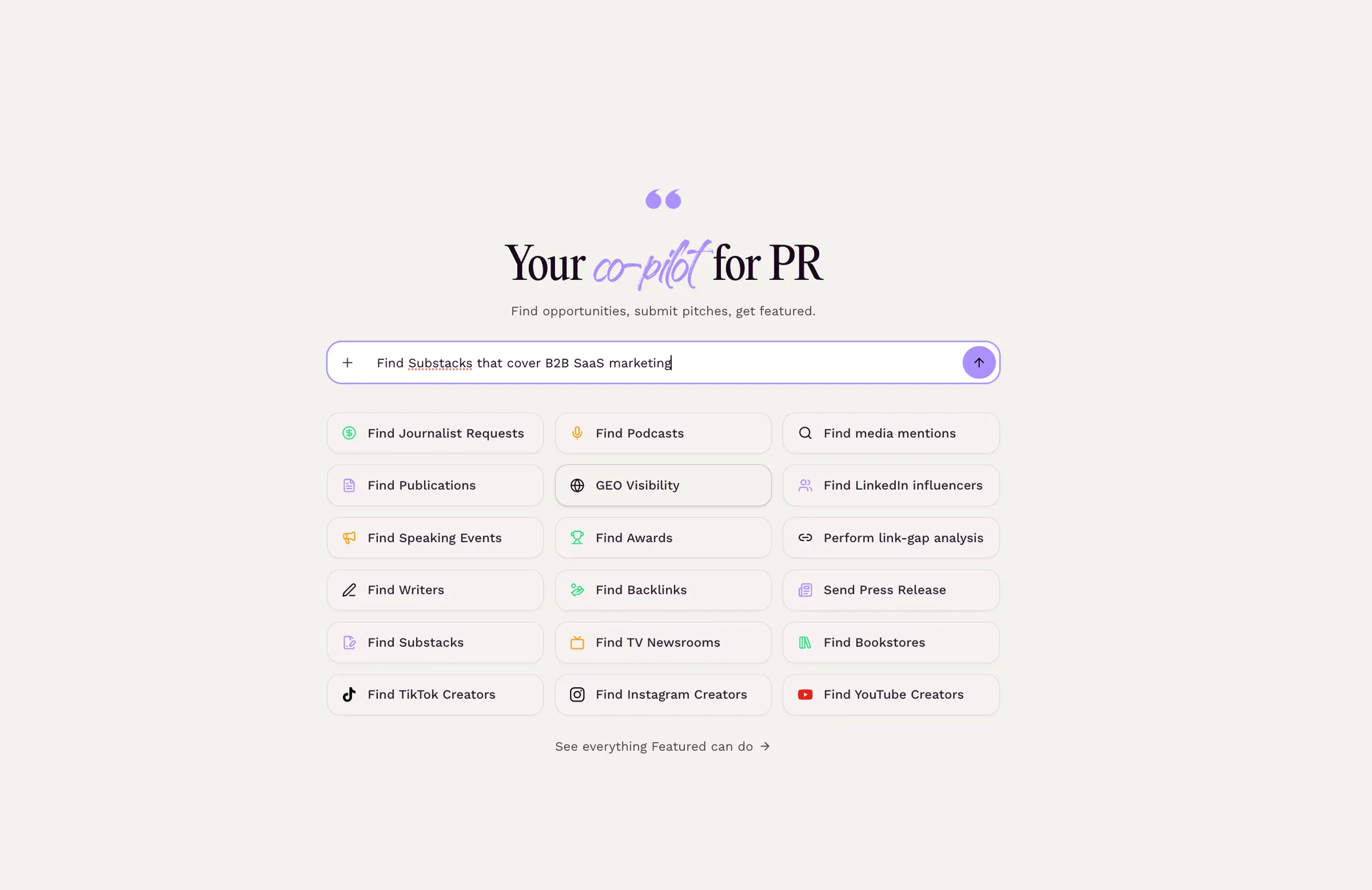
Go to featured.com and type a plain-language request that names the topic or industry. You do not need special syntax. Requests that work well:
- “Find Substacks that cover homeopathic remedies.”
- “Find Substack publications that cover B2B SaaS marketing.”
- “Find Substack writers who cover women’s health and wellness.”
- “Find Substack newsletters about early-stage startup fundraising.”
Lead with what the publication writes about rather than who you hope reads it. If the first set of results is too broad, reply with a narrower topic; if it is too narrow, reply with an adjacent one. Because Find Substacks works through conversation, you can refine as many times as you like without starting over.
Step 2: Review the results
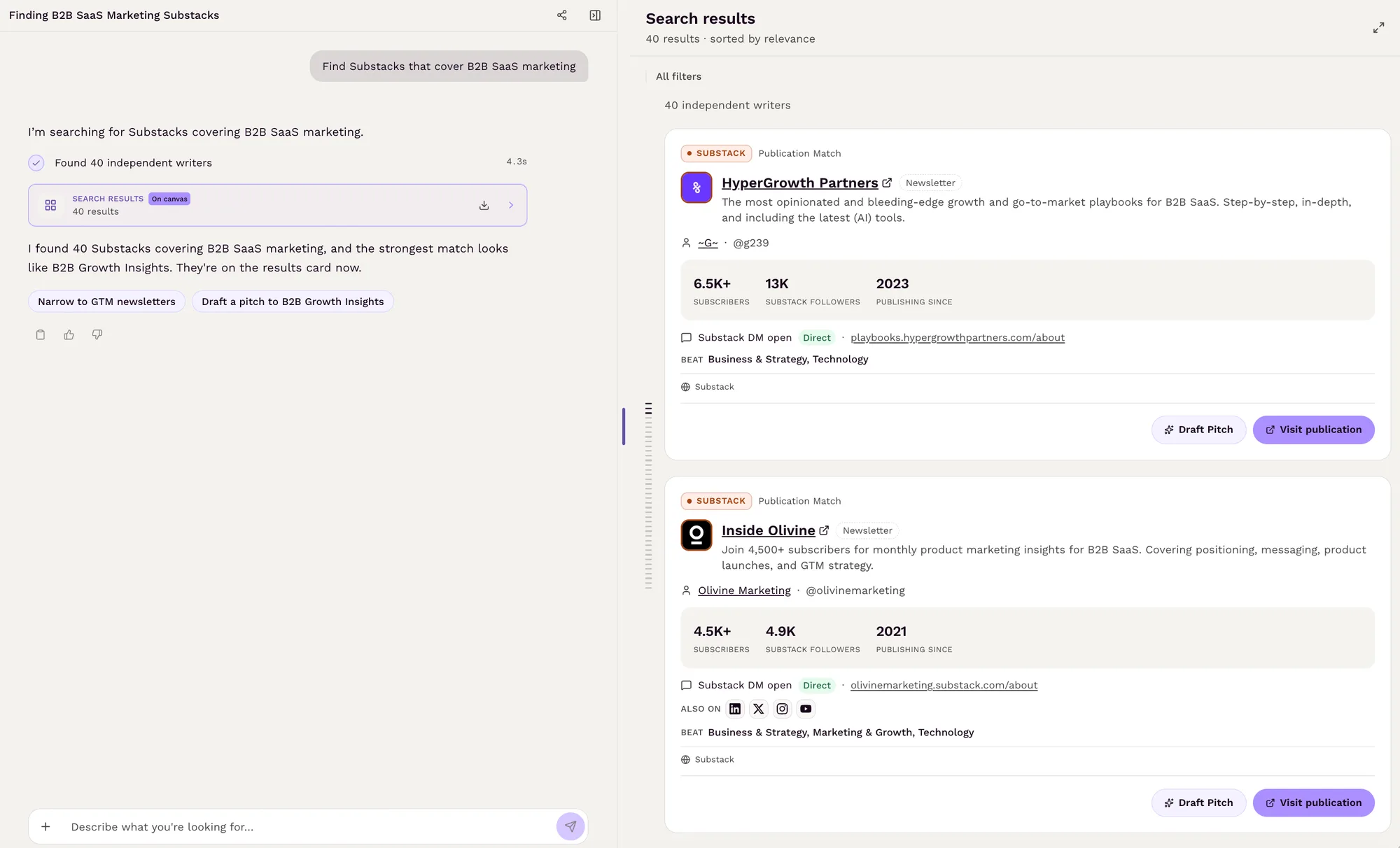
Featured returns a set of publication cards. Each card shows the publication’s subscriber count, its follower count, the year it started publishing, whether the writer’s direct messages are open (with a link straight to the DM), and the writer’s related social accounts, including LinkedIn, Facebook, Instagram, X, TikTok, and YouTube where the writer has linked them.
Use the cards to shortlist, then do three things before you pitch anyone:
- Look at the audience size. Subscriber count tells you the size of the list; follower count reflects the writer’s reach across Substack. Pay attention to the publishing-since year too, since newer publications are usually more open to new sources.
- Read the Substack. Open the publication and read two or three recent posts. You are looking for the writer’s angle, the formats they use (essays, interviews, guest posts, Q&A), and whether your idea fits the way they already cover the subject.
- Investigate the socials. Check the linked accounts to see how the writer talks about their work and whether they engage with readers there. If the DM is closed, a social account is your route in, and LinkedIn tends to work best for business and technology writers; about half of the publications tagged with business, startup, or marketing topics list a LinkedIn profile.
Step 3: Draft a pitch
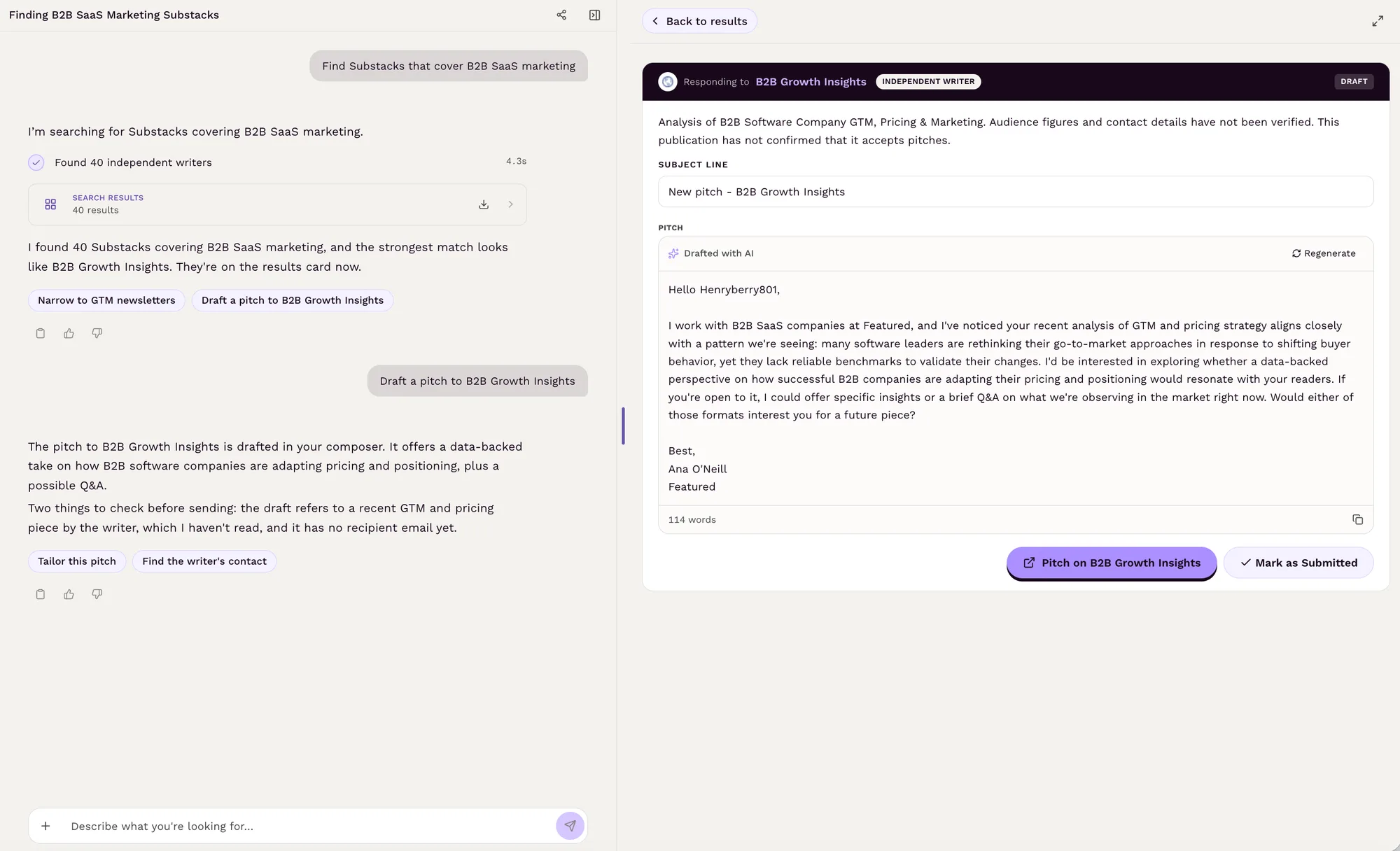
When you have found a publication worth pitching, click Draft Pitch on its card. Featured writes a short collaboration pitch based on the publication, which you can review and edit on the same screen. Before you send it, add the specific reason you are reaching out: a recent post you read, the expert you can offer, or the data you can share. Keep the finished pitch under 200 words.
Then send it. If the writer’s direct messages are open, use the DM link on the card and paste the pitch into Substack. If they are closed, use one of the listed social accounts. Follow up once after three to seven days if you do not hear back, and then stop.
Step 4: Download your results as a CSV
Once you have a set of results you want to keep, download them as a CSV. The file gives you the publications and their details in a spreadsheet you can add to a media list, share with a client, or return to for future outreach. Running a few narrow searches and saving each one builds a reusable newsletter list for every topic you cover.
Putting it together
The whole process fits inside one conversation: describe the publications you want, review the cards, draft and send the pitch, and save the list. What used to take an afternoon of searching Substack one newsletter at a time now takes a few minutes, and the research is reusable the next time a client needs the same audience.
A few habits make the results better. Run several narrow searches rather than one broad one, since the database covers more than 50 topic areas and a specific prompt returns a tighter list. Favor fit over size; a small publication in your exact niche usually outperforms a large general-interest one. Read before you pitch, because the writers who reply are the ones who can tell you read their work. And treat the drafted pitch as a starting point, not a finished message.
Independent writers are the new trade press, and nearly nine in ten of them can be reached with a single direct message. Find Substacks puts all 38,746 of them one search away.
No login or setup required. Go to featured.com and type “Find Substacks that cover [your topic]” to see who is writing about your industry right now.
Frequently asked questions
How many Substacks can I search?
The Find Substacks database contains 38,746 Substack publications.
What can I search by?
Industry and topic. Describe the subject matter the publication covers and Featured will match it.
What information does each card show?
Subscriber count, follower count, the year the publication started, whether the writer's direct messages are open (with a link), and related social accounts such as LinkedIn, Facebook, Instagram, X, TikTok, and YouTube.
Can Featured write the pitch for me?
Yes. Ask Featured to draft a pitch to collaborate with the publication, then review & edit it before sending.
Is this different from HARO or Connectively?
Yes. HARO and Connectively connect sources with journalists who post requests. Find Substacks lets you search for newsletter writers proactively, before they ask.
Ready to try it? Log in at featured.com, open the chat, and type "Find Substack publications that cover [topic]"
Connecting Experts with Publishers
Connectively connects subject-matter experts with top publishers to increase their exposure and create quality, ready-to-publish Q & A content.
About Connectively →