



















The answers · 25
- 01Defy Convention With Acid-Yellow Design
- 02Earn Loyalty With Candid Reviews
- 03Position Focus as Your Advantage
- 04Become a Strategic Operations Partner
- 05Trace Oils to Hawaiian Origins
- 06Claim Ignored Niches With Flexible Terms
- 07Build Loyalty Through Founder Authenticity
- 08Dominate Tiny Questions on YouTube
- 09Educate Clients Before Product Pitches
- 10Map Solutions to Device Milestones
- 11Validate Innovation Through Independent Research
- 12Publish Formulas and Original Market Data
- 13Serve Shaved-Scalp Customers Personally
- 14Anchor Education in Vastu Principles
- 15Showcase Signature Animated Lines
- 16Humanize Home Sales With Direct Access
- 17Differentiate Care With Exosome Protocols
- 18Master Live-Event Publicity With Set Packages
- 19Democratize Compliance Knowledge for Entrepreneurs
- 20Guarantee Longevity Through Parts Support
- 21Offer Sellers Transparent Flexible Choices
- 22Disclose Every Ingredient and Dose
- 23Win Work Through Local Accountability
- 24Outserve Giants With Personal Expertise
- 25Promise Exclusive Category Access
Big competitors may have bigger budgets, but startups can still win by playing to their strengths. This article shares 25 practical ways to stand out through expertise, trust, focus, and better customer service, with insights from experts in the field. From transparent pricing to distinctive branding, these strategies turn limited resources into a real competitive edge.
Defy Convention With Acid-Yellow Design
This is something we’ve literally just finished working on. The strategy was to be much bolder and more memorable, taking an all-in risk on the brand in a market dominated by standard blue, teal and soft pastel UK corporate websites.
Our black and acid yellow ‘in-the-lab’ design, with subtle psychedelic CSS motion graphics, really makes us stand out. We can afford to take this risk because we don’t have any massive overheads, and the metrics so far are looking really good.
Earn Loyalty With Candid Reviews
I built the brand on something the big review sites cannot say: this tool is not for you.
SmartKeys reviews AI and SaaS tools against sites with a hundred writers and affiliate deals on every listing. I cannot outproduce them. So every review leads with who should skip the tool before it gets to the verdict, and it names the limit that will stop them: the send cap, the seat rule, the feature gated on the second-cheapest plan. The large sites rarely do that, because telling a reader not to buy costs them a commission.
It costs me a commission too. It also turned out to be the thing readers remember and come back for. The “who should skip it” section gets cited by AI assistants more than anything else on the site, because it is a direct answer to the question people actually ask, and the affiliate revenue is higher than when I wrote the way everyone else did. Readers who trust the “no” believe the “yes”.
The second lever was testing in real workflows instead of demo accounts. I use a tool for two weeks on work I have to do anyway. Roughly a third never becomes an article because it did not survive contact with real data.
Leveling the field was never about looking bigger. It was about refusing to do the thing their size forces them to do.
Position Focus as Your Advantage
Compete on the one trade-off a larger competitor can’t copy without undermining itself. I run VolRadar, a bootstrapped options analytics platform, and it covers only the roughly 500 S&P 500 names, end-of-day, filtered down to premium-selling candidates rather than listing everything. A big platform can’t say “fewer tickers” without sounding like it offers less, so that constraint is our positioning. The rule I work to: choose the narrow promise the incumbent can’t match, then document how it works. VolRadar’s public methodology page explains how each metric is calculated, and that transparency carries trust where brand size can’t.
Become a Strategic Operations Partner
We stopped competing on what large agencies do best and leaned into what they don’t offer. Most big virtual assistant agencies are built for task-based support: you send a task and someone completes it. ProTask positions itself as a strategic partner instead. We build the systems, workflows, and documentation, and then help run them.
That one distinction shapes our whole brand, from how we describe our services to the leaders we talk with. A founder who has tried task-based help and ended up training and managing it themselves hears “strategic partner” very differently from someone hiring their first assistant.
It levels the playing field because we’re no longer compared on price per hour or headcount. We’re compared on whether the founder can step back and lead. A small, hands-on firm can win that conversation, because our depth comes from operations experience, including my own years running multi-site healthcare research programs.
Find the gap your larger competitors leave, name it clearly, and build your brand around it.
Trace Oils to Hawaiian Origins
One way we compete with much larger essential oil companies is by building the brand around where our products come from and being open about how they’re made and tested. We began as a family business on the island of Hawai`i in 2011, and today the hand bottling, the blending and the replies to customer emails are done by relatives and people from our community. Part of our range is distilled from plants growing in our own backyard, and our island-distilled hydrosols are steam distilled on Hawai`i Island with rain water, which gives us a story a bigger brand can’t simply borrow. To back that up, all of our oils go through third-party testing to confirm they’re free of synthetics, pesticides and adulteration, and our product pages list the extraction method used. My advice to any small brand facing bigger names is to compete on specifics a customer can check for themselves, such as where the plant grew and how it was extracted.
Claim Ignored Niches With Flexible Terms
We said yes to the clients the big agencies turn away. Cannabis, online casinos, adult businesses. These companies can barely run ads, so search is often their main way to get found, and most established agencies won’t touch them because of the reputational worry. That gave us a door nobody else was standing in.
The second move was dropping the long contract. Big agencies lean on 12-month agreements. We work month to month. It sounds small, but for a buyer who’s been burned before, it removes the biggest fear in the decision. We have to earn the next month, and clients know it.
The lesson for any startup: you can’t outspend an incumbent, so don’t fight on their terms. Find the customer they’re ignoring or the friction they’ve stopped noticing, and build your brand around fixing exactly that. Being the obvious choice for a small group beats being the cheaper option for everyone.
Build Loyalty Through Founder Authenticity
One way I leveraged our brand to compete against bigger players was by making my own lived experience the center of it, something a larger, established competitor cannot replicate. I built Self-Care Shirts out of my own mental health journey. I hand-draw every design, and I show up as a real person behind the brand rather than a faceless company. Bigger competitors can outspend me on ads all day, but they cannot be me, and they cannot manufacture the trust that comes from customers knowing the founder actually lives the mission.
That approach leveled the playing field because it shifted the competition away from budget and scale, where I would lose, and onto authenticity and connection, where a small founder-led brand actually has the advantage. People do not feel seen by a logo. They feel seen by a person who has been where they are. Our mission reinforces it too, since every order supports the 988 Suicide and Crisis Lifeline and The Trevor Project, so buying from us means something a transaction with a large brand often does not. That emotional connection is the one thing a bigger competitor cannot buy, and it is what keeps our customers loyal.
Dominate Tiny Questions on YouTube
I couldn’t outrank the giants on Google — so I went where they don’t scale: thousands of narrow YouTube videos.
My site, allcredit.cards, catalogs every credit card from every US bank and credit union. My competitors are NerdWallet and Bankrate — companies with hundred-person content teams and domain authority I can’t match head-on in search results. So I stopped fighting for their battlefield and built mine: YouTube, with thousands of short videos, each covering exactly one narrow question — a specific credit union’s card, a specific fee, a specific comparison nobody else bothers to cover.
Here’s why this levels the playing field: big brands can’t justify producing a video about a credit card from a $50M credit union in Texas — the audience is too small for their economics. For me, that audience is the entire point: the viewer searching for that exact card has no other video to watch, so I win the view by default, and those viewers click through to the site already warmed up — they arrive knowing I’m the only one who took their niche question seriously. Thousands of tiny monopolies add up to real traffic, while each individual video stays too small for a large competitor to ever contest.
My advice: don’t try to out-shout established players on their main channel — find the content format where their scale works against them. Anywhere the economics require covering ten thousand small topics instead of fifty big ones, a solo founder with automation beats a content department. Their strength is budget; yours is that no niche is beneath you.
— Eve Bakaleinikova, founder of allcredit.cards
Educate Clients Before Product Pitches
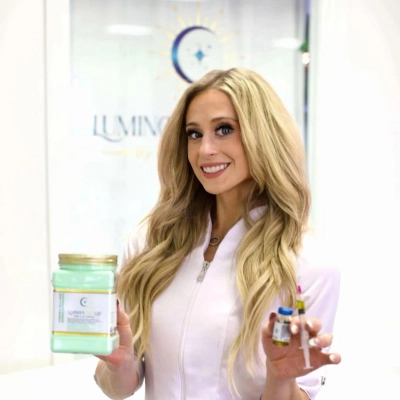
Leveraging a startup brand in the skincare and aesthetics industry starts with an intimate education-driven approach.
Early on, I made a deliberate choice to lead with education rather than promotion. Instead of pushing products, I spent time teaching clients about their skin barrier and how medical-grade ingredients really work. That shift built something no big competitor could easily replicate the genuine trust.
Here’s a real example: when I introduced advanced laser treatments, I didn’t just offer the service. I built a signature post-treatment care program around it. We walked clients through every step of their recovery, set clear expectations, and held ourselves to a higher safety standard. The result? A 30% increase in returning clients compared to competitors in the same space.
Larger providers can offer scale, but they often can’t offer personalization. By being transparent about outcomes and tailoring care to each individual, I showed clients the difference between a generic treatment and one designed specifically for them. That’s what kept them coming back — and what kept us competitive.
Map Solutions to Device Milestones
We stopped describing what we can build and started describing when a customer needs us.
Larger firms present a capability menu: embedded software, verification, regulatory support, cybersecurity. It is accurate, and it leaves the buyer to work out which parts apply to them. Device founders do not think that way. They think in milestones. I need to apply for an IDE. I need something a clinician can use in a first-in-human study. I need my software documentation to hold up in a 510(k).
So we organized our positioning around those moments rather than around our service list. The work itself did not change. What changed is that a founder can see where they are and what has to be true before the next step.
The clearest signal we have is how people arrive. One in-depth article on ISO 13485 brought a qualified inquiry straight through our contact form, from someone who was not shopping for a vendor but was stuck on a question that article answered. A larger firm with a broader audience has little reason to publish something that specific. We do, because that reader is exactly who we serve.
The other part was removing the reason to default to a bigger name. Buyers choose large firms to reduce risk, so we address that directly. We engineer everything under the rigor of our ISO 13485-certified quality management system, and we are clear about ownership: the customer owns what we deliver, and their regulatory and quality team owns classification and submissions. Being explicit about what we do not do earns more trust than claiming everything.
What levels the playing field is not being scrappier or cheaper. It is being more specific. A large firm has to speak to many markets at once. We can speak to one type of company at one point in its journey and be precise about it. When buyers are making a high-risk decision with limited information, precision beats breadth.
Validate Innovation Through Independent Research
Droplet Lab makes the Dropometer, a smartphone based instrument for contact angle, surface and interfacial tension, surface free energy and sliding angle. We compete with KRUSS, DataPhysics, Biolin and rame-hart: firms with decades of history, global sales teams and instruments costing several times ours. We are small and bootstrapped. Here is how we compete.
1. Let evidence others produce speak for you. A new brand starts at zero trust. Our method is validated in two peer reviewed papers: Review of Scientific Instruments (benchmarked against a KRUSS DSA100E) and Colloids and Surfaces A. Researchers have since cited the Dropometer in 52 papers, all listed on our website. For a university buyer, 52 independent papers answer the risk question faster than a sales call.
2. Put a scientist at the centre. Our founder, Dr Alidad Amirfazli, built the method from a career in wetting research. He hosts our upcoming Surface Science Conversations series with researchers and engineers. It is the opposite of an ad and designed for authentic conversations addressing real challenges.
3. Earn endorsement; never pay for it. An independent, unpaid endorsement from Dr Abbott, a respected surface scientist, got us meetings with buyers who had never heard of us. Paid endorsements are easy to spot in technical markets.
4. Make the customer’s proof your proof. Zeus, a polymer extrusion manufacturer, ran its own Gage R&R on the Dropometer across three operators and it passed; they now run five units in production. To a QC manager, a peer’s own test beats any spec we print. Visiting their plant taught me the language I now use with every QC prospect.
5. Show up where buyers ask. Many inquiries say they found us through ChatGPT, Gemini or Google’s AI Overview. We publish plain technical content and track how often AI engines name us for real buying questions.
6. Be transparent where incumbents are not. We publish prices, and our standards pages say plainly where we are only partially compliant. Stating limits makes every other claim more believable.
7. Compete where the giant is weak. We win where a big benchtop system fits badly: production lines needing several stations, teaching labs needing a unit per group, grants that cannot cover a premium system.
Publish Formulas and Original Market Data
Our competitors are agencies with big case-study pages and sales teams. We’re a few weeks old, so we picked two things they don’t like doing: showing prices and showing our own data.
Prices first. Every price is on our site as a formula, a network fee plus a per-location rate. A marketing lead at a 40-location dental group can work out their monthly cost in about a minute without booking a demo. A bigger agency can’t easily copy that, because its pricing lives inside the negotiation.
Then data. Instead of quoting the same industry stats everyone quotes, we went and pulled our own. 400 Google Maps dentist listings across 20 US metros. A hand-run test of how often ChatGPT and Perplexity name six cleaning franchises in 10 cities. When you have no reputation to borrow, the data has to be the reputation.
Did it level the field? In the places that matter for a new brand, yes. Our dentist guide built on that data got indexed by Google the same day it went live, and OpenAI’s search crawler visits the site about 25 times a week. A month-old domain usually doesn’t get that kind of attention with generic content.
Serve Shaved-Scalp Customers Personally
We built Domepeace around bald men and the practical details of caring for a shaved scalp. That focus gave us a clear identity in a grooming market where a smaller brand could easily disappear. I had personal experience with the problem, so our content could explain the routine from the perspective of someone who actually uses it. We paired that with direct conversations: I answer questions on Instagram and YouTube and sometimes respond with a video. That gives people a connection to the founder as well as an explanation of the products. Our advantage is being specific and accessible. A large competitor may reach more people, but we can make the right customer feel understood and answer the question standing between him and a confident purchase.
Anchor Education in Vastu Principles
The advantage of starting small is that you can build the whole thing around one idea. For ASDAV, that idea was Vastu, designed into every brief and studio critique from day one, the way you’d set a building’s orientation before the foundation. I’d trained as an architect in Milan, and the gap was visible there and at home. Students who’d been looking for that kind of program started arriving, usually women moving sideways from architecture or fashion into interiors. The first few told the next group, and we’ve grown mostly that way since.
Showcase Signature Animated Lines
We made the product’s behavior the brand. Doodraw is a drawing app where every line wiggles as you draw, powered by an animation engine I built from scratch in about 20,000 lines of Rust, with no generative AI in the app. That one distinctive behavior is recognizable within seconds on screen, which matters when you can’t outspend established players. Short video is where it shows: one Doodraw YouTube Short has 4.2 million views. Since launching in August 2026, we passed 70,000 installs in our first 8 weeks with almost no ad spend, and we now have users in 136 countries across iOS, Android and a Windows desktop app. My takeaway for small teams: don’t compete on feature lists. Pick one thing that’s genuinely yours, make it visible in the first seconds of a video, and let the product demonstrate itself. Distinctiveness travels further than budget.
Humanize Home Sales With Direct Access
In cash home buying we’re up against national companies and big franchises with huge ad budgets. We can’t outspend them, so we don’t try. We compete by being a real person.
The video on our website is me holding the key to a house we just bought. We’d just hauled a load of junk to the dump. And I tell the real story. The seller had tenants who stopped paying rent, so they couldn’t make the mortgage and were heading into foreclosure. We bought it with the tenants still in it, signed papers the same day, handled the eviction for them and made the back payments to get them out of foreclosure. No actors, no stock footage.
That matters because when someone’s in a tough spot, they don’t trust a logo. They trust a face. When a homeowner reaches out, they can book a call with me directly, or just text me, whichever they prefer. And I’ll come out and walk the house myself. One seller in Modesto said in her review I did a walkthrough with her and made an offer later that same night. A big company can’t really copy that. Being small and personal isn’t our weakness. That’s what we do.
Differentiate Care With Exosome Protocols
I leveraged our brand by making product quality and patient experience the core differentiator: I added “best in industry” protocols and billions of exosomes to every stem cell product at no additional cost. We made that distinction central to our patient-facing messaging and consultations so prospective patients could see the difference up front. Because our model is 100% direct-to-consumer and focused on high-ticket regenerative medicine delivered in-home and via telehealth, improving the pre- and post-treatment experience built trust quickly. That focus drove referrals and strong reviews, and we now almost never lose a client who is shopping around, which helped level the playing field against larger competitors.
Master Live-Event Publicity With Set Packages
We built the Thelemata brand around one specialty: PR and influencer marketing for live events. That meant cutting services we could technically sell, like reputation management, crisis work and general digital PR, and focusing on touring shows, single-night marquees, galas and corporate conferences. We got there by listening to why clients hired us and what frustrated them about other agencies.
Events suit a small agency. Each one comes with a date, a venue and a story built in, so we run the same playbook market after market and get sharper every time. For the touring show Luminiscence, we’ve carried one creator playbook from Minneapolis to Philadelphia, Sacramento and New York. Press, creator content and ticket sales all build toward a fixed date, which makes results easy to measure.
We also packaged the work. Clients choose from three fixed monthly tiers for PR or influencer marketing, scoped by outputs and numbers of markets, so an event producer knows the price before the first call.
Bigger agencies have bigger teams and budgets. An event team on a tight timeline wants a specialist with a proven playbook and a clear price, and that is where we win. Focus leveled the playing field for us.
Democratize Compliance Knowledge for Entrepreneurs
I built the brand around a problem I had experienced myself.
I started as a nurse and saw good operators locked out of regulated industries because the large corporates already had the legal teams, compliance infrastructure and experience to navigate the system.
HCPA was built to change that, and has now helped more than 16,000 businesses enter and grow in regulated markets. Dallo is the next step. We are taking eight years of expertise across 25 regulated industries and turning it into a platform entrepreneurs can use themselves.
For me, that is how you level the playing field: give smaller operators access to the knowledge and infrastructure that used to protect the incumbents.
Guarantee Longevity Through Parts Support
We can’t compete against those brands’ reputation and advertising. But, we do compete on product longevity and durability.
Desky backs the frames of our Dual and L-Shape desks with a 10-year warranty. We have more than 800 individual replacement parts in stock, so our customers never need to purchase an entirely new desk if one component, a motor, or a control panel malfunctions.
Desky products are tested against international standards and independently verified by third-party testing organizations, including BIFMA, EESS, TUV Rheinland, and AFRDI.
Certifications may be a deciding factor for customers looking for assurance and reassurance when making a purchase from a company they’re not as familiar with. So, our certifications provide consumers with data points to compare Desky to other, larger, more recognized names.
Ultimately, competing against the competition isn’t about fame, it’s about creating products that stand the test of time, and backing them up after sale.
Offer Sellers Transparent Flexible Choices
My name is Jagger Babuin, and I am a real estate investor and the Owner of Cash House Buyers 4 You, a BBB A+ Accredited firm. Since 2021, we have purchased over 227 properties across 49 counties in Florida, Georgia, and Oklahoma.
When competing against massive institutional iBuyers and national corporate competitors, our startup leveled the playing field by leveraging radical transparency and personal trust signals as our core brand identity.
Large institutional buyers rely on automated algorithms and rigid, one-size-fits-all lowball offers. To stand out, we made our BBB A+ Accreditation and specifically our record of zero complaints across 227+ transactions the centerpiece of our brand positioning. We pair this trust guarantee with tailored flexibility, offering sellers five distinct exit paths (including creative seller financing and subject-to structures) rather than forcing a single cash discount.
By competing on trust, speed (delivering written offers within 3 days and closing in an average of 29 days), and tailored deal structures, we consistently win properties over larger corporate competitors who lack a human, high-touch approach.
Disclose Every Ingredient and Dose
I compete on the label. I run Shuven, a small gut-brain supplement brand, and I can’t outspend the big players on ads or shelf space. What I can do is put every ingredient and the exact amount on the label, at full clinical doses, with no proprietary blends. A lot of bigger brands hide behind a blend so you can’t tell how much of anything is actually in the capsule. I made the opposite choice and built the whole brand around it.
Here’s how that plays out day to day. My product pages read like a spec sheet. Ingredient, dose, why it’s there. When someone compares my bottle to a name brand and sees a blend on theirs and real numbers on mine, the size of the other company stops mattering. I back it up with Trustpilot reviews I don’t curate, so the proof isn’t just me talking.
It levels the field because transparency is something a small brand can do faster than a big one. A large company has to run a label change through legal, procurement, and a supply chain built around cheap blends. I just have to be honest and put it on the page. I lean on organic search first, so those detailed pages also do double duty. People searching for a specific ingredient and dose land on a page that answers the question instead of dodging it.
Win Work Through Local Accountability
We leaned into being local and being reachable. The bigger outfits, especially the ones that roll into town after a storm, can outspend us on ads, but they can’t give a homeowner the owner’s name and a crew that’ll still be here in five years. So we put our faces, our reviews, and our Charlotte roots front and center everywhere we show up. When a customer calls, they talk to someone who knows the area and stands behind the work. That trust wins jobs that a bigger ad budget can’t, and a lot of our business now comes from referrals because of it.
Outserve Giants With Personal Expertise
I leveraged my brand against bigger competitors by being specific and personal where they could not be. With Osborne Digital Marketing I was up against agencies and software companies with far bigger teams and budgets. I could not outspend them, so I went deeper on the topics that mattered, made each page the best answer I could, and put my own experience behind it. That is how I ranked Osborne Digital Marketing for some very hard SEO terms against names like WebFX, Ahrefs, and Nathan Gotch. Big brands tend to publish broad content for everyone. A smaller brand can be more useful to a specific reader, and both search engines and buyers reward that.
I did something similar with my coaching brand at ronaldosborne.org. Many coaches charge a flat premium fee whether the client grows or not. I charge a modest monthly retainer plus a performance fee tied to results, usually a percentage of revenue. That model came from plumber friends who were worried about inconsistent work and offered me a stake in their business. It levels the playing field because a big name has reputation, but I can offer skin in the game. It tells an owner I only win when they win, which is a promise most larger firms will not make. My advice to any startup is to stop trying to look big. Pick the thing a large competitor cannot or will not do, whether that is personal attention, deeper expertise, or sharing the risk, and make it the center of your brand. Then back it with real results, because people trust what you show them more than what you claim.
Promise Exclusive Category Access
Category exclusivity was the game-changer for us. Because we are working exclusively with one company per area of business (e.g. only one mortgage broker per geographic area), when an existing mortgage broker applies or requests a relationship with us; we tell them no. The larger agencies can’t do this as much as we can because they have so many clients across multiple areas of business. So, if a potential buyer finds out how we operate, procurement stops calling around and the majority of the trust issues are resolved even before we have had a chance to review our first slide.
This concept is very simple. The small new player wins against the established players by making a promise that the established player cannot make. Our exclusive offering is both category exclusivity and a 90 day guarantee. Yes, there is a cost associated with this approach. Every month we pass up revenue opportunities and have to carefully consider where we want to enter each niche. Your unique advantage will be different than ours, but it will be something that your competitors can’t replicate without breaking their own model.
Adam Woodhead, Co-Founder, Wolfstone Digital
Related Articles
Connecting Experts with Publishers
Connectively connects subject-matter experts with top publishers to increase their exposure and create quality, ready-to-publish Q & A content.
About Connectively →