

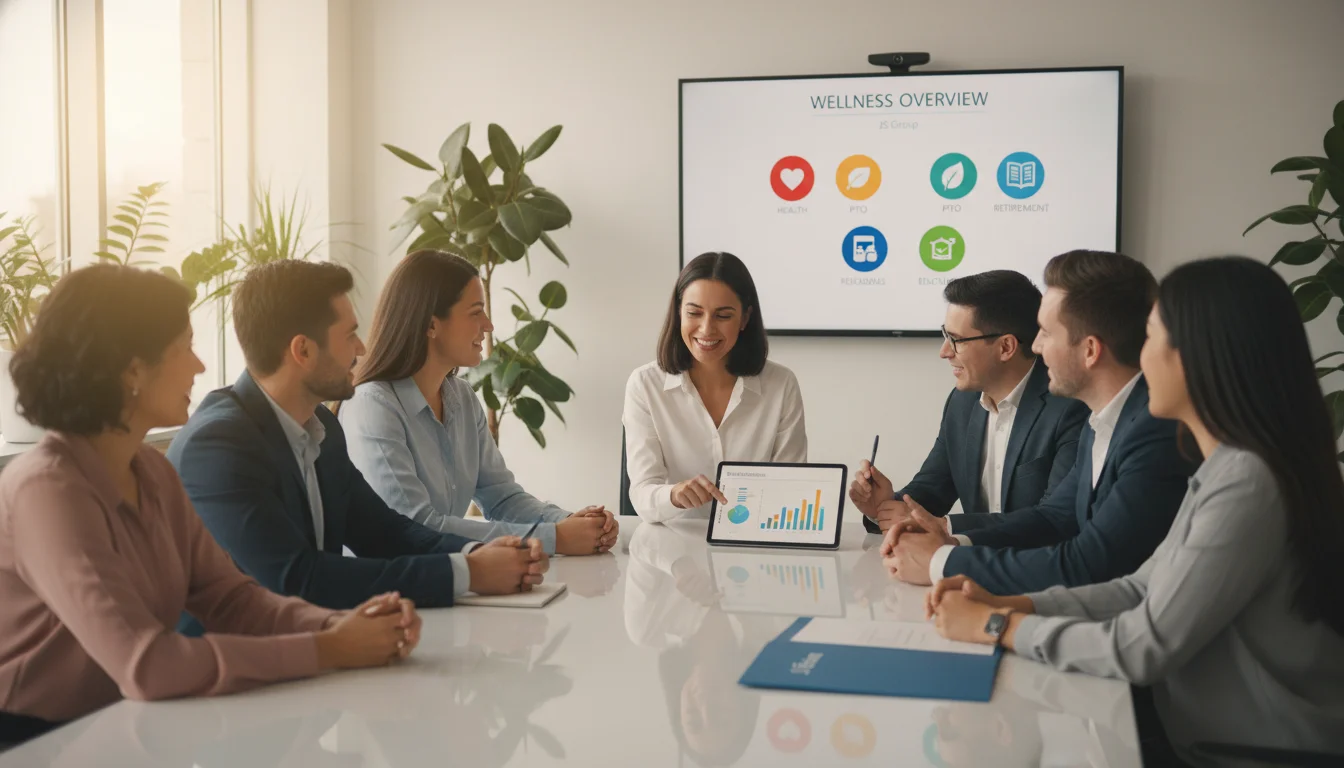
This interview is with Vicki Brown CCWS™, Certified Corporate Wellness Specialist | SHRM Mental Health Ally | Corporate Wellness Strategist, JS Benefits Group.
To introduce you to Featured readers, how do you describe your role as a Corporate Wellness Strategist and SHRM Mental Health Ally at JS Benefits Group within the insurance industry?
As a Corporate Wellness Strategist at JS Benefits Group, I help organizations move beyond traditional benefits by designing wellness strategies that reduce healthcare costs, improve employee engagement, and support long-term retention. My role sits at the intersection of employee benefits, culture, and business performance, ensuring wellness initiatives are not just feel-good programs but measurable, strategic investments.
As a SHRM Mental Health Ally, I also guide employers in building psychologically safe workplaces by integrating mental health support into their overall benefits strategy. This includes helping leadership teams normalize conversations around mental health, identify early risk factors, and create environments where employees feel supported both personally and professionally.
Within the insurance industry, this dual role allows me to bridge the gap between coverage and care, helping clients maximize the value of their benefits while creating healthier, more resilient workforces.
Vicki Brown, CCWS™
Corporate Wellness Strategist | SHRM Mental Health Ally. Helping organizations reduce healthcare costs and build healthier, more resilient teams. www.jsbenefitsgroup.com
What pivotal experience led you into corporate wellness and employee benefits strategy in insurance?
Early in my career, I saw firsthand how rising healthcare costs were forcing employers to make difficult decisions—often cutting benefits or shifting more costs onto employees. What stood out to me was that many of these organizations were reacting to problems rather than preventing them.
The pivotal moment came when I worked with a company struggling with both high claims and low employee engagement. Instead of focusing solely on plan design, we introduced a simple, strategic wellness initiative—targeting stress, lifestyle habits, and preventive care. Within a year, not only did their claims begin to stabilize, but employee morale and retention improved noticeably.
That experience reshaped how I viewed the role of insurance. It’s not just about managing risk after the fact—it’s about proactively improving the health of a workforce.
That realization led me into corporate wellness and employee benefits strategy, where I now help organizations take a more proactive, data-driven approach—aligning benefits with both employee well-being and business outcomes.
From that background, when you begin a new client engagement, what does your first 30-day diagnostic look like to uncover wellness and benefits gaps?
When I begin a new client engagement, the first 30 days are all about listening, analyzing, and uncovering what’s really driving both cost and employee experience.
I start with a data-driven review—analyzing claims trends, utilization patterns, and high-cost drivers. This helps identify where dollars are being spent, but more importantly, why. I’m looking for signals like chronic condition prevalence, ER overuse, or gaps in preventive care.
At the same time, I conduct a benefits and vendor audit. Many organizations are offering strong benefits on paper, but employees either don’t understand them or aren’t using them effectively. That disconnect is often where the biggest opportunities lie.
Equally important is the employee perspective. Through surveys or leadership conversations, I assess stress levels, burnout risk, and overall engagement. As a SHRM Mental Health Ally, I pay close attention to psychological safety and whether mental health resources are both accessible and normalized.
Finally, I evaluate culture and communication—how benefits are positioned, how often they’re reinforced, and whether leadership is aligned around wellness as a business strategy, not just an HR initiative.
By the end of those 30 days, I’m able to clearly outline:
- Where costs are leaking
- Where employees are underserved
- Where quick wins and long-term strategy can drive measurable impact
From there, we build a roadmap that aligns wellness, benefits, and business goals—so every initiative has purpose, adoption, and ROI.
Building on integration, how does being part of JS Group through JS Benefits Group shape the way you connect wellness strategy with employee benefits consulting?
Being part of JS Benefits Group fundamentally changes how wellness strategy is delivered—it’s not an add-on, it’s embedded in the core of how we design and manage employee benefits.
What sets us apart is that we don’t approach wellness in isolation. We work directly with the data, the funding strategies, and the day-to-day realities of healthcare costs. That means every wellness initiative is intentionally aligned to reduce claims, improve utilization, and close real gaps—not just check a box.
Many organizations invest in wellness programs that sit on the sidelines. At JS Benefits Group, we integrate wellness into plan design, cost-containment strategies, and employee communication so it becomes part of how the entire benefits ecosystem functions.
This also allows us to move faster and be more precise. If we identify a spike in chronic conditions or mental health claims, we can immediately align targeted wellness initiatives with the benefits strategy—creating a direct line between insight and action.
From a mental health standpoint, that integration is critical. We’re not just recommending resources—we’re ensuring they’re accessible, utilized, and supported by leadership and organizational culture.
Ultimately, it positions us differently in the market. We’re not just advising on benefits, and we’re not just delivering wellness—we’re helping organizations use both together as a strategic lever to control costs, strengthen retention, and build a healthier, more resilient workforce.
On the communication front, what 60–90 day open-enrollment plan have you found most effective for boosting understanding and participation?
At JS Benefits Group, we approach open enrollment through what I call the “3E Framework: Educate, Engage, Empower.” It transforms enrollment from a transactional event into a strategic communication campaign.
-
Educate (Days 90–60): We start early by simplifying complexity. Employees don’t make good decisions if they’re confused, so we focus on clear, jargon-free education—what’s changing, why it matters, and how healthcare costs impact both the company and employees. This builds awareness and reduces last-minute overwhelm.
-
Engage (Days 60–30): This is where we make it personal. We use real-life scenarios, cost comparisons, and decision-support tools to help employees see how each plan fits their situation. We also activate managers and leadership to reinforce messaging, because employees are far more likely to engage when communication is visible and consistent.
-
Empower (Days 30–0): In the final phase, we remove friction. Step-by-step guidance, clear deadlines, and easy access to support—whether through one-on-one sessions or quick-hit resources—ensure employees feel confident taking action. The goal is not just enrollment, but confident enrollment.
What makes this framework effective is that it’s intentional, repeatable, and multi-channel—meeting employees where they are instead of relying on a single touchpoint.
The result is higher participation, better benefit selection, and fewer downstream issues—because employees aren’t just informed; they’re empowered to make decisions that align with both their needs and the organization’s strategy.
When budgets are tight, which single low-cost initiative has delivered the biggest impact for caregivers or mental health in your programs, and why?
One of the highest-impact, low-cost initiatives I’ve implemented is manager training focused on mental health awareness and caregiver sensitivity.
When budgets are tight, most organizations look to add or cut programs, but often overlook the influence of frontline managers. In reality, managers shape the day-to-day employee experience more than any benefit ever will.
By equipping managers with simple tools—how to recognize signs of burnout, how to have supportive conversations, and how to guide employees to existing resources like EAPs—we create an immediate ripple effect across the organization.
This approach is highly cost-effective because it doesn’t require new vendors or major investments. Instead, it maximizes what’s already in place while addressing one of the biggest gaps: employees often don’t feel comfortable or supported enough to use the benefits they already have.
Especially for caregivers, flexibility and understanding from a direct manager can make a greater difference than any standalone benefit. When managers are trained to lead with empathy and awareness, it reduces stigma, increases utilization of mental health resources, and improves retention.
The impact is both cultural and measurable—because when employees feel supported, they’re more engaged, more productive, and far less likely to leave.
To keep employees engaged, how do you design a micro-learning or lunch-and-learn series so topics like stress and time management feel immediately usable across different employee groups?
To keep employees engaged, I use what I call the “MOMENTUM Model™: Micro-learning that Moves Behavior, Not Just Awareness.”
It’s designed to ensure every session delivers immediate, practical value—so employees don’t just learn; they apply.
- M — Make it Micro. Sessions are intentionally short (20–30 minutes) and focused on one outcome. Instead of broad topics like stress management, we zero in on something actionable—like a 2-minute reset or a simple prioritization method employees can use the same day.
- O — Outcome-Driven. Every session starts with a clear promise: What will this help you do better today? This keeps content focused and eliminates information overload.
- M — Make it Relevant. We tailor content to different employee groups—leaders, managers, and individual contributors—so examples and challenges feel real and relatable, not generic.
- E — Easy to Apply. Each session includes a “use it now” tool—whether it’s a script, framework, or quick habit. If it’s not simple enough to use immediately, it won’t stick.
- N — Normalize Through Leaders. Managers play a key role in reinforcing behaviors. When leaders model and reference these tools, adoption increases significantly—especially around mental health and stress.
- T — Tie to Real Data. We align topics with actual organizational trends—burnout indicators, absenteeism, or productivity gaps—so employees understand why it matters.
- U — Use Multiple Touchpoints. Learning doesn’t stop at the session. Follow-ups, quick guides, and reminders reinforce key concepts and drive consistency.
- M — Measure What Matters. We track engagement, feedback, and behavior shifts to ensure sessions are making an impact—not just filling time.
What makes the MOMENTUM Model™ effective is that it respects employees’ time while delivering real, usable value. It turns learning into action—and action into measurable change.
To earn executive support and prove impact, which KPIs do you rely on to demonstrate ROI from wellness and benefits education?
To earn executive support, I focus on KPIs that clearly connect employee behavior to financial outcomes—not just participation metrics.
- Claims trend and cost per employee. Are we bending the trend line over time? Even small shifts in chronic condition management or preventive care can translate into meaningful savings.
- Utilization of key benefits—especially high-value, often underused resources like preventive screenings, EAPs, and mental health services. Increased, appropriate utilization is often an early indicator that education is working.
- ER versus urgent care utilization. When employees better understand where to go for care, we typically see a reduction in unnecessary ER visits—one of the fastest ways to impact costs.
- Absenteeism and productivity indicators. Improvements here—especially when aligned with stress management or mental health initiatives—help tell the story beyond healthcare spend.
- Engagement metrics that go deeper than attendance, such as repeat participation, resource downloads, and decision confidence during open enrollment. These show whether employees are actually absorbing and applying information.
- Retention and turnover trends. When benefits are understood and valued, employees are more likely to stay—making this a critical long-term ROI measure.
What resonates most with executives is when these metrics are connected into a clear narrative: education → behavior change → utilization shifts → cost impact → retention.
That’s how we move wellness and benefits education from a “nice to have” to a measurable business driver.
Looking ahead 12 months, what emerging corporate wellness trend—especially with Gen Z in the workforce—should employers you advise through JS Benefits Group pilot first?
Looking ahead 12 months, the most important trend I’m advising employers to pilot is “real-time, personalized mental health support”—delivered in the flow of work, not outside of it.
Gen Z has fundamentally changed expectations around wellness. They don’t want static programs or once-a-year initiatives; they want accessible, immediate, and personalized support that fits into their daily lives.
The data is clear:
- 91% of Gen Z report experiencing mental health challenges, and many would leave for better mental health support.
- Only about half feel comfortable discussing mental health with their manager.
That gap is where employers need to focus.
The most effective pilot I’m seeing is a combination of:
- On-demand micro-support tools (short resets, guided coping techniques, AI-driven nudges)
- Personalized recommendations based on employee behavior or needs
- Embedded access points—within communication platforms employees already use
This aligns with how Gen Z already manages stress—through immediate, practical tools like “calm kits” or quick coping strategies they can use in real time.
What makes this trend different—and powerful—is that it shifts wellness from program-based to moment-based.
Instead of asking, “Did you attend the session?” we’re asking, “Did you get support in the exact moment you needed it?”
It also ties into a broader shift: Gen Z is prioritizing authentic connection, flexibility, and everyday well-being—not just performance.
For employers, this is a major opportunity.
My recommendation is to start with a focused pilot:
- Integrate real-time mental health tools into existing platforms
- Train managers to reinforce and normalize usage
- Track engagement and behavioral shifts—not just participation
Because the organizations that will win with Gen Z aren’t the ones offering the most programs—they’re the ones delivering the right support, at the right moment, in the right way.
Thanks for sharing your knowledge and expertise. Is there anything else you'd like to add?
There’s one thing I’d leave you with: the organizations seeing the greatest impact today are the ones that have stopped treating wellness and benefits as separate conversations.
When you align strategy, communication, and culture, you move beyond offering benefits to actually influencing how employees experience them—and that’s where real change happens.
We’re also at a pivotal moment where expectations are shifting quickly, especially with newer generations entering the workforce. Employers who stay proactive—listening to their people, using data to guide decisions, and focusing on practical, everyday support—will be the ones who not only manage costs but also build stronger, more resilient teams.
Wellness isn’t about adding more programs. It’s about making what you offer work better, feel more accessible, and deliver measurable value—for both the employee and the organization.