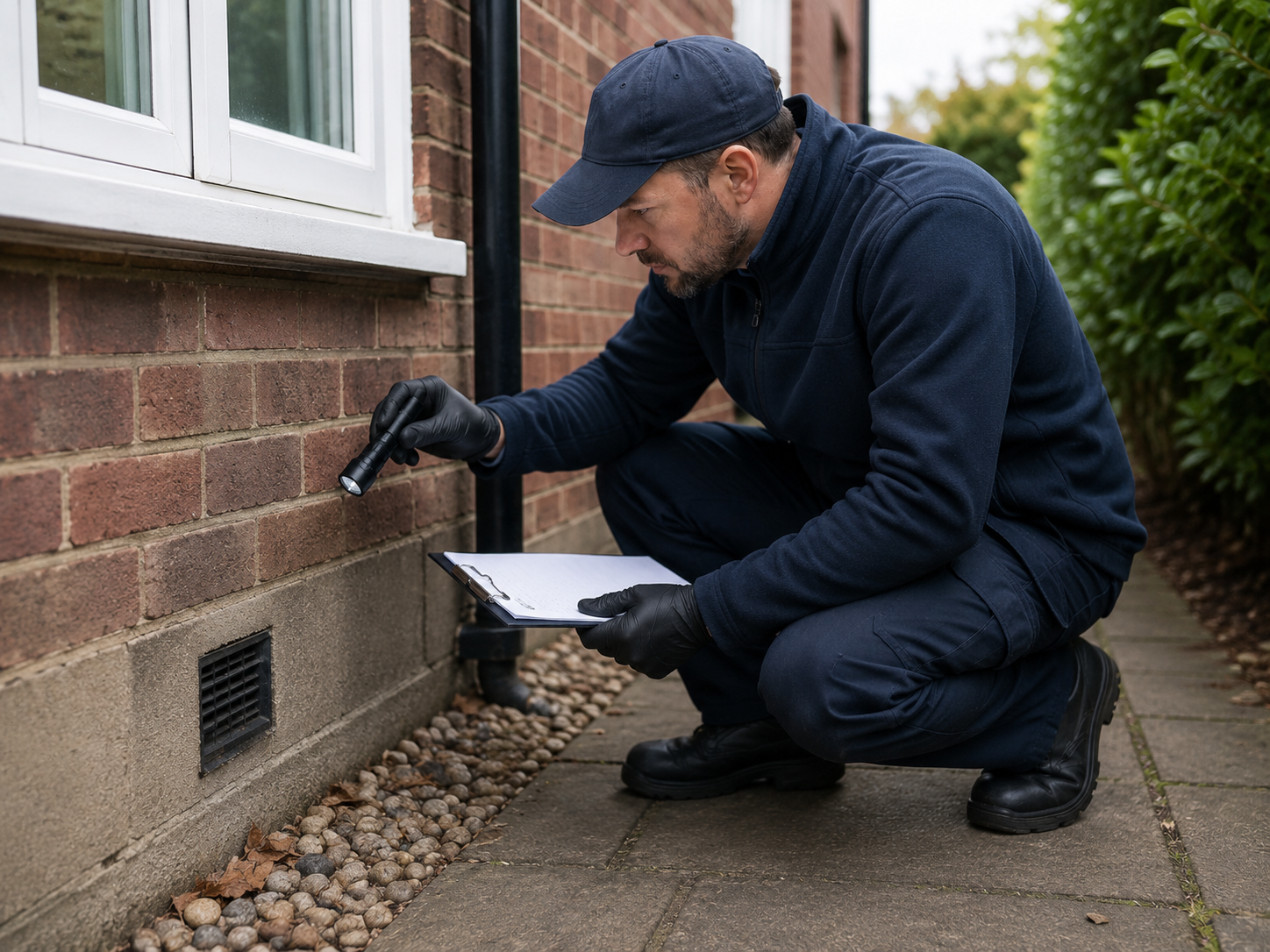
What Your Property May Be Telling You: Early Pest Warning Signs to Act On
Authored by: Mark Cooper
Pest problems rarely begin as obvious infestations. They usually start with small clues: scratching in the loft, ants near a kitchen door, wasps entering the same roofline gap, or unexplained bites around the ankles.
These signs are easy to dismiss, but early action matters. The sooner a problem is identified, the easier it is to understand the cause, reduce disruption, and stop it spreading.
Here are some of the most common early signs homeowners, landlords, and businesses should take seriously.
1. Repeated Noises in Walls, Ceilings, or Lofts
Scratching, scurrying, or gnawing sounds are often associated with rodent activity. Rats and mice are usually most active at night, which is why many people first notice them when the property is quiet.
The key word is repeated. A single sound may be difficult to interpret, but regular movement in the same area should not be ignored. Rodents often use hidden routes behind walls, under floors, or through loft spaces.
Takeaway from experience: In many rodent cases, the visible signs appear after the activity has already been happening for some time. Noise is often one of the earliest clues.
2. Droppings, Smear Marks, or Gnawed Materials
Rodents leave evidence along their routes. Droppings, greasy marks along skirting boards, chewed food packaging, damaged insulation, or gnaw marks around stored items can all suggest active movement.
Common places to check include:
- Behind kitchen appliances
- Inside cupboards
- Around bins
- Lofts and garages
- Near pipework or utility gaps
- Around pet food storage
Cleaning the area may remove the mess, but it does not solve the cause. If the entry point, food source, or nesting area remains, the problem is likely to continue.
3. Wasps Entering the Same Gap Repeatedly
Seeing the occasional wasp outdoors is normal in warmer months. What matters is repeated traffic. If wasps are flying in and out of the same roofline, soffit, wall cavity, shed, garage, or loft space, there may be a nest nearby.
One common mistake is blocking the entry point. This can force wasps to find another route, sometimes into the building. If there is repeated wasp activity, observation is useful, but direct interference can make the situation worse.
4. Itchy Bites or Pets Scratching More Than Usual
Flea issues are often noticed after bites appear. These bites commonly affect ankles and lower legs. Pets may scratch, lick, or groom more than usual, and small dark specks may appear in bedding or carpets.
Fleas can be frustrating because treating the pet alone may not address the wider issue. Eggs and larvae can remain in carpets, rugs, upholstery, and soft furnishings.
Takeaway from experience: Flea problems are rarely just “on the pet.” The surrounding environment usually needs attention too.
5. Birds Gathering, Nesting, or Leaving Droppings
Bird activity can look harmless at first, but repeated nesting or roosting can lead to blocked gutters, staining, odours, and hygiene concerns. This is especially relevant for commercial properties, rental properties, and buildings with regular public access.
Signs to watch for include:
- Droppings on ledges, signs, paths, or vehicles
- Nesting material in gutters
- Birds regularly gathering on roofs or ledges
- Blocked downpipes
- Feathers or debris near rooflines
The longer birds are allowed to settle, the harder it can be to manage the issue humanely and effectively.
6. Pests Returning After DIY Treatment
DIY products may reduce visible pest activity, but recurrence usually means the source has not been addressed. The nest may remain active, entry points may still be open, or eggs and larvae may still be present.
This is where identification matters. Different pests require different treatment methods, and guessing can delay the right action.
Practical takeaway: If the same pest problem keeps returning, stop treating it as a surface-level nuisance. Look for the cause: access, shelter, food, moisture, or nesting conditions.
Small Signs Today Can Prevent Bigger Problems Tomorrow
A pest issue does not always start with a major infestation. More often, a property gives early signals: sounds, smells, droppings, bites, repeated sightings, or small areas of damage.
The best response is not panic. It is observation followed by timely action. Check the affected area, note when and where the activity happens, avoid disturbing nests or access points, and get the situation assessed if the signs repeat.
Early action helps protect the property, reduces disruption, and makes long-term prevention more realistic.
Author Bio: Mark Cooper, Pest Controller, Pest Gone