

Victorian & Edwardian Renovations in London & Surrey: Balancing Heritage with Modern Luxury
Authored by: Paula Morrison
Renovating a period property in the Surrey Hills or London’s historic suburbs is a deeply personal journey – one that is as much about honouring the past as it is about designing for the future. Victorian and Edwardian homes are renowned for their “good bones,” but their original layouts – designed for a bygone era of closed doors and coal fires – often struggle to meet the demands of 2026 living.
In my practice, I find that a successful high-end renovation isn’t about erasing history; it’s about mastering the three pillars of period design: Light, storage, and flow.
1. Inviting the Light In
The “dark middle” is a common complaint in Victorian terraces and Edwardian properties in London and Surrey.
Clients always approach with the ‘The living rooms and hallways feel so gloomy and dark’. Historically, these homes kept heat in but shut light out. In a modern luxury renovation, we have to be more strategic.
In my recent Dorking project, we focused on verticality. By utilising the existing high ceilings and reflecting natural light through a palette of “Modern Neutrals,” we allowed architectural details like the detailed ceilings to become focal points rather than shadows. We avoided heavy, dated drapery in favour of sculptural lighting from renowned brands like Visual Comfort. This bridges the gap between old and new, ensuring the room feels bright even on a typically overcast Surrey afternoon.
2. The Art of “Invisible” Storage
Luxury is often defined by what you don’t see. Period homes have beautiful proportions, but they lack the built-in storage modern families require. To maintain a “Quiet Luxury” aesthetic, storage must be integrated, not added as an afterthought.
I’m a firm believer that bespoke joinery is the single best investment you can make. In our Surrey Hills projects, we often utilise the traditional “alcove” but give it a contemporary edge. For the Dorking living room, we opted for deep navy cabinetry painted in Railings by Farrow and Ball. It provides a “grounding” effect that balances the room’s grand scale, turning a functional storage unit into a piece of architectural art. When you choose a heritage-inspired moody tone over standard white, the room feels curated rather than just “decorated.”
3. Mastering the “Broken-Plan” Flow
While the “open-plan” trend dominated the early 2000s, 2026 is all about the “broken-plan” layout. We want the sense of space, but we also want to keep and protect the intimacy that Victorian architecture originally intended.
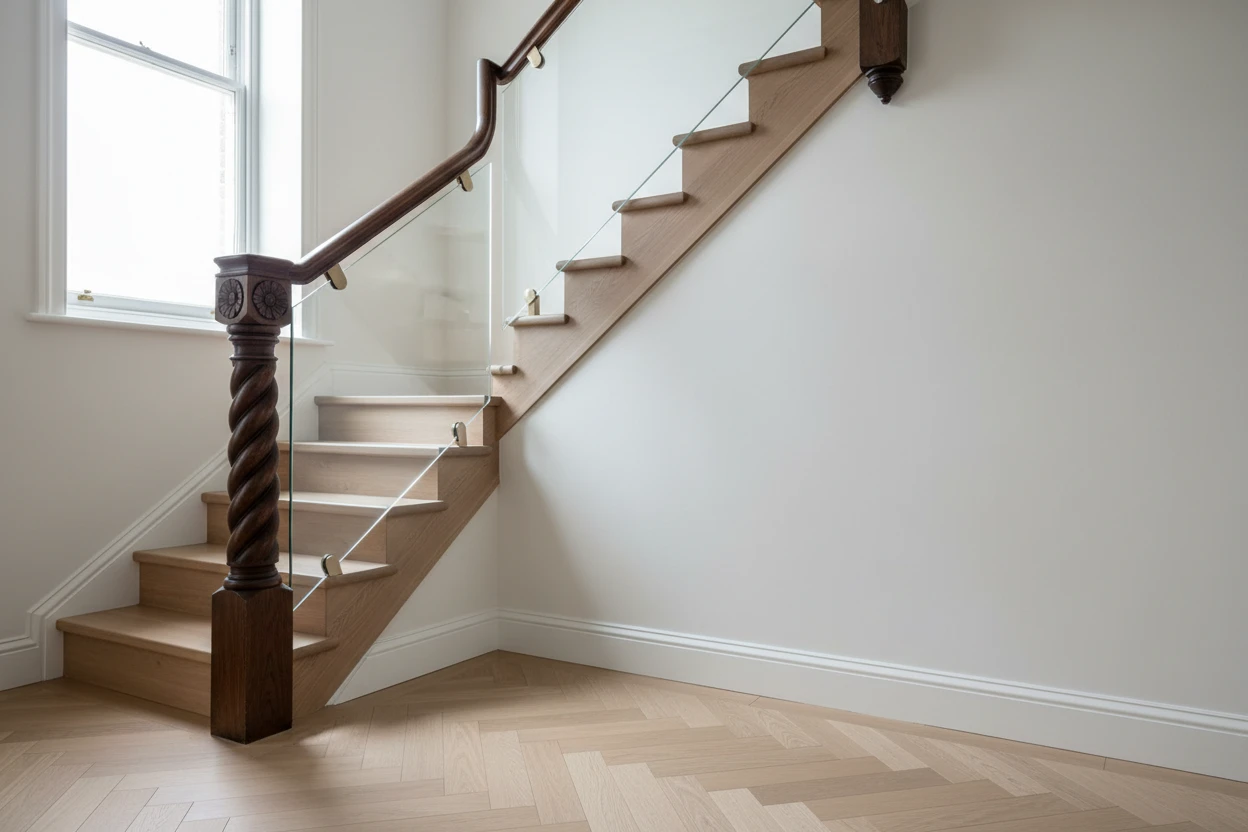
In London and Surrey renovations, I use floor transitions to signal a change in zone. Moving from traditional limestone to a rich herringbone wood naturally defines a dining area or a reading nook without the need for walls. It’s about creating a home that flows intuitively – where a morning coffee in the kitchen feels connected to the life happening in the living room, yet each space retains its own distinct soul.
The Human Element
Beyond the blueprints and the fabric swatches, there is the human side of a renovation. It’s about the feeling of stepping onto a heated herringbone floor on a cold morning or the way a navy shelf perfectly frames a collection of well-loved books. A renovation is successful when it stops feeling like a “project” and starts feeling like a legacy.
Author Bio: Paula Morrison, Interior Designer, Paula Morrison Interiors Ltd