


Three Lessons I Learned About Building Application Security Programs That Developers Actually Use
Authored by: Udaya Bhaskar Vemuri
Application security has become an important part of modern software development. Most organizations understand that security matters, but many still struggle to make it a natural part of the development process.
Too often, security is treated as the final step before an application goes live. By then, fixing problems is usually more expensive and takes more time. This can create frustration for developers and make security teams appear to be slowing down delivery.
Based on my experience working with application security and DevSecOps programs, I have learned that successful programs are not built by adding more tools alone. They are built by making security practical, collaborative, and easy for development teams to follow.
Here are three lessons that can help organizations build security programs that developers use.
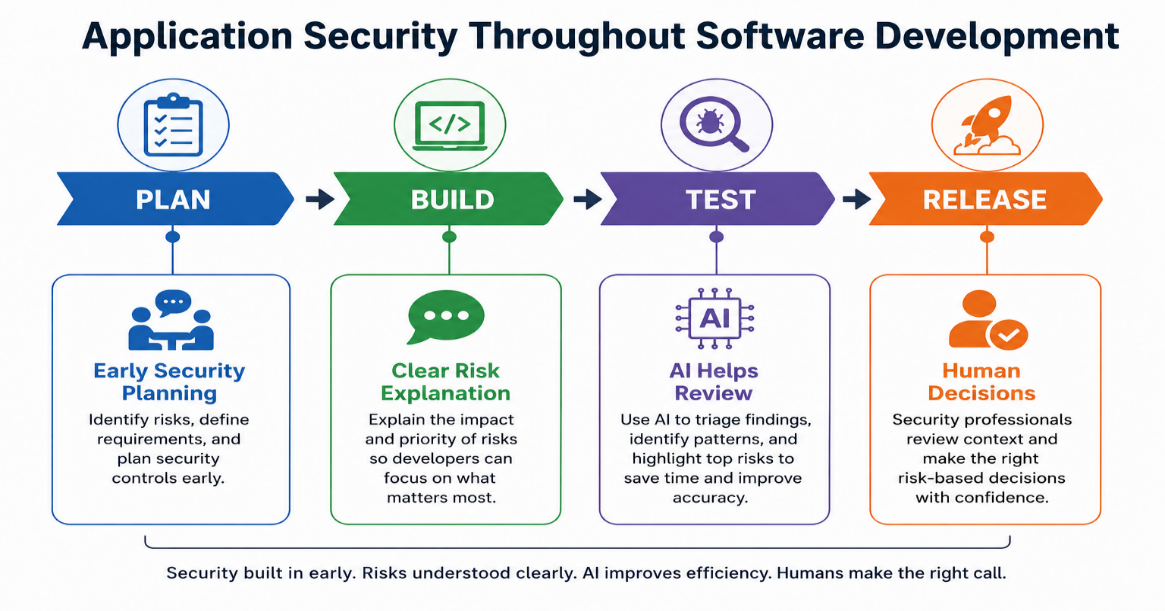
Building security in every stage of software development helps teams identify risks early, communicate them clearly and make informed release decisions.
1. Start Security Conversations Early
One of the most effective improvements an organization can make is to discuss security before development begins.
Security scanning tools are very good at finding problems with software after they have been built. However, they cannot always identify risks created when an application is designed or how it is expected to be used.
An early security planning discussion can help teams identify these issues before they become difficult or expensive to fix. Many organizations call this a secure design review. OWASP’s threat modeling guidance describes this as a structured way to identify potential threats and determine appropriate mitigations.
In my experience, early security discussions have helped teams identify cases where a new application was requesting access to more customer or business information than it needed. Reducing that access during the planning stage was much easier than redesigning the application after development was completed.
These discussions also helped teams decide how users should log in, what information required stronger protection, which systems the application truly needed to connect to and what security controls should be included.
The purpose was not to delay development. It was to help the team make safer decisions before building the application and avoid costly changes later.
2. Explain the Risk, Not Just the Finding
Developers receive information from many different tools every day. If security teams simply send a long list of security issues without explaining why they matter, important problems can easily be overlooked.
I have found that security conversations are much more productive when teams explain the possible business impact behind each issue.
Instead of saying, “This vulnerability must be fixed” it is more useful to explain how an attacker could take advantage of it. This issue may allow someone to access customer information, change important data, interrupt a business service or misuse an application feature.This gives developers the context they need to understand the urgency.
In my experience, I have seen security reports where two findings looked similar from a technical perspective but had very different business impacts. One affected a public-facing payment system, while the other involved a low-risk internal tool. The issue affecting the payment system required immediate attention, while the internal issue could be addressed through the normal development schedule.
Explaining that difference helped the development team focus on the most important risk first. It also built trust because the recommendation was based on business impact not just the severity shown by a security tool.
When developers understand why an issue matters and how it could affect the organization, they are more likely to act on the recommendation instead of viewing security as another compliance task.
3. Use AI to Support Security Teams, Not Replace Them
Artificial intelligence is already helping security teams work more efficiently.
AI can organize security reports, summarize technical information, group similar issues together, and highlight the items that deserve the most attention. It can also help prepare information for security reviews and reduce some of the repetitive work involved in vulnerability management.
This allows security professionals to spend more time on work that requires experience and judgment. However, AI should support security teams, not replace them.
AI may provide useful recommendations, but it does not fully understand every organization’s business priority, technical environment, legal obligations or level of risk. A recommendation that works for one company may not be appropriate for another. People still need to review the information, confirm the facts and make the final security decision.
In my experience, AI may classify a security issue as high risk based only on technical details. However, after reviewing the situation, a security professional may find that the affected feature is not available to the public, has additional protections, or will soon be retired. That business and technical context can change how urgently the issue should be addressed.
AI is most useful when it helps professionals review information faster while keeping experienced people responsible for the final decision.
Building Security That Teams Trust
A successful application security program should not be measured only by the number of scans completed or the number of issues reported. It should also be measured by how well security becomes part of everyday software development.
Organizations can improve their programs by involving security early, explaining risk clearly, and using AI carefully to improve efficiency. This approach is also consistent with the NIST Secure Software Development Framework which encourages organizations to integrate security practices throughout the software development lifecycle.
These steps can reduce costly rework, improve cooperation, and help teams build more secure applications from the beginning.
The goal is not to make development harder. The goal is to help teams build secure software from the beginning, so security becomes part of the process instead of a last-minute obstacle. The strongest application security programs are not the ones with the most tools; they are the ones that make secure development the easiest path for developers to follow.
About the Author: Udaya Bhaskar Vemuri is a Senior Application Security Analyst and DevSecOps professional with more than 13 years of experience helping organizations build secure software throughout the development lifecycle.
Note: These comments reflect the author’s personal professional views and do not represent the official position of his employer.