

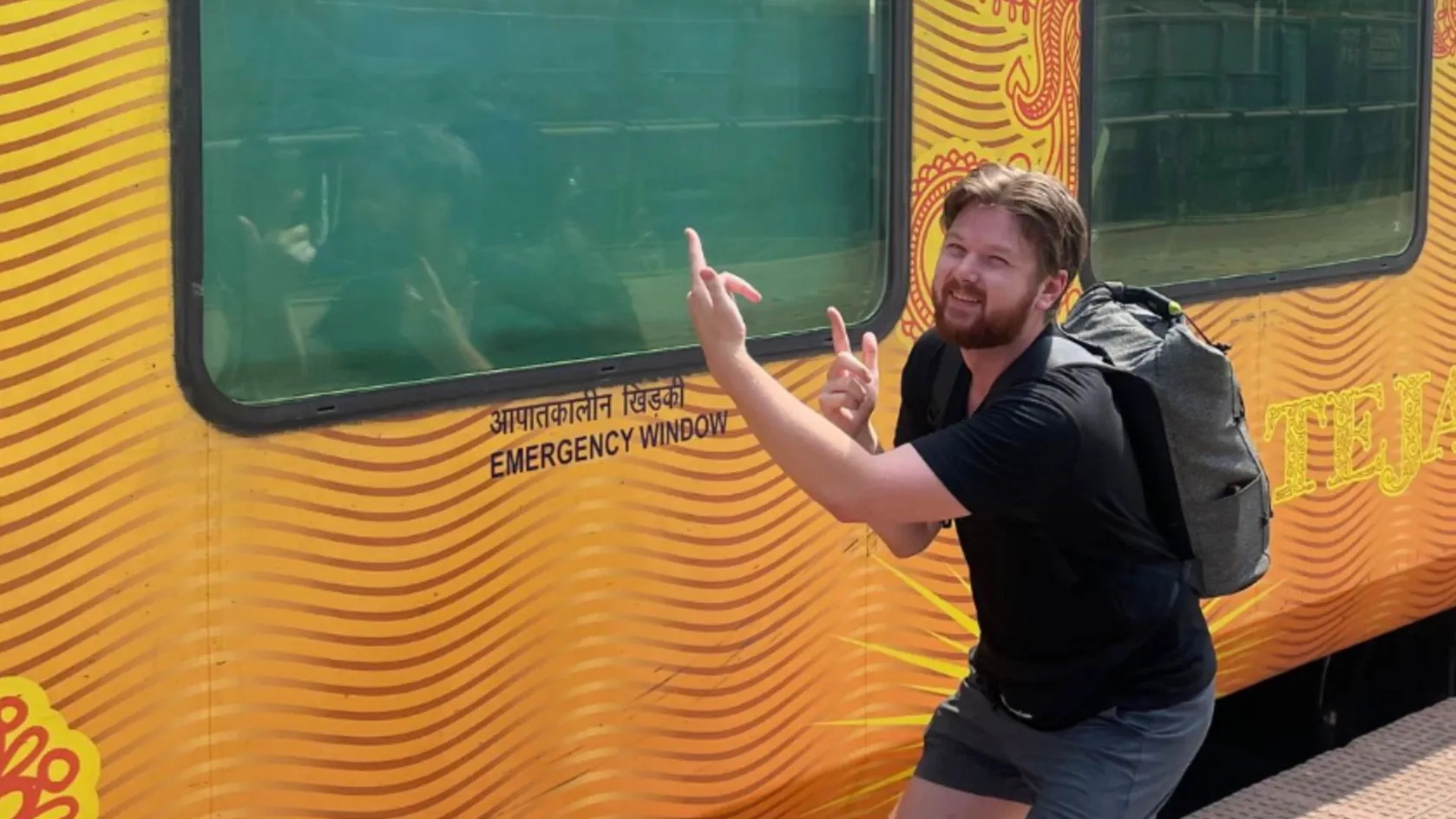
This interview is with Tor Rydder, Creator, Organizing.tv.
Tor, as a creator and founder of Organizing.TV who has traveled carry-on only since 2014, how do you introduce your philosophy on minimalist, efficient packing and travel organization?
Travel gives you freedom, but traveling light gives you real freedom.
After 12 years of carry-on travel, you need a lot less than you think. Most people pack for the trip they’re afraid of, not the trip they’re going on. Three pairs of jeans for a week of warm weather. A hairdryer for a country where every hotel has one. “Just in case” items for situations that almost never happen.
Minimalist packing isn’t about deprivation. It’s about not letting your stuff slow you down. When you can grab one bag and walk out the door, you can change plans, take the train instead of the cab, walk past the baggage carousel, and move through a trip instead of dragging it behind you. That’s freedom in the day-to-day, not just in theory.
The other side of it is using what you already have. Most people don’t need to buy new gear. They need to repack what’s already in their closet.
What path took you from frequent traveler to creator in this niche, and what turning point most shaped your current methods?
I was always a light traveler. That part wasn’t a transformation; it’s just how I packed.
What turned me into a creator was realizing how many people don’t know this is even an option.
I’d talk to people who were anxious about an upcoming trip—dragging two checked bags they didn’t need, stressed about airport rules they could look up in a minute—and it hit me that the problem wasn’t packing skill. It was that nobody had shown them what’s possible.
So I started making content to show them. What I want to show is that travel can be much easier than you think. Most of the stress people feel before a trip melts away the moment they’re moving.
The airport rules sound scarier than they are. The “what ifs” you packed for almost never happen. The freedom is on the other side of one bag and a little willingness to leave the rest behind.
There wasn’t one big turning point; it was just years of watching otherwise capable adults turn into stressed-out, overpacked versions of themselves at the check-in counter and wanting to show them there’s another way.
What does your personal-item organizer “control center” look like in practice, and how can readers replicate it step by step?
If you only learn one thing, learn to roll your clothes. That alone solves most packing problems before you buy a single accessory.
Beyond that, my “control center” is just 3-5 bags inside the bag:
- 1-3 compression cubes for clothes. Roll the clothes, group them by type, squeeze the cube down. You go from a chaotic pile to a flat rectangle.
- A good toiletry bag. A mesh or see-through one (for carry-on), with separate compartments so your liquids don’t end up next to your medicine, is nice.
- A tech bag. This is where I keep all my electronics, chargers, and cables, but also my passport, money, and anything valuable. Having one bag for everything that matters means you grab it when you leave the seat and you’re not opening five compartments at security.
That’s the whole control center. Most people just need to separate their clothes from their toiletries and they’re fine. Anything beyond that is usually overkill as a start—fancy modular this, multi-pocket that—all looks impressive and adds weight without adding much.
Less is more.
To replicate it, ROLL, GROUP, BAG:
- Roll the clothes, group them by type, and put them in a compression cube.
- Group your toiletries into one bag.
- Group your tech and valuables into one bag.
That’s the system.
You often say to pack non-clothing first; what exact sequence do you follow from empty bag to ready-to-fly?
Most people forget how much space everything outside their clothes takes up: toiletries, electronics, chargers, gifts, and souvenirs they haven ’t bought yet. If you pack clothes first, you re guaranteed to be fighting your zipper at the end.
Here’s the sequence from empty bag to ready-to-fly:
- Research the airline and the trip first: airline baggage rules, fare-class limits, weather at the destination, activities, and any dress code. Most of the success happens here—if you know the trip, packing becomes easy.
- Plan the clothing as a capsule: layers that work together, neutral colors that mix and match, and nothing that only goes with one outfit. Cover your bases without packing the whole closet.
- Sort everything else: toiletries in one pile; electronics, chargers, and valuables in another; documents and travel essentials in another.
- Pack the non-clothing first: your toiletry bag and tech bag go in before clothes. This way you know exactly how much space is left for clothing instead of finding out the hard way.
- Roll the clothes and fill the remaining space. Use compression cubes if you have them. Underpack on purpose—you can find pretty much anything you need anywhere in the world, but you often can t get rid of weight you re already packed.
- Weigh the bag before you leave. A bathroom scale works fine: step on it without the bag, then again holding it—the difference is your bag weight. Check it against your airline s limit; weight surprises at check-in are the most expensive surprises in travel.
That’s the full sequence. The packing itself is fast once the planning is done.
When planning a trip, how do you translate itinerary, climate, and activities into a compact capsule that reflects your “intention over emptiness” approach?
Intention starts before the suitcase. Most people pack based on what travel blogs and travel companies say they should do, not what they actually want to do.
That’s how you end up packing hiking gear for a trip you wanted to spend at a spa, or formal dinner outfits when you’d rather be eating at street food stalls.
So my first step is to ignore most of that and ask what excites me about the trip. If I love food, I plan around it. If I love adventure, I plan around it. If someone wants to spend their entire vacation in the hotel spa, that’s still a trip. There’s no universal “right way” to travel.
Once you know what you want from the trip, the capsule almost packs itself. Climate sets your fabric type and thickness choices.
The activities you’ve chosen set your specific items. A food-focused trip needs comfortable walking shoes, breathable layers, and outfits you can sit in at a long dinner. An adventure trip needs technical layers and items that dry fast. A spa trip may need two outfits and a swimsuit.
How do you decide between pouches, packing cubes, and compression for different categories so organization improves without adding bulk?
For most categories, compression cubes are the answer. Standard packing cubes keep things organized, but they don’t save any real space. Pouches are fine for smaller groupings, but they can’t compress a stack of clothes.
I combine compression cubes with compression folds, which already squeeze a lot of air out before the cube even closes. Roll your shirts tightly, stack them, then compress. You can fit close to twice as many clothes in the same volume.
Where I still use pouches:
- Cables and chargers
- Small tech accessories
- Medications
- Anything that doesn’t compress and that you want to find quickly
Those items don’t need cubes; they just need to be grouped.
Anything works. But if you want to stop fighting your bag: compression cubes for clothes and pouches for everything small and rigid. That’s the optimized version.
Which sustainable travel practices—across gear choices, laundry, and in-destination habits—have actually stuck for you because they save space or reduce waste?
The 80/20 of sustainable travel is using what you already have and packing light. Most “sustainable travel” advice tells you to buy more stuff: a sustainable backpack, eco-friendly toiletries, the right reusable everything. Buying a new “sustainable” product still produces a product. The more sustainable move is to not buy it.
For laundry, I use detergent sheets and wash in the sink for small loads. They take almost no space, and you can wash one to ten pieces at a time. For bigger loads, a hotel or local laundromat is usually more efficient in water and energy use than multiple rounds of sink washing. I match the method to the load, not the ideology.
For in-destination habits, I do as the locals do when possible. Eat where they eat. Take the transport they take. Tourist routes tend to be packaged, overpriced, and wasteful, and locals already figured out the efficient version of the city.
The biggest sustainability wins come from three places:
- Not buying gear you don’t need
- Packing light enough that you’re not adding extra fuel burn to your flight
- Leaving the destination roughly the way you found it
Mostly everything else is just decoration.
For a 7–10 day international trip with one carry-on and a personal item, what is your go-to one-bag blueprint (item counts and a 10-minute pre-flight checklist) that readers can copy?
For a 7–10-day international trip, I don’t bother washing clothes. The math is simpler if you just pack enough for every day.
The clothing blueprint:
- 10 pairs of underwear
- 10 pairs of socks
- 4–5 t-shirts
- 2–3 long-sleeves (one can be a layer for cooler evenings)
- 2 pairs of pants, or 1 pant + 1 shorts depending on season
- a light jacket or rain shell depending on the climate
- Sleepwear, or a t-shirt and shorts you don’t wear out
- 2 pairs of shoes max: walking shoes on your feet, plus one secondary pair if needed
The biggest mistake on a 7–10-day trip with a carry-on is filling space just because it’s there. Shoes are the worst offender. Three pairs of shoes eat up real estate fast and you only ever wear two of them.
Personal item carries the tech bag (electronics, chargers, valuables, passport, money), the toiletry bag, and anything you need in flight (book, headphones, snacks, neck gaiter). That’s it.
10-minute pre-flight checklist:
- Phone, charger, power bank, in the tech bag.
- Passport and any printed documents, same place.
- Wallet, cards, cash, same place.
- Medications in the carry-on bag, not buried where they could get separated or lost from you.
- You can consider one full outfit accessible in the personal item, in case the carry-on goes missing.
- Bag weighed and under the airline limit, with a margin.
- Liquids in a quart-sized bag, easy to pull out at security.
- House keys, parking ticket, anything you need on arrival.
That’s the whole system.
Thanks for sharing your knowledge and expertise. Is there anything else you'd like to add?
One thing I’d add: anywhere you go in the world, people are generally nice, and they have the same basic needs as you do. They have toothpaste, socks, chargers, and t-shirts. If you forget something or run out of something, it’s almost never a real problem. You can buy it, borrow it, or live without it.
That’s the part most people miss when they’re packing. They imagine the destination as a place where nothing works the way it does at home, so they pack for every conceivable scenario.
The reality is that the world is full of pharmacies, shops, laundromats, and helpful strangers. Not packing the eighth t-shirt isn’t the disaster your brain tells you it is.
So don’t be afraid to go light. The freedom on the other side is worth more than the imagined safety of overpacking.
If you want a starting point, I put together a free cheat sheet with my 9 favorite space-saving packing tricks that you can check out next.
Safe travels!