

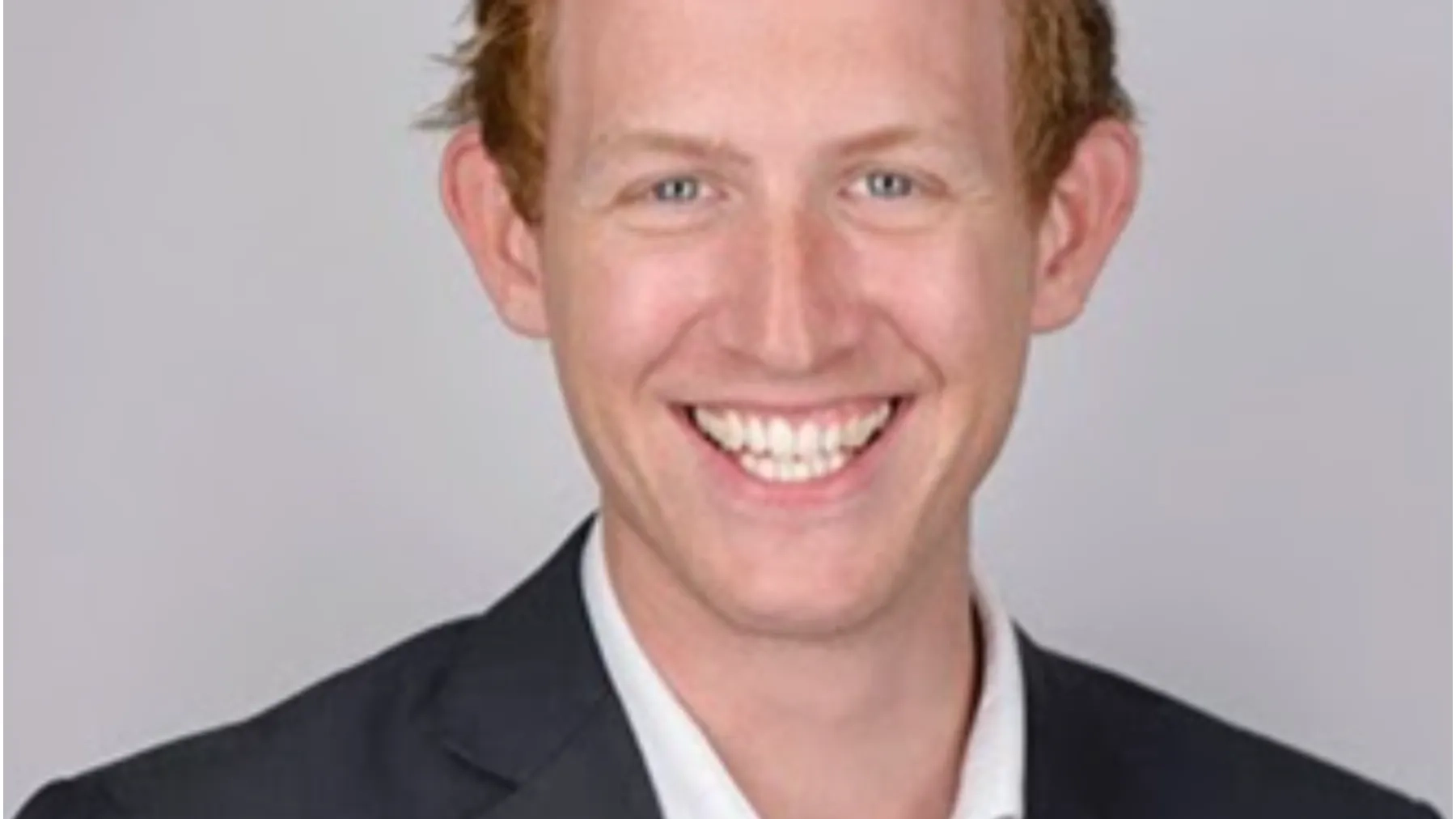
This interview is with Tom Parling, CEO, growthvibe.
Tom, for Connectively.us readers, how do you describe your role as CEO of growthvibe in the internet industry?
I think of myself as a founder first rather than a CEO. At growthvibe, that means staying close to the work, the clients, and the strategy, which allows me to lead directly from the front line.
My role is to understand how AI platforms like ChatGPT, Perplexity, and Google AI Overviews decide which brands to surface, and to build the conditions that put our clients in that conversation.
The internet is being rebuilt right now, and most businesses have yet to realize how much their search visibility has already changed. My job is to ensure the companies I work with stay ahead of that curve, securing their place at the forefront before the full impact becomes obvious to everyone else.
What pivotal experience moved you from leading Ocere to building an AI-focused practice at growthvibe?
Around 2020, I started noticing that the search landscape was changing in ways that felt structurally different from previous Google updates. AI was beginning to influence how information was surfaced. I could see that the businesses winning in search five years out would need a completely different playbook than the one that had worked for the previous decade.
Selling Ocere to JVWEB gave me a clean slate to build something designed from scratch for that future rather than retrofitting an existing agency around it. growthvibe was founded specifically to solve the problem I saw coming. Brands are becoming invisible as AI answer engines replace the traditional search results they’ve spent years optimizing for.
Starting fresh meant I could build the methodology, the service model, and the client approach around how AI search works.
Drawing on your SEO, link-building, and AI background, what single lever has most reliably improved Brandvisibility for your clients in answer engines like ChatGPT and Perplexityai?
The single most effective way to improve your visibility is through entity clarity. This means ensuring AI platforms have a clear, consistent, and well-supported understanding of who your brand is, what you do, and why you deserve to be cited. When your brand’s information is confusing or contradicts itself across different sources, AI engines lose confidence and stop including you in their answers.
The actual work behind this involves aligning your structured data, third-party mentions, and website content so they all tell the exact same story. Key elements include:
- Structured data on your website
- Third-party mentions and citations
- Consistent website content and messaging
Fixing these discrepancies and building outward from a strong foundation produces the most significant and lasting results. This cleanup process creates a trustworthy digital footprint that AI models can easily verify and recommend.
In your work, how do you operationalize Brandcited (brand citations) as a signal for LLM answers?
Brand citations in AI answers depend on how often and how consistently trusted websites mention a brand. At growthvibe, I track this by running regular AI Mention Rate audits across ChatGPT, Perplexity, and Google AI Overviews to see exactly where and how a business appears.
We focus on mapping out the topics a brand already owns and finding the areas it should be winning. From there, we build the right content and signals across the web to claim those missing spots.
When collaborating with publishers or digital PR partners, what kind of pitch has most consistently earned brand mentions that LLMs actually cite?
The pitches that earn citations AI platforms actually pick up are the ones built around a specific claim that a journalist or publisher can attribute directly to a named expert. Generic thought leadership gets ignored. A sharp, quotable insight tied to a real trend, backed by a credible source, is what earns the kind of third-party mention that AI systems treat as authoritative.
At growthvibe, the most effective digital PR work follows that same principle. It relies on a clear point of view, a named expert, and placement in a publication that AI engines already trust as a source. The attribution chain matters as much as the mention itself.
Shifting to owned content, what does an Ainative content architecture look like when your goal is to be quoted in AI answers?
AI-native content architecture starts with structuring every piece of content around a specific question instead of a broad topic. AI models look for information in much the same way a human researcher does. They search for the clearest and most direct answer to a query from a source they already trust.
This means each page or article should completely own one specific question. You should place a direct answer in the opening paragraph, provide supporting evidence in the body, and include structured markup underneath so the engine reads it perfectly.
I build content frameworks around the exact queries growthvibe’s clients want to win in AI answers. I then design the surrounding entity signals and third-party coverage to back those answers up. This creates the exact kind of proof that makes an AI model confident enough to cite your brand.
For Chatgptvisibility, which leading indicators do you monitor weekly to validate progress before traffic or revenue move?
The indicators I watch weekly are:
- AI mention rate across target query categories
- Consistency of brand entity references across ChatGPT, Perplexity, and Google AI Overviews
- Volume and quality of new third-party citations earned that week
Traffic and revenue lag these signals by weeks, sometimes months, so watching citation momentum and mention frequency early tells me whether the strategy is building in the right direction before the downstream numbers catch up.
Can you share a recent Perplexityai win from your own campaigns and what you changed to earn inclusion or attribution?
One of our biggest wins was with a B2B SaaS client. Despite having great traditional SEO rankings, they were completely missing from Perplexity’s answers in their category.
We gained them a spot in those answers by taking three specific steps, in sequence:
- We cleaned up their brand data across Wikidata and website schema markup.
- We secured three targeted feature articles in publications that Perplexity regularly uses as sources.
- We rewrote their main service pages to focus on specific questions instead of broad descriptions of what they do.
Within six weeks of making these updates, the brand started showing up naturally in category searches where they used to be completely invisible.
Looking 12 months ahead, how will you allocate effort between classic SEO and Answer Engine Optimization to maximize Brandvisibility?
The breakdown I’m aiming for over the next 12 months is roughly 30% traditional SEO and 70% AEO. This ratio reflects where client visibility is actually being won and lost right now. Traditional SEO still matters for building a strong foundation, earning backlink authority, and maintaining technical health. Those elements feed directly into how much AI engines trust a site, so walking away from SEO completely would be a mistake.
However, the extra return on pure SEO effort is shrinking compared to what you get from entity optimization, building citation authority, and creating AI-native content. The businesses that treat AEO as a vital layer sitting on top of SEO are the ones building the most lasting visibility across both traditional search and AI engines at the same time.
Thanks for sharing your knowledge and expertise. Is there anything else you'd like to add?
The one thing I want to leave you with is this: the window to gain an early advantage in AEO is open right now, but it won’t stay open long.
Businesses investing in AI search visibility today are building trust and authority that multiply over time. This is exactly how early SEO adopters dominated their industries for years before everyone else caught up.
Waiting too long means becoming invisible. By the time most businesses realize they need to act, the gap will already be incredibly hard to close.