

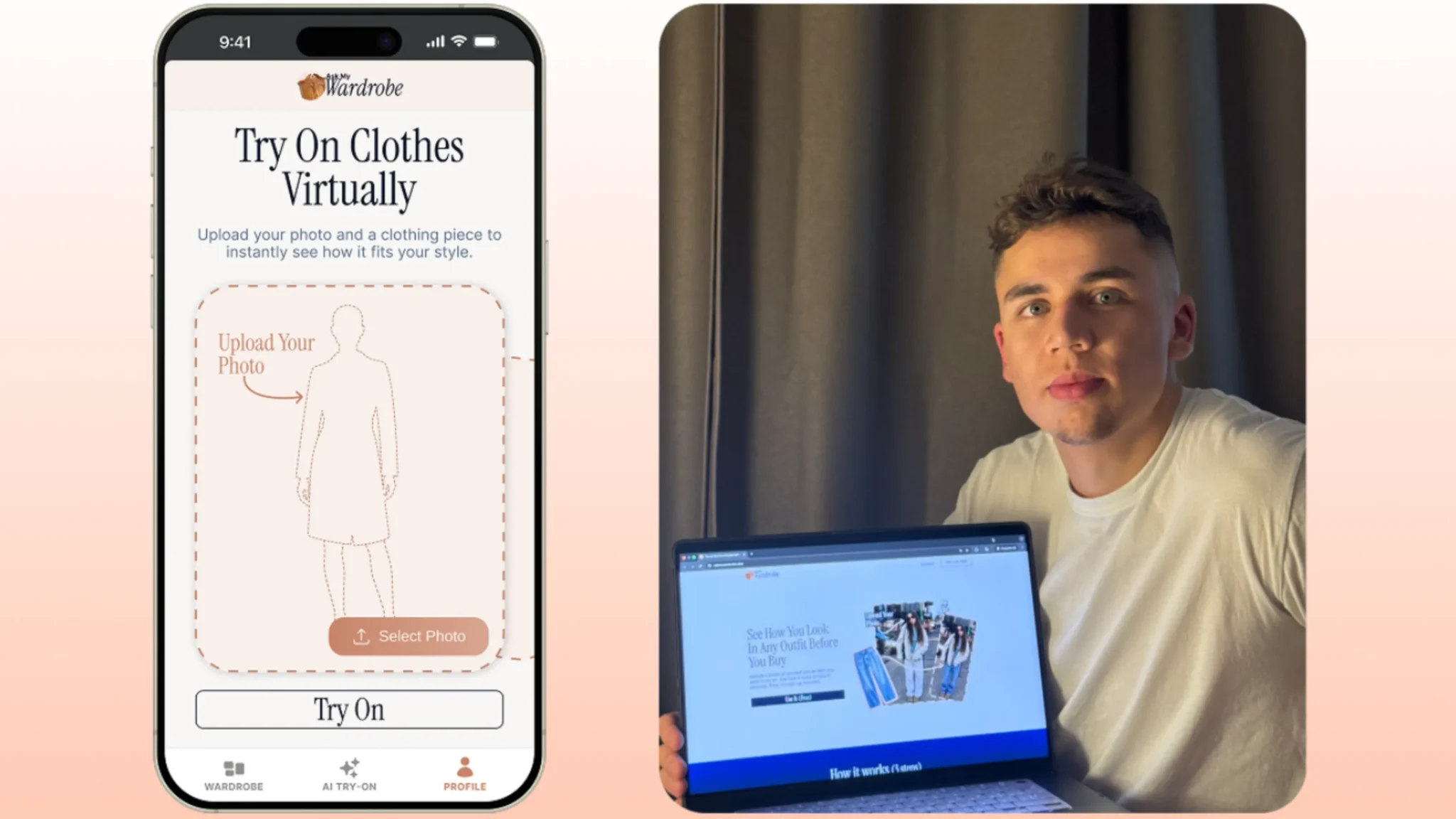
This interview is with Sarunas Rodriguez, Founder, Ask My Wardrobe.
As the founder of Ask My Wardrobe, how do you describe your role and the specific problem in virtual try-on and virtual wardrobes that you set out to solve for shoppers and brands?
As the founder of Ask My Wardrobe, my role is to identify pain points and create effective solutions.
I have identified two key problems:
-
For shoppers: They often feel unsure when buying clothes online. It is hard for them to see how items will look or fit. This uncertainty makes them delay or abandon their purchases.
-
For e-commerce brands: The lack of customer confidence reduces sales. When shoppers do not buy, brands waste ad spend. Lack of confidence also increases return rates. Each return costs brands money in logistics, refunds, and handling.
By addressing these issues, we help shoppers feel more confident, while brands reduce returns and wasted ad spend.
What pivotal experiences or turning points led you from the initial idea to launching Ask My Wardrobe in the virtual fitting space?
This whole idea started when I went shopping with a close friend. She often spends hours looking for clothes but never really chooses anything because she’s not sure whether it matches her current wardrobe.
The problem is you can’t bring your entire wardrobe to a store and try everything on, and online shopping doesn’t let you visualize how new items would look with the clothes you already own. So you’re left either trying to coordinate outfits in the store or just guessing online.
That’s exactly the gap that Ask My Wardrobe fills.
It lets you take photos of yourself in the outfits you already own and mix and match them with new pieces you’re thinking of buying.
That way, you make more confident fashion decisions without wasting time or money.
From hands-on testing with real users, which single factor most increases shopper trust in virtual try-on, with one low-effort change teams can make to boost it?
This sounds pretty obvious, but it’s really important to only swap the clothes.
Keep the facial structure, background, and skin color exactly the same.
The virtual try-on should only change the clothes and make them fit the person perfectly.
The face, body, and measurements must stay the same so the focus remains on the clothes. This has a big impact on trust and understanding.
Building on trust, how did you design proxy try-on for buying clothes for someone else (like your Father’s Day example) to reduce uncertainty and returns?
It is very important to keep the facial features, skin tone, structure, and body measurements the same. When using proxy try-on, this builds trust because it keeps everything consistent.
Proxy try-on is especially important when you’re buying clothes for someone else. For example, if you’re giving a gift, like for Father’s Day, you don’t want the person to see how they look until the gift is ready.
By using Ask My Wardrobe, you reduce uncertainty and returns. This gives shoppers confidence when they buy clothes for others.
As you built the virtual wardrobe flow, what onboarding steps and photo guidance proved most effective for high-quality uploads and repeat engagement?
We keep the process very simple, so users get results fast.
We ask them to upload just one full-body photo in which their face and body type are clearly visible. Then they upload a photo of the product. With these two photos, the process takes less than 30 seconds.
Speed is essential because users want to see themselves in the clothes right away.
They don’t need a perfect studio shot; they just want a quick way to visualize the fit.
In production, which constraint—pose variation, fabric physics, or size mapping—has been hardest to get right, and what pragmatic workaround kept performance acceptable early on?
By focusing on prompt engineering, we ensured that even if the input photo was lower quality, the AI still generated a realistic fit.
This balanced usability and accuracy. As a result, we maintained good performance early on and had a foundation to improve the size mapping over time.
When requesting virtual photos, how do you operationalize privacy, consent, and fairness across body types and skin tones to earn user trust?
We are fully transparent about how we handle user photos—only using them for the virtual try-on, never for biometric purposes or model training.
Consent is built in by requiring users to agree before uploading; we give them full control, and they can delete their data at any time. We also ensure fairness by testing across diverse body types and skin tones so everyone is represented and treated equally.