

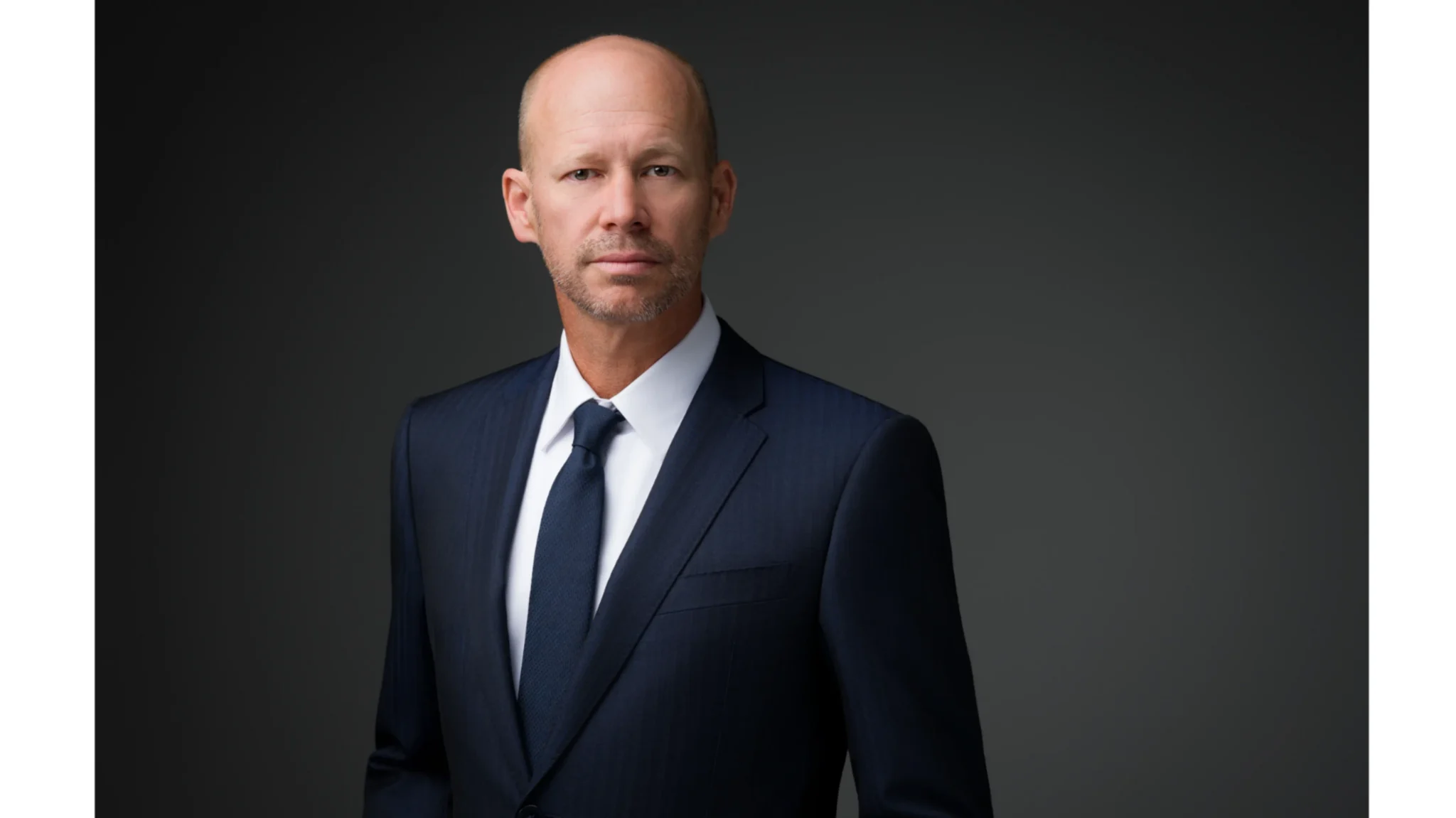
This interview is with Mark Huntley, CEO, Citeworks Studio.
To start, please introduce yourself and describe how SEO, analytics, and growth fit into your role as CEO in the facilities services industry.
Based on the career history and positioning you shared, here is a publication-ready response that connects your facilities-services experience to the broader CiteWorks Studio narrative.
I’m the founder and CEO of CiteWorks Studio, where we help companies become more discoverable, credible, and commercially persuasive across Google, AI-generated answers, publisher ecosystems, YouTube, social platforms, and high-trust communities.
My connection to the facilities services industry began at Citywide Building Maintenance, where I led marketing and digital growth across a business that involved senior leadership, franchise owners, local operators, commercial customers, vendors, and regional markets. That experience taught me that growth in facilities services is not simply a matter of generating more leads. Marketing has to reflect service capacity, geographic coverage, customer expectations, sales follow-up, operational consistency, and the economics of recurring commercial relationships.
As a CEO, I view SEO, analytics, and growth as parts of the same operating system. SEO helps us understand how buyers describe their needs and where demand is forming. Analytics shows us which channels, markets, messages, and customer segments are producing qualified opportunities. Growth strategy connects those insights to revenue, staffing, service delivery, retention, and profitability.
That perspective has become even more important as discovery shifts beyond traditional search. Facilities decision-makers are increasingly using Google, ChatGPT, Gemini, Perplexity, reviews, videos, and third-party sources to evaluate providers before contacting them. A company may deliver excellent service, but if search engines and AI systems cannot clearly understand its capabilities, geographic relevance, reputation, and evidence of performance, it can be excluded from consideration before a sales conversation ever begins.
My role is therefore not to treat SEO as a standalone marketing tactic. It is to build a measurable discovery and authority system that helps the right customers find the company, understand why it is credible, and move confidently toward a buying decision. The objective is not traffic for its own sake. It is sustainable, operationally aligned growth.
Looking back, what pivotal decision most influenced your journey from sales and operations to leading a data-driven growth program and launching an AI-powered studio?
The pivotal decision was to stop treating marketing as a standalone function and begin treating growth as an operating system.
Earlier in my career, I worked across sales, operations, legal, and business ownership. That gave me a practical understanding of how revenue is actually created: positioning matters, but so do capacity, process, customer experience, financial discipline, and execution. When I moved deeper into digital growth, I realized that SEO, content, analytics, development, and conversion could not be managed in separate silos. They had to be connected to the economics and operating realities of the business.
That decision changed the trajectory of my career. I began building programs where search demand informed strategy, analytics guided investment, developers automated workflows, and teams were measured against commercial outcomes rather than activity. In later leadership roles, that approach helped me oversee large publishing and affiliate operations, manage multidisciplinary global teams, reduce production costs, expand capacity, and drive significant revenue growth.
Launching CiteWorks Studio was the natural extension of that philosophy. AI has changed how buyers discover, compare, and select companies, but the underlying challenge remains the same: businesses need a coordinated system that connects market evidence, content, technology, data, and distribution. CiteWorks was built to help brands become easier for both people and AI systems to understand, trust, cite, and recommend.
The real shift was not from sales to marketing or from operations to AI; it was from managing individual functions to designing integrated systems that create durable growth.
Within facilities services, what SEO play has consistently moved revenue, not just rankings, in your experience?
The SEO play that consistently moved revenue was a service-by-market strategy built around high-intent commercial demand.
In facilities services, broad traffic is rarely the goal. The valuable searches are specific: a defined service, in a defined geography, from a buyer who is actively evaluating providers. We built pages and supporting content around those combinations—such as a particular maintenance need, property type, or service area—and made sure each page answered the questions that matter during vendor selection.
The important part was not simply creating location pages. Each market had to reflect actual operating capacity, service coverage, customer requirements, proof of performance, and a clear path to conversion. We also aligned the content with sales follow-up, call tracking, form quality, lead source, close rate, and account value.
That changed SEO from a rankings exercise into a demand-capture system.
The strongest results came when we prioritized keywords and markets based on commercial value rather than search volume alone. A lower-volume query from a facilities director looking for a specific service in an active territory was often worth far more than a high-volume informational term.
The same principle applies today in AI discovery. Search engines and AI platforms need clear, consistent evidence about what a company does, where it operates, who it serves, and why it should be trusted.
When that information is structured across the company’s website, reviews, citations, publisher content, videos, and other credible sources, the brand is more likely to be surfaced during high-intent evaluation.
The play was simple in concept: own the most commercially important questions in the markets the business could serve well, measure the entire path from discovery to closed revenue, and invest where operational capability and buyer demand were strongest.
Building on that, what specific step did you take to increase your brand’s visibility inside AI assistants’ shortlists?
The specific step was to stop optimizing only for branded search and start mapping the actual comparison prompts buyers use in AI assistants.
We identified questions such as:
- “best facilities service providers”
- “top commercial maintenance companies”
- “alternatives to [competitor]”
- “which provider is most reliable for a specific property type or market”
Then we reviewed which companies were being recommended, which sources were being cited, and what evidence appeared to influence those shortlists.
From there, we strengthened the brand’s presence across the sources AI systems were already relying on—credible articles, reviews, industry citations, YouTube, community discussions, and clearly structured first-party content. The goal was not to manufacture mentions. It was to create a consistent body of verifiable evidence about what the company did, where it operated, who it served, and why it was credible.
That made the brand easier for AI systems to interpret as a legitimate candidate during comparison and recommendation queries.
The key insight was that AI visibility is rarely won through one page or one channel. It comes from repeated, consistent market evidence across multiple trusted surfaces. Once that evidence is in place, we track recommendation share, citation sources, competitor inclusion, and brand framing to see whether the company is actually entering the shortlist—not merely appearing somewhere in the answer.
Tell us about a growth decision you changed after reviewing analytics.
One decision I changed was moving budget away from broad, traffic-oriented content and toward a smaller set of high-intent service and market opportunities.
The initial assumption was that more organic traffic would create more pipeline. But once we reviewed the full funnel—from search query and landing page through call quality, lead source, close rate, and account value—the data showed that some of our highest-traffic pages were contributing very little revenue. Meanwhile, lower-volume searches tied to a specific service, geography, or buyer need were producing far more qualified opportunities.
We changed the program accordingly. Instead of optimizing primarily for traffic growth, we prioritized the pages, markets, and content themes that were most closely connected to real buying intent. We also aligned those efforts with sales capacity and operational coverage so we were not generating demand in places the business could not serve effectively.
That decision improved more than marketing efficiency. It gave us a better model for allocating content, development, and sales resources around commercial value.
It also shaped how I approach AI visibility today. The same discipline applies: appearing in more AI answers is not automatically valuable. What matters is whether the brand is being surfaced in the right comparison, trust, and selection moments—and whether that visibility influences qualified demand, revenue, and market position.
How have you configured GA4, Search Console, Ahrefs, and your CRM to attribute leads from AI‑influenced discovery to closed revenue?
We configured the stack to measure AI-influenced discovery as a multi-touch journey rather than expecting one platform to provide a perfect source label.
In GA4, we created custom channel groupings for identifiable AI referrals, including traffic from platforms such as ChatGPT, Perplexity, Gemini, and Copilot. We also tracked:
- first landing page
- engaged sessions
- conversion events
- form submissions
- calls
- return visits
That allowed us to see which service pages, comparison content, and trust assets were attracting visitors from AI environments and whether those visitors progressed toward a commercial action.
Search Console provided the search-side context. We monitored changes in branded demand, comparison queries, problem-based searches, and the pages gaining visibility after the brand began appearing more frequently across third-party sources and AI-generated answers. Search Console cannot tell us that an AI assistant caused a particular search, but it can reveal the downstream behavior AI exposure often creates, such as an increase in branded searches or direct searches for a company alongside a competitor.
Ahrefs was used to monitor the external evidence layer, including:
- new referring domains
- unlinked brand mentions
- citation growth
- competitor source patterns
- third-party pages ranking for commercially important questions
The CRM connected those signals to revenue. We captured:
- original source
- latest source
- landing page
- referrer
- UTM values
- lead type
- service interest
- market
- opportunity stage
- expected value
- closed revenue
We also added a self-reported attribution field asking prospects how they first heard about the company. That field is especially important because some AI-assisted journeys appear as direct traffic, branded search, or unattributed visits after the buyer has already conducted research elsewhere.
We then reported on:
- identifiable AI referrals
- AI-assisted conversions
- branded-search lift
- opportunity creation
- close rate
- sales cycle
- revenue by source and content entry point
The goal was not to force every lead into a single channel. It was to build enough first-party and third-party evidence to understand whether AI visibility was influencing consideration, generating qualified pipeline, and contributing to closed revenue.
What decision framework do you use when speed, quality, and cost are in tension across SEO, content, and operations?
I use a simple framework: protect the outcome, identify the constraint, and spend precision where mistakes are most expensive.
Speed, quality, and cost are rarely optimized equally. The right balance depends on the commercial value of the work, the risk of getting it wrong, and whether the process can be improved through systems, automation, or better decision-making.
For SEO, GEO, AEO, and AI SEO, I first ask where the work sits in the buyer journey. A high-intent comparison page, an executive point of view, or a source likely to influence an AI-generated recommendation requires a higher standard of research, accuracy, and editorial control than a low-risk supporting asset. The closer the content is to trust, consideration, or revenue, the less willing I am to trade quality for speed.
I then separate work into three categories: work that requires expert judgment, work that can be systematized, and work that can be automated. Strategic positioning, source validation, prompt analysis, competitive interpretation, and final quality control remain human-led. Research collection, data normalization, content briefs, reporting, and repeatable production steps can often be accelerated with AI and automation.
Cost is evaluated against expected commercial impact, not simply production expense. A cheaper asset that fails to rank, earn citations, influence AI answers, or move a buyer forward is not efficient. At the same time, premium effort should not be applied uniformly. We reserve the highest investment for the pages, prompts, markets, and evidence assets most likely to affect visibility, recommendation share, pipeline, or revenue.
The final decision comes down to reversibility. If an error is easy to detect and correct, we move quickly, test, and iterate. If the work could damage trust, create factual inconsistency, or weaken how search engines and AI systems understand the brand, we slow down and apply stronger controls.
The objective is not maximum speed, maximum quality, or minimum cost in isolation. It is the fastest reliable path to a commercially meaningful result.
From your experience running CiteWorks Studios, what process lets you turn subject‑matter expertise into scalable, high‑quality content without bloating budgets?
The process is built around separating expertise from production.
Subject-matter experts should not be asked to write every article from scratch. Their highest-value contribution is judgment: identifying what buyers misunderstand, which claims require nuance, what evidence matters, and where competitors oversimplify the issue. We capture that expertise through structured interviews, recorded conversations, internal documents, client data, and targeted review sessions.
From there, we convert the raw knowledge into a reusable content system. That includes topic frameworks, prompt clusters, source libraries, approved claims, entity relationships, examples, editorial standards, and templates for different formats. One expert session can then support multiple outputs across articles, comparison pages, FAQs, executive commentary, video scripts, social content, and citation-focused assets.
AI and automation handle the repetitive parts: transcript processing, research organization, brief creation, content structuring, data normalization, and versioning. Human specialists remain responsible for strategic direction, factual validation, positioning, editing, and final approval.
That distinction is what prevents budgets from expanding linearly with output. We do not use AI to replace expertise; we use it to reduce the cost of moving expertise through the production system.
At CiteWorks Studios, the workflow is supported by a multidisciplinary team that includes full-stack developers, data scientists, analysts, SEO and GEO specialists, editors, designers, project managers, and account leaders. Our COO, a computer science major, also helps oversee the automation and systems architecture behind delivery. That technical depth allows us to build internal workflows rather than relying entirely on manual production.
The result is a human-in-the-loop model that can scale without lowering standards. We have used this approach to increase production capacity by as much as 20x in fewer than 60 days while maintaining stronger quality controls.
The real efficiency comes from using experts only where expert judgment is necessary, automating repeatable work, and creating assets that can influence search rankings, AEO results, GEO visibility, AI citations, and buyer trust across multiple channels.
If you could run only one experiment over the next 12 months to prepare for AI search’s impact on service businesses, what would you test?
I would test whether deliberately improving a service business’s evidence footprint changes how often it is cited, compared, and recommended by AI systems—and whether that visibility produces measurable pipeline.
The experiment would begin with a fixed set of high-intent prompts across ChatGPT, Gemini, Perplexity, Copilot, and Google AI experiences. These would include questions such as “best provider,” “top companies near me,” “alternatives to,” “most reliable for,” and use-case-specific searches tied to a particular service, customer type, and market.
We would establish a baseline for recommendation share, citation sources, competitor inclusion, brand framing, and answer quality. Then we would select a limited number of markets and build a coordinated evidence program around them: stronger first-party service pages, clearer entity and location signals, expert-led content, customer proof, reviews, YouTube assets, credible publisher coverage, and participation in relevant communities.
A comparable group of markets would remain unchanged as a control.
Over 12 months, we would measure whether the treated markets gained more AI citations and shortlist appearances than the control group. More importantly, we would connect those changes to branded search, direct traffic, self-reported AI discovery, qualified opportunities, close rates, and closed revenue.
This is the experiment I would choose because service businesses do not need more speculation about AI search. They need evidence showing which signals actually influence recommendation systems, how long those changes take, and whether AI visibility creates commercial value.
The winning outcome would not simply be “we appeared in more answers.” It would be proof that a stronger, more consistent market evidence layer can move a company from being invisible to being considered—and from being considered to being chosen.
Thanks for sharing your knowledge and expertise. Is there anything else you'd like to add?
The broader point I would add is that AI search is creating a new layer of market infrastructure.
Brands will increasingly be evaluated not only by what they publish about themselves but by the consistency of the evidence surrounding them: who cites them, how customers describe them, which sources validate their claims, and whether AI systems can connect those signals into a credible recommendation.
At CiteWorks Studio, we are developing several frameworks around that shift:
-
Semantic and co-sign gap analysis. We examine how a brand is described across search, AI answers, publisher content, reviews, communities, and other trusted sources, then identify where the market lacks the language, corroboration, or third-party validation needed for the brand to be confidently understood and recommended.
-
Citation Architecture: the deliberate design of an evidence ecosystem around a company. That includes first-party expertise, authoritative third-party coverage, customer proof, reviews, videos, community discussions, structured data, and consistent entity signals. The objective is to create a body of evidence that both buyers and AI systems can verify.
-
We are also focused on UGCR—user-generated customer reviews—as a solutions-side asset. Reviews should do more than express satisfaction. When structured around the customer’s problem, the solution delivered, the use case, and the measurable outcome, they become highly valuable evidence for search engines, AI systems, and prospective buyers.
-
We are working toward indexing major industries with category-specific case studies and benchmarks. Companies need to know how often they are recommended, which competitors dominate AI shortlists, which sources influence those answers, and what level of citation and recommendation visibility is realistic within their market.
The companies that build this evidence layer early will have an advantage that is difficult to replicate. The future of discovery will not be determined only by who publishes the most content; it will be shaped by which brands are most clearly understood, independently validated, consistently cited, and confidently recommended.