

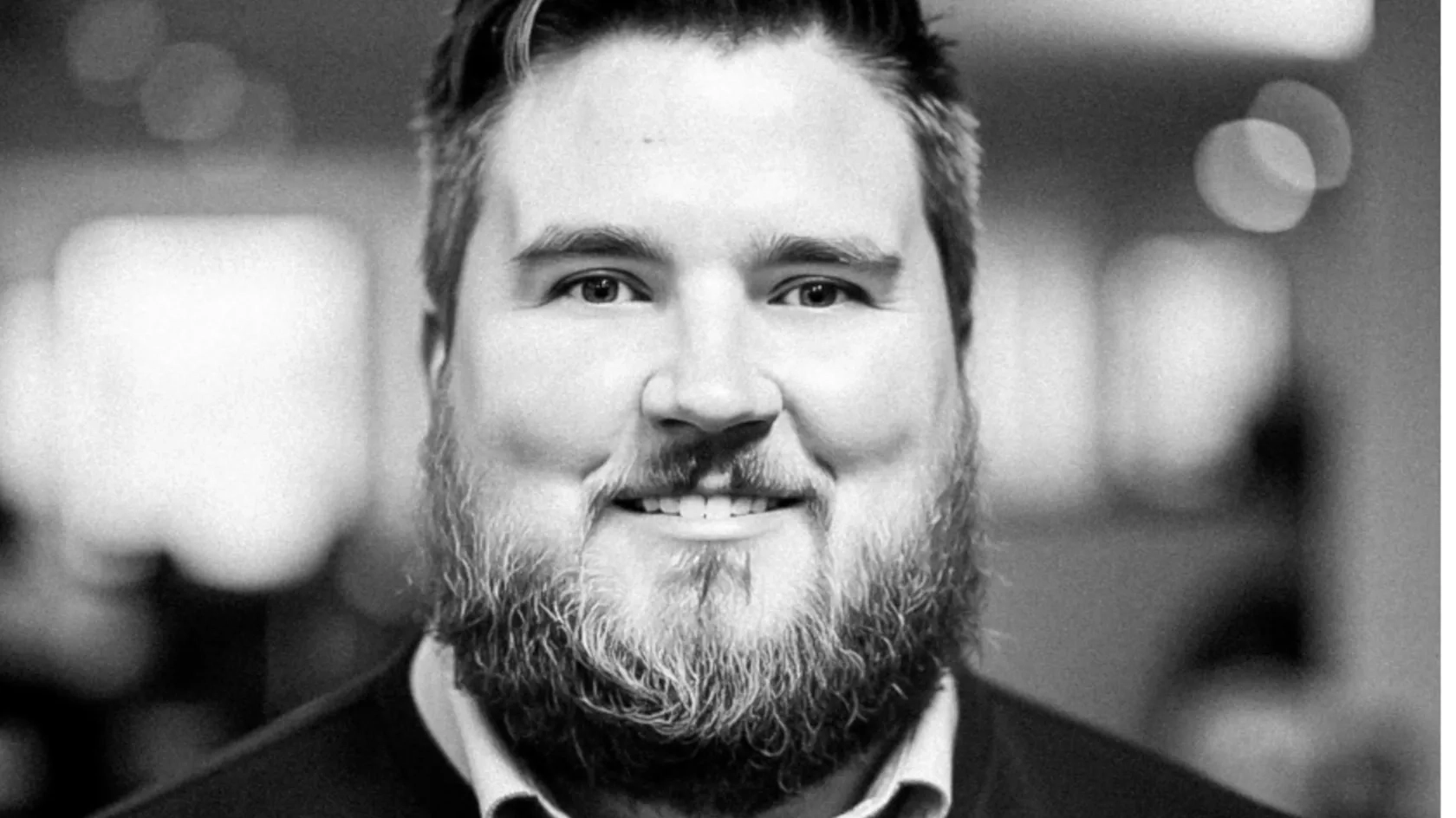
This interview is with Kyle Barron, Founder & Lead Strategist, Moon Vibes Media.
For Connectively readers, how do you introduce what you do as a Founder & Lead Strategist in marketing and advertising?
I’m a Founder and Lead Strategist in marketing and SEO, and here’s the simplest way I can put it: we help people who are already looking for the exact services or products a business offers actually find that business. That’s it. We make businesses visible to customers who need them right now. But here’s what matters more than the technical work: when someone trusts you with their business, they’re handing you something they’ve built with their own hands, their own risk, their own sleepless nights. I take that seriously. I grew up around self-made entrepreneurs and watched too many of them get burned by agencies that blamed Google updates or upsold instead of owning outcomes. So we built something different. We don’t wait for clients to tell us something is broken. We walk in the door already holding the answer and the plan. We tell you when something isn’t working before you do. That’s not a service feature. That’s embedded into who we are.
Most people in my space lead with metrics. I lead with accountability. The systematic approach matters, the analytics matter, but the why behind it matters more. You’re not paying for vanity metrics or reports that look impressive but don’t translate to real customers. You’re paying for local dominance, for showing up when someone searches for exactly what you offer. We don’t sell Google Ads as a Band-Aid. We build permanence. And when you’ve been burned before, when trust is already broken before we even meet, we earn it back by explaining exactly what isn’t working, where the inconsistencies lie, and why your current setup is leaving money on the table. The moment someone’s shoulders relax and they start actually listening instead of bracing for the pitch? That’s when the real work begins.
What turning point in your career led you to found your own firm?
Honestly, there wasn’t a single turning point. I grew up surrounded by self-made entrepreneurs—my brothers and close friends—all running their own businesses. I kept watching the same pattern play out.
Someone I cared about would hire a marketing or SEO company that looked good on paper, pay thousands of dollars a month, and then get handed vague reports full of vanity metrics when things didn’t work. The vendor would shift the blame: “Oh, Google made a change.” “Your website platform is weak, let us upsell you.” I saw business owners spending five, ten, fifteen grand on Google Ads while ranking 90th on Google, paying for a Band-Aid instead of building real visibility.
What drove me was simple: the client should never be the one walking in to say something’s broken. The vendor should walk in first, with the diagnosis and the plan. When someone hands you their business to help grow, that trust is serious. You don’t respond to it with fluff reports; you respond with clarity, ownership, and a real plan.
I couldn’t keep watching that pattern without doing something about it. So phase one was operating as a traditional SEO company. Phase two, now, is scaling that accountability-first model to help more people.
It wasn’t a single moment. It was a pattern I couldn’t ignore anymore.
Before you spend a dollar on media, what does your initial “signal consistency” audit look like across the website, Google Business Profile, and directories, and what issues do you hunt for first?
Before I let a client spend anything on ads, I run what I call a signal consistency audit. I’m looking at three places where Google and AI overviews like ChatGPT, Perplexity, and Gemini decide whether they can trust your business enough to cite it:
- Your website
- Your Google Business Profile
- Every directory listing out there
The first things I hunt for are:
- NAP inconsistencies (name, address, phone). If your website says “123 Main Street” but your Google Business Profile says “123 Main St.” and half your directory listings say something else entirely, you’re telling Google you don’t know where you are. That’s a trust problem, and trust is everything when you want to rank.
- Whether your Google Business Profile is actually complete. Most aren’t—missing hours, no services listed, or categories that don’t match what you actually do.
- Your website itself: is it built to convert, or is it just a Band-Aid someone threw up five years ago? I mean technical health, on-page signals, and whether it loads fast enough that people don’t bounce.
- Whether you’re showing up in AI overviews at all. If ChatGPT can’t find you when someone asks for an HVAC company in your area, you’re invisible to a growing chunk of your market.
Every finding I bring back comes with a why and a what we need to change. There’s a reason behind everything we do. When I walk a client through what isn’t working and where the inconsistencies lie, their eyes open and their shoulders relax. They’ve usually been burned before by vague reports and vanity metrics that don’t translate to ROI. What I’m showing them is the foundation: you don’t pay for ads until this is solid. Google Ads are a Band-Aid. Local SEO is permanent infrastructure. Fix the signals first, then we talk about media spend.
When you build a lean media strategy for an early-stage startup, what is your step-by-step playbook from first user research to channel selection?
The biggest mistake I see early-stage founders make is trying to do everything at once. They end up with half-done 55 things, pivoting before anything has a chance to work, stuck in a sick cycle of busy work with no results.
The fix is simple: focus on the biggest return. Before you touch a single channel, do the research. Talk to other business owners in your market, understand what’s actually working, or hire someone who knows.
-
Start with your Google Business Profile.
- Check how you’re ranking and fix what’s wrong.
- Every section needs to be filled out completely.
- Post weekly, add photos, list pricing, link social media, and actively request and respond to reviews.
- Keep the ask simple: “If you had a good experience, we’d love for you to share it.” Give customers a card with a QR code or send a link in a follow-up email. Frame it as helping the next person have the same experience they just had.
-
Make sure your website matches your profile exactly.
If Google says what you do, where you do it, and when you do it, your website needs to say the same thing. Mismatches send a distrust signal to Google and AI overviews.
If you have seven services or 30 services listed on your Google Business Profile, you need a page for each one on your website.
-
Paid media comes last.
Only invest in paid channels after your organic foundation is solid.
-
Focus on what you’re good at.
If you have the bandwidth, learn. If you have the money, hire someone who knows what they’re doing so your time goes to fulfillment and customer experience.
Can you share a time you turned competitive analysis or observed consumer behavior into a creative direction that unlocked meaningful growth?
I kept watching the same pattern play out: business owners were spending $5K, $10K, $15K a month on Google Ads while ranking 15th, 40th, or 90th organically.
On average, around 5% of people click on Google Ads. The other 80% of traffic goes to organic results. These businesses were paying for a band-aid and missing the majority of available customers. Nobody in the space was being honest about it.
Marketing companies were delivering vanity metrics, beautiful reports, and zero accountability. Clients were paying and not ranking. They were also invisible in AI overviews like ChatGPT, Perplexity, and Gemini because their organic signals were weak or inconsistent.
But the thing that really got to me was the consumer behavior I observed: business owners who had been burned no longer believed SEO worked. They were skeptical. Their shoulders were tense walking into every conversation. The trust was already broken before I opened my mouth.
So instead of competing on price or services, I built my entire positioning around proactive accountability and honest diagnosis. Show the client exactly what isn’t working and why before asking for anything.
The creative move was simple: lead every conversation with the audit. Walk in with findings, not a pitch. When their eyes open and their shoulders relax, that’s the moment trust is earned.
Paid ads became a last resort at my agency, a deliberate, contrarian positioning in a market where everyone else was selling Google Ads as the first solution.
I spent six months simplifying my offerings so the value was impossible to misunderstand: we make businesses visible to the customers who are already looking for what they offer. This positioning works for both ends of the market: the client who paid too little and got nothing, and the client who paid $20K a month and got fluff. Both are skeptical. The honest audit disarms both.
What scrappy market research method has given you the clearest question-level insight to shape messaging for a startup?
The most valuable market research I do costs nothing and happens before I write a single word of messaging. When a new client comes in, I look at their Google Business Profile first. It’s not a survey or a focus group. I check how they’re ranking, where the inconsistencies are, and what signals Google and AI overviews are interpreting as distrust. Then I listen to what they’ve already tried and why they think it didn’t work. That gap between what they believe (“SEO doesn’t work”) and what’s actually true (“you paid the wrong person”) is where the messaging insight lives.
But here’s the scrappiest version: before writing anything, I walk the client through their own audit findings and watch their face. The questions they ask in that moment—out loud, unfiltered—are the questions your messaging needs to answer.
- Business owners don’t ask “how does SEO work?” They ask “why am I not getting calls?” or “why is my competitor showing up and I’m not?”
- The burned client asks “how do I know this will actually work?”
- The overspending client asks “why am I paying this much and still invisible?”
Both need the same answer delivered differently:
- Here’s exactly what’s broken.
- Here’s why.
- Here’s the plan.
That real-time reaction tells you more than any focus group ever could.
With limited historical data, how do you forecast growth and set the right KPIs for the first 90 days?
When you don’t have historical data, you don’t start with a forecast. You start with a diagnostic audit. I look at where the business currently stands:
- Is the Google Business Profile completely filled out?
- What’s the organic ranking position?
- Do the signals between the website and GBP match?
- How many reviews do they have, and how recent are they?
- Are they showing up in AI overviews for their core services?
That baseline is the data. You don’t need years of history when you can see exactly where the gaps are today.
The first 90 days are not a growth phase; they’re a foundation phase. So the KPIs in this window reflect infrastructure, not revenue.
- Is the GBP fully optimized?
- Are weekly posts going out?
- Are reviews being actively requested and responded to?
- Does every service listed on the GBP have a corresponding page on the website?
These are the leading indicators that predict whether organic visibility will follow. There’s a reason behind everything we do, and if a KPI can’t be traced back to “are more people who are already looking for this business finding them?”, it doesn’t belong in the first 90 days.
Competitive benchmarking fills the gap where historical data is missing. I look at who’s ranking in the top three in the same market. What does their GBP look like? How many reviews? How consistent are their signals? That tells me what ‘good’ looks like and gives me a realistic target to close toward.
The forecast is honest and sequential:
- First 30 days: foundation locked in.
- Days 30 to 60: early signal improvement, like ranking movement and review velocity.
- Days 60 to 90: first visibility wins, like appearing in the local pack or showing up in AI overviews for core service terms.
Revenue KPIs come after the foundation holds. We’re not building a Band-Aid. We’re building something permanent.
Beyond traditional link-building, what have you tested recently to earn citations or inclusion in LLM and AI search overviews, and what were the results?
I wrote a content guide for a construction company client about a state-provided program. The topic was specific, niche, and authoritative, but the existing information online was thin and fragmented. Within three days of publishing, when you searched for that program in ChatGPT, the article appeared as a cited source explaining the program, positioned right next to the state’s own site. This wasn’t a link-building campaign. No outreach. No paid placement. Just a well-structured, authoritative piece of content on a topic where the information gap was real.
Here’s what I learned:
- LLMs and AI overviews are not citing the most popular pages.
- They’re citing the clearest, most complete, most authoritative explanation of a specific thing.
- If you write the best answer to a specific question that exists on the web, AI will find it.
- The same principle that applies to Google Business profile consistency applies here: the content has to clearly say what it is, who it’s for, and what it covers. No ambiguity.
This is the opposite of a Band-Aid. Writing one authoritative piece of content on a niche topic creates a permanent citation asset. The client doesn’t pay for that visibility every month — it compounds. The construction company example shows that this works in unsexy, local, trade-based industries, not just tech or media. Any business in any category can own a topic if they write the most useful thing about it that exists. You’re not writing content. You’re making your client the most credible source on a specific thing. When AI needs to explain that thing to someone, it reaches for the most credible source it can find.
As growth accelerates, how do you prioritize projects and manage client communication so creative velocity stays high without diluting the brand?
The answer to scaling without dilution is simple: embed the standard into the SOP, not police it from the top down.
It’s in our SOP. It’s integrated into who we are and why we exist as a company. The brand doesn’t dilute because the way of working is the brand.
Key process elements include:
- Proactive accountability
- Honest diagnosis
- A reason behind everything we do
These aren’t values on a wall; they’re process steps.
Prioritization follows the same principle I use in client strategy: focus on what gives the biggest return. Not every project gets the same attention. The ones closest to a visibility win, a ranking movement, or a trust moment with a skeptical client get prioritized first.
Client communication is proactive, never reactive. The standard I hold myself and my team to is that the client should never be the one to surface a problem. If something isn’t working, we find it first, explain why, and arrive with a plan.
That discipline keeps communication clean and fast: no defensive back-and-forth, no blame-shifting to algorithm changes or platform limitations.
As growth comes, the biggest risk is bringing on the wrong people. The protection against that is alignment — staff and partners who operate the same way, not just people who can do the technical work.
As long as we align with the right partners, keep processes in place for a reason, and maintain the same outcomes, the customer experience remains consistent.
Creative velocity stays high because the process removes ambiguity. When there’s a reason behind everything you do, you don’t slow down to debate direction. You execute, measure, and adjust. Managing expectations upfront is itself a velocity tool; it eliminates the interruptions that slow creative work down.
Thanks for sharing your knowledge and expertise. Is there anything else you'd like to add?
If you’ve been burned before, if you’ve been told SEO doesn’t work, or if you’re just tired of being invisible online when you know your work is solid, I built my entire model for you.
I start with a diagnostic audit every single time because there’s a reason behind everything we do, and you deserve to see what’s actually broken before anyone asks you to pay for a fix. The door is open if you want an honest look at where you stand.