

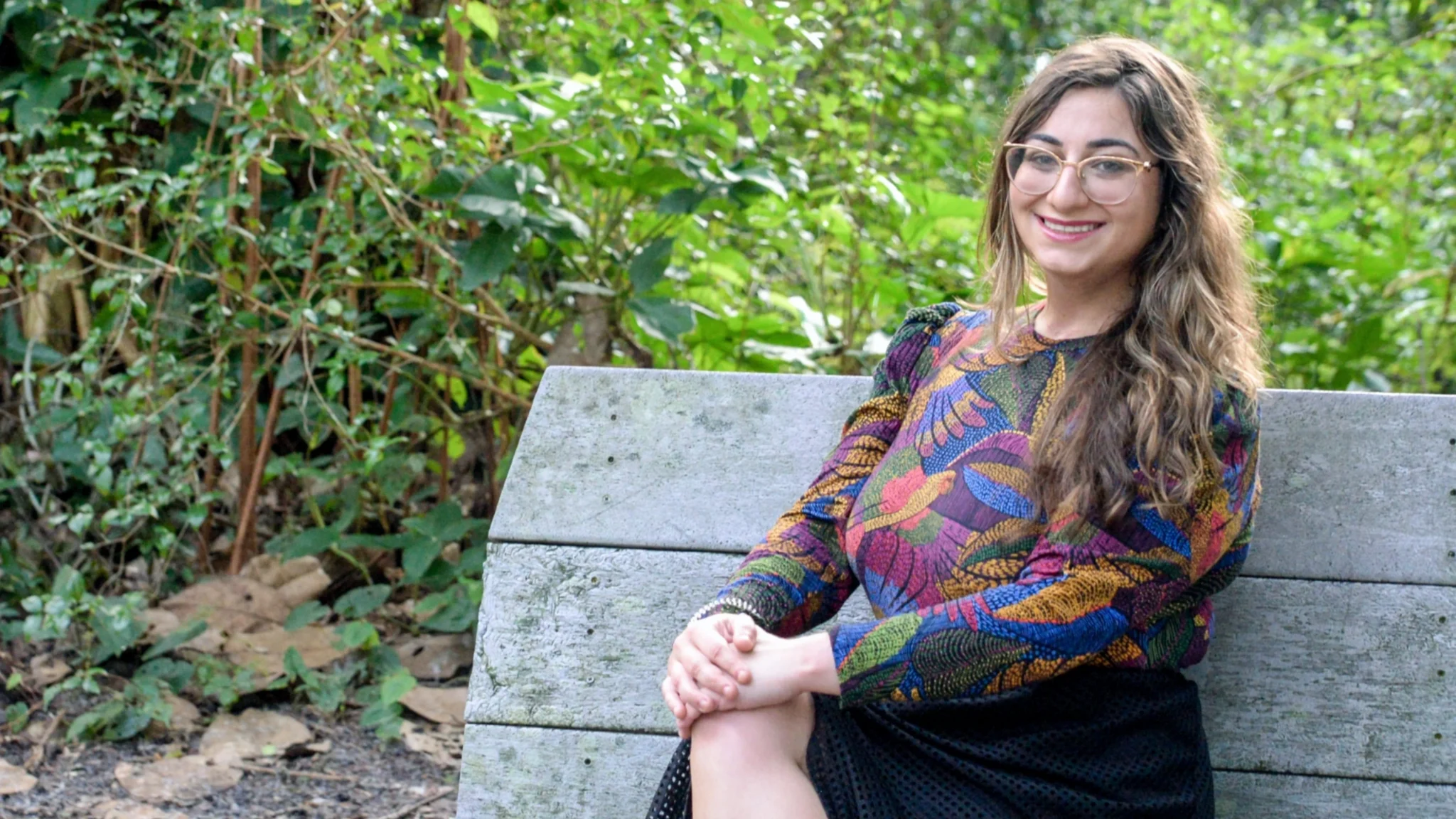
This interview is with Alyssa Ostroff, Founder/Designer, Self-Care Shirts.
For readers at Connectively, how do you introduce your expertise as the Founder/Designer of Self-Care Shirts with a background in marketing and CDC public health design in the context of mental wellness?
My path to mental wellness work wasn’t linear — it was a layoff notice on April Fools’ Day.
I spent five years as a Senior Graphic Designer at the CDC, creating public health campaigns for dengue, cancer awareness, antibiotic resistance, and menstrual health equity. I believed deeply in the mission of communicating health information clearly and accessibly to the people who needed it most. Then, in April 2025, I was laid off as part of the federal reduction-in-force, and everything I had built my professional identity around was gone overnight.
What came next was both the hardest and most clarifying season of my life. I had spent years in therapy processing childhood trauma, and during that time I had quietly been drawing what I needed to hear — phrases like “You Are Enough,” “Not Broken,” and “It’s Okay to Not Be Okay” — on my iPad in Procreate. I wore them on shirts on my hardest days, before I fully believed them yet.
In the month after my layoff, I launched Self-Care Shirts, a mental health awareness apparel brand where every design is hand-drawn from lived experience. My background in public health communications gave me a specific lens: I understand how to make complex emotional concepts accessible, how to reduce stigma through language, and how to meet people where they are rather than where we wish they were.
The brand crossed 1,400 orders in its first year and has been profitable since month seven. I donate 10% of proceeds to 988 and The Trevor Project quarterly — not as a campaign, just always — because if you’re going to build something around mental health awareness, the minimum is putting your money where your mission is.
I bring together design craft, public health communication instincts, and the specific authority that comes from having lived what I make. That combination is the whole brand.
What pivotal moment moved you from federal public health communications into launching Self-Care Shirts as a therapy-wear brand?
The pivotal moment had two parts — and they happened years apart.
The first was quieter. I was sitting in my therapist’s office after a particularly hard session, exhausted from processing childhood trauma I had spent decades burying. I went home, opened Procreate, and drew “Not Broken” — not to sell, not to share, just because I needed to see it somewhere outside of myself. I printed it on a shirt and wore it often before I even believed it. Something shifted. Not dramatically, not permanently — but enough.
That became a practice: drawing what I needed to hear and wearing it before I believed it. Over years of therapy, including EMDR, I built a quiet library of designs that had held me through the hardest parts of my healing.
The second moment was loud and impossible to ignore: April 1, 2025. I received a notice that my position at the CDC had been eliminated as part of a federal reduction in force. Five years of public health design work, gone — on April Fools’ Day. The irony was not subtle.
In the grief of that week, I looked at everything I had been quietly drawing for years and made a decision: stop keeping it for myself. Build something around it. Launch it during Mental Health Awareness Month, which started exactly one month later, and see if what had helped me could help someone else.
That was the moment Self-Care Shirts became a business. Not a pivot — a permission. Permission to make the private thing public. Permission to build something that belonged entirely to me and couldn’t be eliminated by anyone else’s decision.
The federal career ended. The mission didn’t.
Taking us inside your process, what does your creative workflow look like—from a therapy-session sketch in Procreate to a final design ready for print?
Every design starts the same way — with a feeling I don’t yet have words for.
Sometimes it surfaces in therapy. Sometimes it’s 2 a.m., and I can’t sleep, and something is sitting on my chest that needs to get out. Sometimes it’s a phrase someone says in a mental health community online and I think — that. That’s the one. That’s what nobody is saying out loud but everyone is feeling.
I open Procreate on my iPad and start with lettering. I’m not sketching concepts, mood-boarding, or running it through a brief. I’m writing the phrase in my own handwriting, over and over, until the letterforms feel like they carry the weight of what the words mean. The typography is the design. The way a letter curves, a word breathes, or a line breaks — that’s where the emotion lives.
From there, I’ll add illustration if the concept calls for it. A dragon for “You’re Allowed to Rescue Yourself.” A diamond character for “Therapy Is Expensive But So Am I.” A phoenix for “Like a Phoenix From the Ashes She Rose.” The illustration has to earn its place — it’s there to deepen the meaning, not decorate it.
Color comes last, and it’s intuitive. I’m matching the emotional temperature of the phrase. Warm and affirming pieces get different colors than dark and funny ones. The palette has to feel like the words.
When it’s done, I sit with it — sometimes for days. I ask myself: Would I wear this on a hard day? Would it say what I couldn’t say out loud? If yes, it goes into production. If not, it stays in the archive until I understand it better.
The whole process is less graphic design and more emotional translation. I’m not making something pretty. I’m making something true.
When deciding which phrases make it onto apparel, what single criterion tells you a message is ready to be worn in the world?
One question. That’s it.
Would I wear this on my hardest day?
Not on a good day when everything feels manageable and I’m feeling confident and the world makes sense. On the day when I don’t want to get out of bed. On the day when the grief is close to the surface and I’m running on very little and the most I can do is get dressed and take my dog for a walk.
Would I put this on and feel something — even something small — shift?
If the answer is yes, it’s ready. If I’m not sure, it isn’t.
The phrase has to do something. Not just say something true — it must actually do something to the person wearing it. Change the texture of the day slightly. Give them something to look down at and remember. Create a moment of recognition between themselves and the handwriting on their chest.
The designs that have resonated most deeply with customers are always the ones I was most uncertain about publishing — the ones that felt almost too personal, too specific, too much. “Not Broken” felt too raw. “It’s Okay to Not Be Okay” felt too obvious. “You Are Not a Burden” felt too vulnerable.
Each one of them found exactly the people who needed it.
That’s the other thing I’ve learned: the more specific and personal a phrase feels, the more universally it lands. Generic comfort reaches everyone and moves no one. The thing that feels too true — too close, too honest — is almost always the one that matters most.
So the criterion is simple. Does it do something on the hardest day?
If yes — it goes on a shirt.
From your marketing and advertising lens, what is one ethical guideline you use to market mental health apparel that other marketers should adopt today?
Never manufacture urgency around someone’s pain.
The mental health space is full of marketing that exploits vulnerability — countdown timers on “healing” products, scarcity tactics on wellness courses, before-and-after framing that implies you are broken now and fixed after purchase. It’s everywhere. It may work in the short term, but it is deeply unethical.
My guideline is simple: I will not create false urgency around someone’s hardest moments.
If someone is struggling, they don’t need a countdown timer. They don’t need to be told this is their last chance to feel better. They don’t need language that implies their healing is a purchase away. They need to feel seen — honestly, without manipulation, without the transaction being the point.
In practice, this means I don’t run flash sales framed around emotional pain. I don’t use copy like “for people who are really struggling” to trigger a purchase. I don’t create artificial scarcity on designs that are always available. When I discount, I’m transparent about why. When I talk about mental health in my marketing, I’m speaking from my own lived experience, not mining someone else’s crisis for conversion.
The business case for this is straightforward: people who feel genuinely seen by a brand become loyal customers for life. People who feel manipulated leave and tell others. Ethical marketing and sustainable revenue are not in conflict — they’re the same thing.
But honestly, the business case is secondary. The primary reason is that the people who find Self-Care Shirts are often in genuinely vulnerable moments. They deserve to be treated like humans, not conversion opportunities.
That’s the standard I’d ask every marketer in the mental health space to hold themselves to.
Drawing on your ADA compliance and web design experience, what is one practical accessibility change creators can make to their online shop or content this week to better support neurodivergent or disabled visitors?
Add meaningful alt text to every product image — and write it for a person, not a search engine.
This is the single highest-impact, lowest-effort accessibility change any online shop can make, and the vast majority of small businesses aren’t doing it correctly.
Most alt text I see falls into two categories: completely empty, or stuffed with keywords that describe nothing useful. Neither serves the person who needs it. A screen reader user visiting your shop deserves to know what they’re actually looking at — not just that an image exists, and not just that you sell “mental health shirts Sunrise Florida handmade apparel.”
For a product image, meaningful alt text might read: “White t-shirt on a light gray background with hand-lettered text in black that reads You Are Enough in a curved, informal script.” That tells someone using a screen reader exactly what the image shows — the product, the color, the style, the message.
For mental health apparel specifically, the message on the shirt IS the product. If your alt text doesn’t include the text shown in the image, you’ve made your product inaccessible to blind and low-vision shoppers — the very people who might need what you’re selling most.
Beyond alt text, one additional quick win: check your color contrast. The Web Content Accessibility Guidelines recommend a minimum contrast ratio of 4.5:1 for normal text. Many wellness and apparel brands use soft, low-contrast palettes that look beautiful and are genuinely difficult to read for people with low vision or certain visual processing differences.
Both of these changes take an afternoon. Neither requires a developer. And both signal to disabled and neurodivergent visitors something your brand values should already be saying: you were designed with everyone in mind.
Given your ongoing donations to 988 and The Trevor Project, what process do you use to choose mental health organizations to support through your brand?
I started with the question I wish more brands would ask: who is most at risk of not getting help at all?
Not which organization has the best brand recognition. Not which cause is most popular during awareness months. Who is actually falling through the cracks — and what would it mean to fund the infrastructure that catches them?
988 was an immediate answer. It’s the national mental health crisis lifeline — free, confidential, available 24 hours a day to anyone who picks up the phone or sends a text. No insurance required. No appointment needed. No waiting list. It exists specifically for the moment when someone has run out of options and needs a human voice immediately. Funding that felt like the most direct possible connection between what the brand says and what the brand does.
The Trevor Project was equally clear. LGBTQ+ youth are disproportionately at risk for suicide — significantly more so than their peers — and The Trevor Project provides crisis intervention and suicide prevention services specifically for that community. When I built a brand around the idea that everyone deserves to feel seen and not broken, excluding the most vulnerable young people from that mission wasn’t something I could justify.
Both organizations also met a practical standard: they are established, transparent about how funds are used, and actually operate the services they describe. I did my research before committing.
The process going forward is the same. Any organization I would add has to serve people who are actively underserved, operate with financial transparency, and connect directly to the core mission of the brand — reducing stigma, providing access, and making sure the people who need support most can actually find it.
The donation isn’t a marketing tactic. It’s the point.
Running a mission-led brand while living with Tourette syndrome, narcolepsy, and AUDHD, what daily system helps you protect your energy and focus that other founders could try first?
I stopped pretending I have a normal workday and built around the one I actually have.
For a long time I tried to operate like a neurotypical founder — early mornings, consistent output windows, linear task management, the whole structure. It didn’t work. Not because I wasn’t trying hard enough, but because my nervous system, my sleep disorder, and my executive function genuinely don’t operate that way. Forcing the structure created shame when I failed it, which created more dysregulation, which made the work harder. It was a cycle that helped no one.
The system that actually works has three components.
-
The first is non-negotiable anchors. Every day starts the same way regardless of how I feel — I walk my dog 1.25 miles and take him to the dog park. That’s it: the anchor. Movement, sunlight, fresh air, and the specific regulation that comes from being outside with a beagle who is completely unconcerned with my to-do list. By the time I get home, my nervous system has had a chance to settle before anything asks of it.
-
The second is task batching by cognitive load. High-focus creative work — designing, writing, strategy — happens in my best window, which is late morning into early afternoon. Administrative tasks, emails, and scheduling happen when my energy is lower. I don’t try to do deep creative work when I’m depleted. I don’t waste peak hours on things that don’t need them.
-
The third is treating rest as infrastructure, not reward. Narcolepsy means my sleep debt compounds faster than most people’s. If I don’t protect rest proactively, everything else degrades — creativity, emotional regulation, executive function, decision-making. Rest isn’t what I get when I finish everything; it’s what makes finishing anything possible.
The underlying principle any founder can apply, regardless of neurotype, is to stop optimizing for what a productive day is supposed to look like and start observing what your actual productive patterns are. Build around those. The goal is sustainable output over time — not performing productivity for an audience of one.
Beyond sales numbers, how do you measure the mental health impact of Self-Care Shirts on your customers and community?
Sales numbers tell me the business is working. The emails tell me the brand is working. Those are two different things, and I track both.
The metric I care most about is unsolicited contact — messages people didn’t have to send, that they sent anyway because something moved them enough to find my email address and type out their feelings.
A therapist in Kentucky named Abby wrote to tell me she wanted to wear my designs while working with clients. Then she sent a photo of herself wearing the sweatshirt in her office. A counselor named Rebecca bought shirts to wear to work as “a little bright spot” for clients struggling through a difficult moment in their community. A graduate student named Marie — who said she doesn’t usually do this kind of thing — wrote to tell me the brand was a spark of joy she had been searching for in a world that felt overwhelming.
I have a folder of these. It’s the first thing I look at when I wonder if any of this matters.
The pattern I’ve noticed is consistent: the people who reach out most often are mental health professionals — therapists, counselors, social workers — who wear the designs with their clients. That tells me something important. The brand isn’t just reaching people who are struggling. It’s reaching the people who sit across with them every day and hold their pain, and giving them something to wear that says: I believe in this work. I’m on your side.
I also track the reviews that say something specific — not “great product, fast shipping,” but “I felt this deeply.” Four words from a customer named Kathy that I think about more than any conversion rate.
Impact is hard to quantify. But it leaves traces. I collect the traces.
Thanks for sharing your knowledge and expertise. Is there anything else you'd like to add?
Just this: if you are someone who is healing — loudly, quietly, humorously, painfully, or any combination of the above — you are not doing it wrong.
Healing is not linear. It does not happen on a schedule. It surfaces at inconvenient times, in inconvenient places, in the middle of moments that were supposed to be joyful. It asks things of you that nobody warned you about. And it is the most important work you will ever do.
Self-Care Shirts exists for the people in the middle of that work. Not the people who have finished — nobody finishes — but the people who are still in it. Still showing up. Still trying to find language for things that don’t have easy words yet.
Every design I draw starts as something I personally needed to hear. That will always be true. This brand will never be manufactured wellness or trend-chasing affirmations. It will always be one person drawing what she needed and trusting that someone else needs it too.
If that’s you — welcome. You found us for a reason.
And if you are a mental health professional reading this: thank you. What you do is among the most important work that exists. The therapists, counselors, social workers, and advocates who have written to tell me they wear these designs with their clients have given me more fuel to keep going than any business metric ever could.
Find us at selfcareshirts.com. Ten percent of all proceeds go to 988 and The Trevor Project — not just in May, but always. Because mental health matters every day, for everyone.
You are not broken. You are healing. Those are different things.