

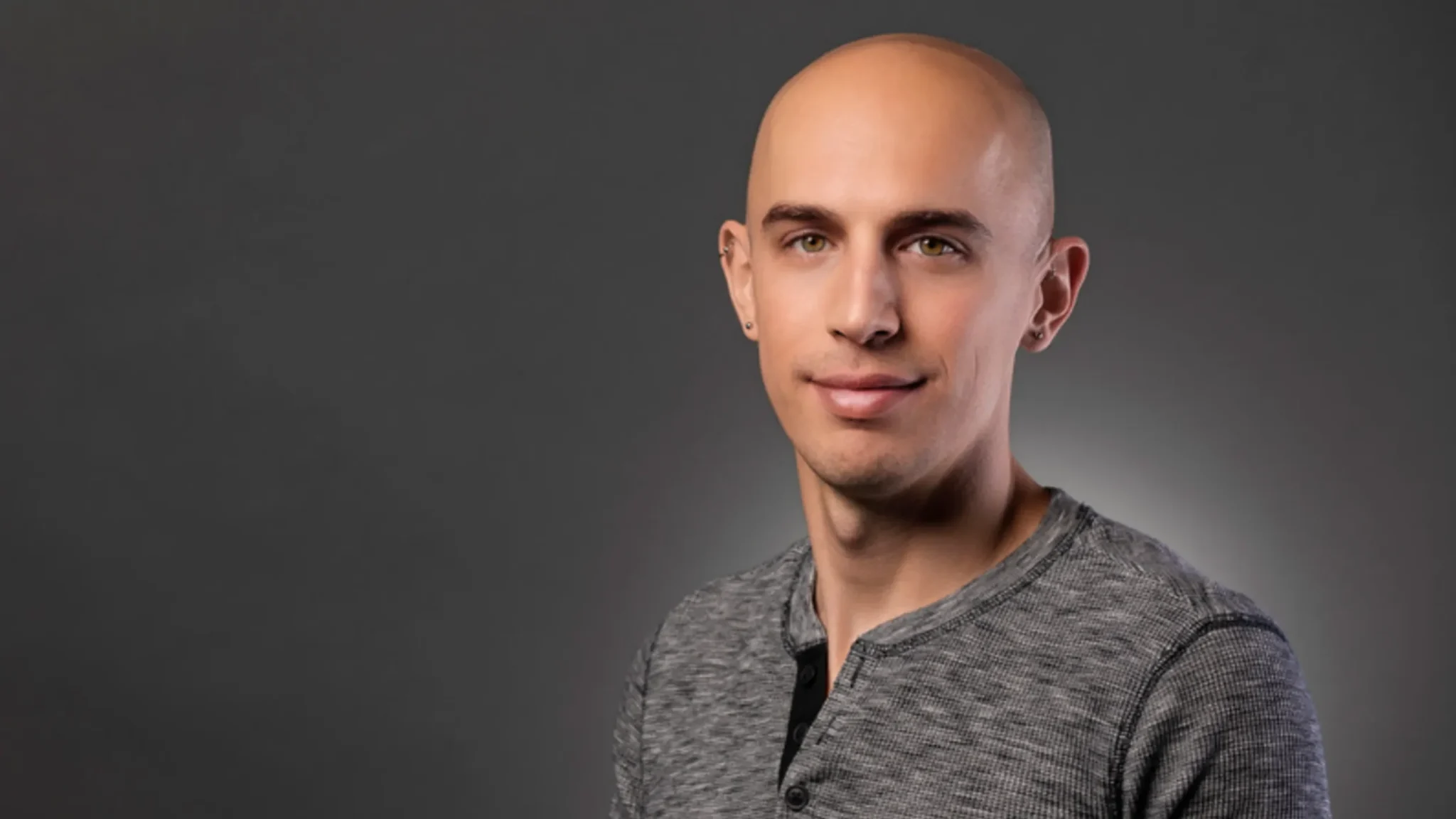
This interview is with Adrian Rosebrock PhD, Chief Investment Officer & Founder, WheelMetrics.
Adrian, as a Chief Investment Officer and Founder in the computer software industry with a machine learning and options background, how do you describe the investing lens you bring to markets today?
My approach to investing is “quantamental” — a combination of quantitative and fundamental analysis working together.
I spent over a decade in the AI, machine learning, and computer vision fields. Computer science trains you to distrust your gut and trust the data. You build a system, test it, measure what actually happens, and let the numbers tell you if you’re wrong.
When I moved full-time into markets, I brought that same instinct with me.
I think in terms of systems. First, I screen stocks on quality and fundamentals, including the balance sheet and profitability—the things that tell you whether this is a business you’d want to own for years. Only the names that clear that bar get to enter the options screening: strike (i.e., delta), days to expiration, and premium.
Company fundamentals gate my entire investing and trading system.
The part most people get backwards is that they start by scanning options chains first. They see a fat premium and chase it, get assigned on a company they never wanted to own, and then the stock drops 40%.
I run it the other way around. I start with companies I’d be happy to own, then let the options math tell me whether the trade is worth making this week. Sometimes it isn’t, and the right move is to sit on my hands.
My machine learning background also taught me something less obvious: a good trading or investing strategy is worthless without the discipline to execute it.
An average strategy traded with discipline will outperform a good strategy traded haphazardly.
What pivotal experience moved you from building and scaling software to founding and leading an investment practice?
In 2021, I sold my previous company for a life-changing exit.
For most of my adult life, my wealth was tied up in one thing: the business I was building. PyImageSearch.com was the asset. Everything went back into it.
Then I sold it, and overnight, the problem inverted. I went from having one concentrated, illiquid asset I understood completely to having real, liquid capital I now had to actually manage.
That’s a strange feeling, and nobody really prepares you for it.
I’d been investing since my early 20s, so I wasn’t starting from zero. But there’s a difference between investing on the side while you run a company and being responsible for preserving and growing capital that took years to build.
So I did the thing I always do: I went deep.
I spent the next four years teaching myself quantitative trading, swing trading, CANSLIM, and options — treating it like a research problem the same way I’d treated computer vision when I was authoring academic research papers. Reading, testing, tracking results, and throwing out what didn’t work.
Somewhere in there, it stopped being a way to manage my own money and became the thing I wanted to do.
The skills carried over more than I expected. Building a stock and options screening system is just engineering. Managing risk is just discipline. And teaching people something complicated in a way they can actually use, I’d already done that for over a decade.
From there, for founders with concentrated, illiquid startup equity, how do you adapt the cash-secured Wheel to fit that risk profile without overexposing them?
First, you have to be honest about the risk that already exists.
A founder sitting on concentrated, illiquid startup equity is carrying one of the most lopsided bets in finance. One company. One outcome. No ability to sell when you want to.
Just because an asset is worth a large sum of money on paper does not mean you can exit it easily. If you want to sell, there may not be a buyer. That’s what illiquid means.
So the job of the liquid capital is simple: do the opposite of what the equity is already doing.
That changes how I’d run the Wheel entirely.
The first thing to understand is that you wheel the cash, not the equity. You can’t sell a cash-secured put against private shares you can’t touch. The Wheel lives on the liquid side of the balance sheet.
Second, cash-secured is the only version that makes sense here. The cash is genuinely set aside, ready to take assignment on a stock. Someone this concentrated has no business adding margin or naked puts on top. That’s stacking risk on risk.
Third, and this is the one people get wrong, you diversify away from the concentration. The classic mistake is a software founder wheeling more software companies. If your equity, your income, and your options book all move together, you don’t have three positions, it’s really just one position, because they are all correlated. If software as a sector ranks, so do all your positions. So I’d deliberately wheel names uncorrelated with whatever the startup does.
Fourth, every put still has to pass the same test: Would I be happy owning this company if I get assigned? Stocks you actually want to own, sized small. The founder’s real risk budget is mostly spent on the startup already, so the position sizing on the Wheel stays modest.
And finally, keep more dry powder than usual. Founders have liquidity needs most investors don’t—taxes, lockups, life events. So I’d treat the Wheel as a way to earn something while staying patient and waiting for fat pitches, not a reason to put every dollar to work.
The Wheel fits that profile well, but only when you run it as a diversifier and an income tool. The moment it becomes another concentrated, correlated bet, it stops solving the problem and becomes part of it.
Zooming in on trade selection, what exact pre-trade checklist do you run before selling a cash-secured put?
The whole strategy runs in two stages. The stock has to clear the first gate before I ever look at an option chain.
Stage one is the stock.
Before anything else, I ask myself one question:
Would I be happy owning this company for the next 6–12+ months if I get assigned?
If the answer is no, I stop right there. No premium is worth being stuck in a business I don’t want.
Then it has to clear the fundamental screen. The metrics I weigh most:
- Return on invested capital that comfortably clears the market’s long-term average
- Profit margins healthy enough to signal real pricing power
- Revenue and earnings that have genuinely grown over the past several years
- A debt load the business can service out of its own cash flow
- A valuation that’s reasonable relative to how fast the company is growing
A profitable, growing business that isn’t drowning in debt and isn’t wildly overpriced. Stocks you actually want to own.
Stage two is the options chain. Only the names that survive stage one make it here. Then I’m checking:
- Delta between 0.20 and 0.30, far enough out of the money to give me room, close enough to pay real premium
- 30 to 52 days to expiration, the sweet spot for theta without taking on too much gamma
- Annualized yield above 20%. If my capital is locked up, it has to work meaningfully harder than a money market. (I’ll drop to 15% for a high-conviction name when nothing better is available.)
- Implied volatility above historical volatility. If IV is below HV, I’m getting underpaid for the actual movement, and I skip it.
- Expiration lands before the next earnings date, because I don’t want a binary event inside my contract.
- A reasonable bid-ask spread, so I can actually get filled at a fair price.
Finally, I have two more questions:
If any single line fails, there’s no trade. Sometimes the best trade is no trade at all.
On the tooling side, which data signals and Python-built tools have been most reliable for screening Wheel candidates and enforcing risk and compliance guardrails at your firm?
I build my own tools — that’s my machine learning and engineering background.
So the most reliable system I have is a two-stage screener.
-
First stage: scores stocks on fundamental quality. The signals I lean on most are:
- return on invested capital
- profit margins
- revenue and earnings growth over several years
- debt load relative to cash flow
- valuation relative to growth
A stock has to be strong on quality before it gets anywhere near the options side.
-
Second stage: screens the options chain, but only on the names that survived stage one. The signals I use there are:
- delta as a rough probability of assignment
- days to expiration
- the annualized yield on the capital I’d tie up
- the bid-ask spread for liquidity
- the earnings calendar, so I never have a binary event sitting inside a contract
The one signal most people underrate is implied volatility measured against historical volatility. If the options market is pricing in more movement than the stock has actually delivered, I’m being paid well to take the other side. If it’s the reverse, I’m being underpaid, and the tool tells me to pass.
Looking back, describe the Wheel misstep that taught you the most, including the single rule it added to your playbook.
Early on, before I had any system, I was a premium chaser.
I’d open the options chain, sort by the fattest premium, and sell puts on whatever was paying the most. High premium felt like free money.
But the reason those premiums were so fat is that the market was screaming how risky those stocks were. High implied volatility is a warning label—the market is telling you something.
So I’d sell the put, collect the premium, feel clever for about a week, and then the stock would crater and I’d get assigned on a company I had no business owning.
That’s the worst place to be in this strategy: assigned on something you don’t believe in, with no plan.
That experience gave birth to the following rule:
“Never sell a cash-secured put on a stock you wouldn’t be genuinely happy to own at that strike for at least 6-12+ months.”
The stock comes first and the premium comes second, always. A rich yield on a company I don’t believe in is a trap. And most of the tickers paying the fattest premiums never make it onto my screen at all.
For readers on Connectively taking their first step, what is the smallest testable experiment you recommend to implement a cash-secured Wheel with proper risk controls?
Start slow.
The instinct is to build a whole portfolio of positions on day one. Don’t. The smallest useful experiment is a single cash-secured put on a single company you’d genuinely be happy to own.
Here’s how I’d structure it:
- First, choose a quality stock whose share price is low enough that securing 100 shares is a small slice of your account, not a white-knuckle bet. If getting assigned would keep you up at night, the position is too big. Shrink it until it doesn’t.
- Second, sell one put, fully cash-secured, well out of the money, around 30 to 45 days out. Far enough below the current price that you have real cushion. No margin. The cash to buy the shares sits in the account the entire time.
- Third, and this is the part people skip, decide your exit before you place the trade. Set a good-til-canceled order to buy the put back at your profit target the moment you’re filled. The decision gets made while you’re calm, not while the market is moving violently.
Then let the experiment actually run.
If the put expires worthless, you keep the premium and do it again. If you get assigned (which is even better for learning), now you experience the second half of the Wheel: owning the shares and selling covered calls against them. You can’t really say you’ve run the Wheel until you’ve been assigned at least once.
Most importantly, journal all of it. Write it down: the trade, the reason you took it, what happened, and how you felt at each step. That journal is the real output of the experiment, not the profit.
Finally, don’t judge the system on one trade. One trade is noise. Run it for a quarter, maybe eight or ten cycles, before you decide anything. You’re not testing whether a single put made money. You’re testing whether you can follow your own rules, week after week, when real money is on the line.
Start there. Scale only once the process feels boring.