

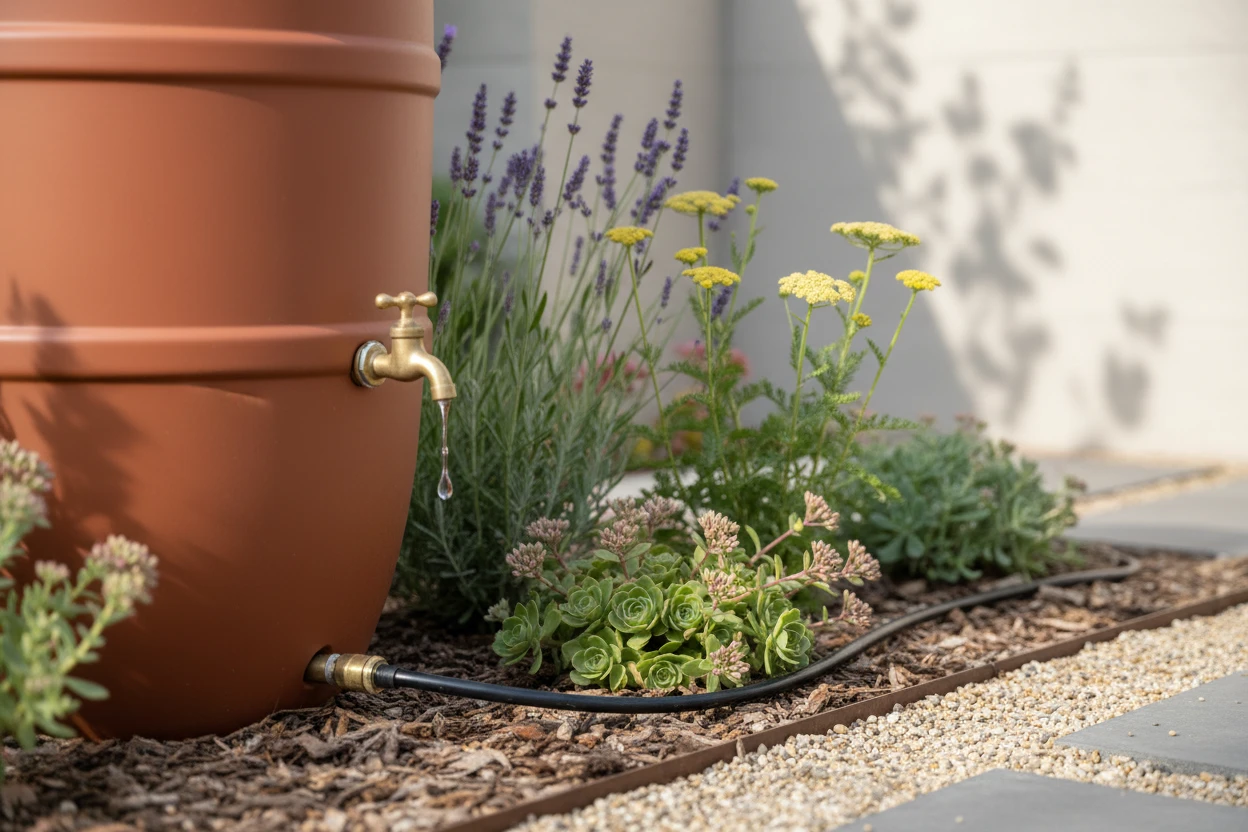
Designing Climate-Resilient UK Gardens That Use Less Water and Support Wildlife
Authored by: Mirela Bajic
Garden design in the UK is shifting in ways that are hard to ignore. Longer dry spells, heavier bursts of rain, and more unpredictable seasons are changing how outdoor spaces actually perform. What worked reliably a decade ago doesn’t always hold up in the same way now.
Many gardens are still built around a perfect conditions mindset. Planting that depends on regular watering, large expanses of lawn that suffer in dry periods, layouts that pay no attention to how water moves through a space. The result is often a garden that looks good for a short window, then becomes frustrating to maintain as conditions change.
A more resilient approach starts with accepting that variation is the norm, and designing around that from the beginning.
Start with the soil
This is where most people underestimate the impact they can have. Healthy soil retains moisture far more effectively, which reduces the need for constant watering. In practice, that means improving structure with organic matter and avoiding excessive disturbance once planting is established. It’s not the visible part of a garden, but it drives how well everything else performs over time. The RHS offers useful guidance on soil improvement for anyone working out where to begin.
In my own work, this is often where client expectations need the most careful recalibration. Many people want to jump straight to plant selection, but skipping the groundwork almost always shows up later, particularly during dry spells when plants that should be thriving begin to flag.
Choose plants that suit the conditions
There is a persistent assumption that a water-wise garden will feel sparse or dull. That isn’t the case. Many plants that handle lower water availability still offer softness, movement, and colour throughout the season. Grasses bring rhythm and lightness to a space, while lavender, salvia, and verbena hold their presence without needing constant attention. The principle is straightforward: select plants for the environment you have, not the one you wish you had.
A project that stays with me was a south-facing garden in Surrey with very free-draining sandy soil. The client had tried and failed to establish a traditional mixed border several times over. Switching to a Mediterranean-inspired planting palette of salvias, alliums, and ornamental grasses, the border not only came through its first summer with minimal intervention but looked far better for it. The RHS maintains a well-organised reference list of drought-tolerant perennials that is worth keeping to hand when making selections.
Reconsider the lawn
Lawns are often one of the most water-demanding elements in a garden, particularly in warmer months. Replacing sections with planting, gravel, or permeable surfaces reduces water use while adding texture and variation. It also makes a space feel more deliberate, rather than defaulting to a single surface that struggles under pressure.
Design for how water moves
This is an area that tends to get overlooked until something goes wrong. Gardens don’t just need less water, they need to handle what they receive more effectively. Creating areas where rain can soak into the ground rather than run off quickly makes a meaningful difference over time. Permeable pathways, gravel borders, and slightly lower planted areas that allow water to collect and drain naturally can help balance both dry and wet conditions. For anyone wanting a more technical grounding, the Susdrain resource on sustainable drainage components covers the principles clearly.
Make room for wildlife
A garden that holds moisture, uses varied planting, and avoids over-controlled conditions naturally becomes more hospitable to insects and pollinators. Nectar-rich plants such as echinacea, nepeta, and alliums provide reliable food sources, while leaving some areas slightly less managed offers shelter without requiring any particular effort. It’s less about adding wildlife features and more about stepping back from the impulse to keep everything immaculate at all times.
Working with conditions rather than against them
The gardens I find most rewarding to work on, and that clients tend to come back and tell me they love most, are the ones that ask less of them over time. A resilient garden doesn’t feel like a compromise. It feels more connected to its surroundings, more interesting across the seasons, and considerably less demanding to maintain.
Designing this way isn’t a reaction to a changing climate so much as an acknowledgement of it. When a garden is set up to handle variation from the start, it becomes easier to care for, more enjoyable to spend time in, and more rewarding in every sense.
Author Bio: Mirela Bajic is a Senior Garden Designer at House Designer, a home design platform for interior, garden and exterior design services: housedesigner.com