

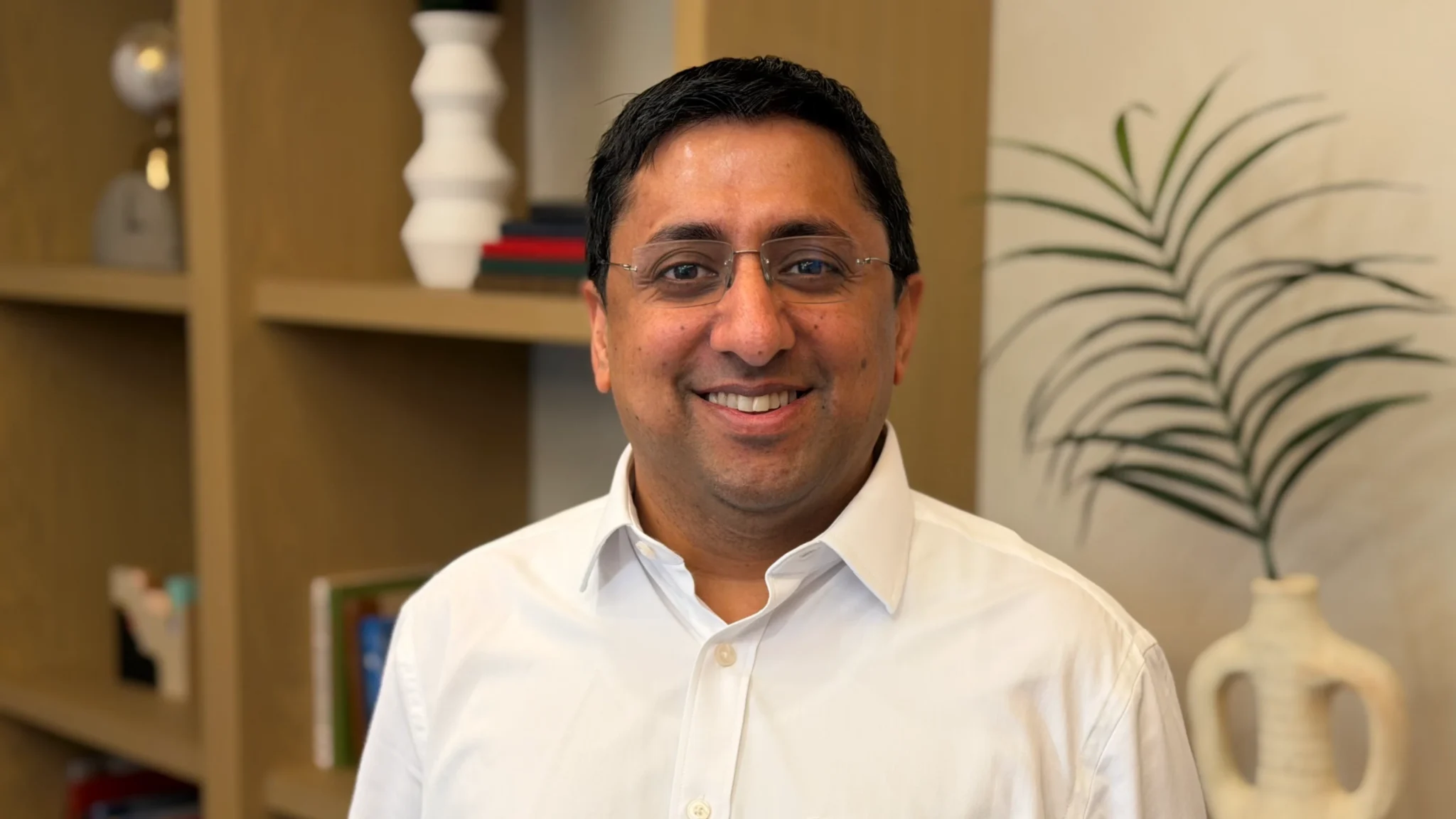
This interview is with Nakul Goyal, Chief Marketing Officer, CARFAX.
For Connectively readers, how do you describe your role as CMO at CARFAX (S&P Global) and the growth areas you lead across SEO, analytics, CRM, paid media, and experimentation?
I lead growth and marketing for both our consumer and business audiences. The outcome of my team’s work is to connect our customers — consumers and dealers.
The teams I lead span SEO, analytics, CRM, paid media, content, conversion optimization, experimentation, demand generation, marketing operations, and product marketing. The common thread is growth: finding the right customers, helping them make better decisions, improving the experience, and measuring what actually drives business growth.
I think of the role less as “running marketing” and more as building a growth machine. That means clear goals, strong teams, testing and measuring everything we do, customer-first thinking, and a constant focus on ROI and impact.
What key moments or decisions in your internet‑industry career—from Tripadvisor to CARFAX—most shaped how you lead marketing today?
There are many lessons along the way. Here are the top two or three that have shaped me the most.
-
First, TripAdvisor taught me that speed wins. When you are working across dozens of international sites, perfect is the enemy of good. You need a clear hypothesis, a simple test, and the discipline to learn fast and fail fast.
-
Second, over the last several decades, SEO taught me to appreciate compounding growth. The best growth is not always the loudest campaign. Most often, it is the system you build over time: better content, a better product experience, a strong technical foundation, and better customer understanding.
-
Third, at CARFAX, trust is the product. In our category, customers are making big decisions. Marketing cannot just drive traffic or leads; it has to help people feel more confident, informed, and protected.
The biggest leadership lesson is simple: growth happens best when it is tied to measurable impact but grounded in customer trust. I want teams that move with urgency, are data-driven, experiment constantly, and understand the “why” behind the work.
Shifting to brand strategy, what was the first high‑leverage move you made to strengthen consumer trust and link it to performance outcomes?
At CARFAX, trust is the business. People are making big decisions, often with imperfect information. So the question became: how do we make every touchpoint help customers feel more confident?
That meant connecting brand work directly to performance signals:
- clearer messaging
- stronger proof points
- better education
- simple customer journeys
- disciplined testing and experimentation
We wanted the brand promise to show up in the actual experience, not just in advertising.
The best performance marketing does not just get the click. It reduces uncertainty, answers consumers’ questions, and helps them make smarter decisions.
On consumer insights, what’s your go‑to method for uncovering the “question behind the question” from customers at CARFAX?
At CARFAX, a customer may ask, “Is this a good car?” But the question behind the question is usually deeper: “Can I trust this vehicle?” “Am I missing something?” “Will I regret this decision later?”
So I like combining three inputs:
- Search behavior: What are people actually looking for?
- Customer data: Where do they hesitate, return, compare, or drop off?
- Direct feedback: What words do they use when explaining uncertainty?
That mix helps us get past surface-level intent. The best insight is usually not the first question; it is the fear, doubt, or job-to-be-done sitting underneath it.
People are not just shopping for information. They are trying to make a smarter decision and eliminate any risk. That’s not easy.
With Google AI Overviews, Bing Copilot, and answer engines rising, what SEO workflow or tactic you implemented recently most improved your chances of being cited?
The biggest workflow shift is that we no longer treat SEO content as “publish the page and move on.”
For AI Overviews and answer engines, content has to be easy to understand, easy to extract, and credible enough to cite. The tactic I like is building around the full consumer question, not just the keyword. We look at:
- What is the direct answer?
- What follow-up questions will the customer ask next?
- What proof, data, or experience makes our answer more trustworthy?
- Is the page structured clearly enough for a person and a machine to understand?
The biggest improvement comes from adding sharper summaries, clearer sections, and more expertise. AI search rewards clarity and confidence. Generic content with good keywords was never the long game.
For content, how do you operationalize a distinct point of view at scale so AI assists without diluting expert voice?
Operationally, I like a simple 4-point workflow:
-
Define the POV first: What is our answer, and why should someone trust it?
-
Use AI for leverage: Research, summarize, compare, organize, pressure-test.
-
Add expert judgment: Real examples, sharper language, customer insight, and tradeoffs.
-
Edit for brand voice: Make sure it sounds like us, not like the internet.
The test is simple: if the content could be published by any company in the category, it is not finished.
AI should make expert content faster and clearer. It should not make everyone sound the same.
On measurement, what real‑world triangulation or incrementality test changed how you allocate budget across paid search, social, and CRM?
Instead of asking, “Which channel has the best reported ROAS?” we ask:
- What demand is this channel creating?
- What demand is it capturing?
- What would happen if we reduced spend?
- Are the customers or leads actually valuable?
That made allocation more disciplined.
In experimentation, what is one A/B testing principle you never compromise on for landing page or funnel optimization?
The principle I never compromise on is this: Know what you are trying to learn before you start the test.
Too many A/B tests become ‘let’s see what happens’ exercises. That creates noise. For landing pages or funnels, I want a clear hypothesis, a primary metric, and a decision rule before the test goes live.
For example:
- Hypothesis: What customer friction are we trying to reduce?
- Primary metric: What behavior should improve?
- Guardrails: What can’t get worse?
- Decision: What will we do if the test wins, loses, or is flat?
The goal is not just to get a winning variant. The goal is to learn something useful about the customer that helps the next decision.
Bad testing chases lift. Good testing compounds learning.
Thinking about digital campaigns, can you walk us through one recent cross‑channel campaign that outperformed and the single decision that made the difference?
One cross-channel campaign that outperformed was built around a simple idea: don’t make every channel say the exact same thing. Make every channel do the right job.
The campaign ran across paid media, CRM, onsite experiences, and content. The difference-maker was aligning the message with the customer’s stage rather than forcing a single generic campaign line everywhere.
- Paid media: create awareness and pull in the right audience.
- Content/SEO: answer the deeper questions and build confidence.
- CRM: bring people back with timely, useful reminders.
- Onsite/funnel: reduce friction and move the customer to the next step.
The single decision that made the biggest difference was treating the campaign as a customer journey, not a media plan. Once we mapped the doubts, questions, and actions at each stage, the work got sharper.
The lesson: cross-channel does not mean “same message everywhere.” It means connected intent everywhere.
Thanks for sharing your knowledge and expertise. Is there anything else you'd like to add?
The only thing I’d add is that the best growth marketing teams don’t chase every new channel or tool. They focus on building a better growth machine.
For me, that comes down to a few basics:
- Know your customer.
- Move fast, but test with discipline.
- Use AI and data to improve judgment, not replace it.
- Measure impact.
- Build trust at every touchpoint.
Channels, algorithms, and tools change. The teams that win are the ones that keep learning faster than the market.