

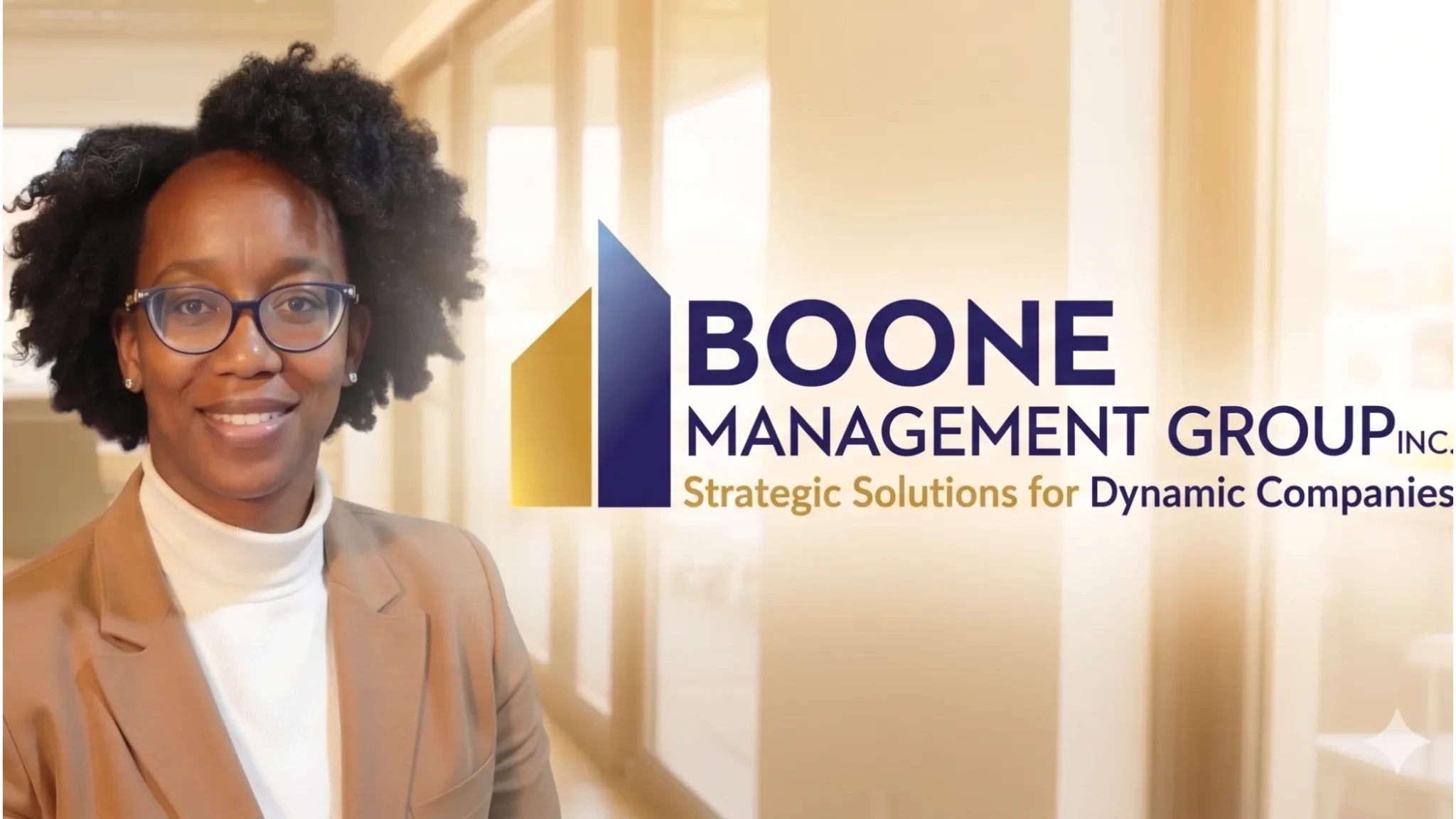
This interview is with Melonie Boone PhD, Chief Executive Officer, Boone Management Group Inc.
For readers meeting you on Featured, how do you introduce the work you do as CEO of Boone Management Group and a business psychologist, and where do you create the most value for executive teams?
Most organizations don’t have a strategy problem. They have an execution problem.
At Boone Management Group, we specialize in the “last leg” of strategy execution, the critical space where well-defined intent often fails to become reality. As a business psychologist and executive advisor with nearly 30 years of experience, I help leaders identify the execution drag and hidden internal friction that erodes performance and dilutes margin.
What Makes Us Different
- We move past the symptoms of organizational dysfunction to address the systemic root causes. Our approach is grounded in the belief that leadership behavior is a structural variable, not a soft skill. Unlike other consultants, we embed with our clients, working side by side to ensure the goals are achieved.
- Forensic Calibration: We don’t guess. We map the behavioral footprint of leadership teams to see exactly where alignment is assumed but not shared.
- Beyond Operations: We recognize that what looks like an operational bottleneck is usually a decision-making breakdown. We help teams increase their decision velocity to capture market value faster.
- The BMG Lens: Utilizing proprietary frameworks like the Boone Alignment Index™ we make the invisible friction visible, allowing for targeted adjustments that improve EBITDA and organizational capacity.
Our Focus
We are the partners called in when a strategy is sound but the results are lagging. Whether it is recovering value during a merger, navigating the scar tissue of past failed initiatives, or preparing an organization to scale, we focus on closing the gap between what a company says it will do and what it actually achieves.
Why Journalists and Executives Connect With Us
I provide clear, grounded insights that cut through corporate jargon. I translate complex organizational dynamics into precise, actionable clarity that leaders can use to drive immediate business impact.
What experiences—from HR transformation and OD to Six Sigma Black Belt work, M&A, and entrepreneurship—most shaped how you help CEOs turn strategy into day-to-day execution?
The gap between strategy and execution is rarely operational. It is behavioral. My approach to closing this gap is a forensic methodology built through decades of leading global operations, navigating complex mergers, and advising the C-suite on behavioral science.
Precision via Six Sigma
As a Six Sigma Black Belt, I view performance through the lens of variance and waste. At Edesia Nutrition, I applied this precision to a $148 million plant expansion that was behind schedule before I began overseeing the project. I also implemented cost-containment initiatives that reduced spending by nearly $10 million in the first year. Strategy execution requires this “forensic calibration” to ensure systems don’t break under the weight of growth.
Navigating the “Last Leg”
Leading global operations through divestitures and expansions at Vistra and Ventiv Technology exposed the hidden friction that stalls execution. I learned that the “last leg”—where strategy meets the front line—is where value is lost. If leadership behavior doesn’t align with intent, the organization develops scar tissue that resists change.
Behavioral Insights
As a Partner at RHR International, I advised CEOs and Boards using business psychology to drive results. This solidified a core truth: you cannot solve a behavioral problem with an operational tool. At BMG, I identified management-style issues and implemented targeted leadership development to align behaviors with growth goals.
The Strategic Right Hand
Whether navigating an 80% revenue loss with a $5 million savings plan or launching ventures from idea to revenue, I transform vision into executable roadmaps.
Every strategy has a behavioral footprint. I ensure yours leads to execution velocity rather than friction. I would be interested in how these patterns are showing up in your environment and am happy to compare notes.
When you first assess a company’s execution gap, what are the first three artifacts or signals you review to uncover “invisible” behavioral friction, and why those?
When assessing a company’s execution gap, I bypass surface-level symptoms to locate where the “behavioral footprint” of the leadership team is creating structural resistance. I look for where alignment is assumed but not verified, and where intent is lost before it reaches the frontline.
To move from intuition to data-supported clarity, I review these three signals:
-
Decision Velocity and “The Bottleneck”
I analyze the timeline between an identified strategic need and a finalized, irreversible decision. In organizations with high execution drag, decisions are often recycled through redundant meetings or delayed by “consensus-seeking” that masks a lack of accountability.
Why: This reveals the actual organizational capacity to scale. It identifies whether the leadership team is operating with decision clarity or if they are bogged down by scar tissue from past initiatives. To diagnose the root cause, we use the WorkStyle Lens to understand how individual leadership patterns are either accelerating or stalling the system’s speed.
-
The Information Decay in “The Last Leg”
I examine the distance between the C-suite’s strategic roadmap and the frontline’s daily priorities. I look for the “translation error” where a high-level vision becomes vague corporate noise by the time it reaches the people responsible for the day-to-day output.
Why: Strategy breaks down in the last leg. To move from assumption to data, I utilize the Boone Alignment Index™. This proprietary framework allows us to forensically map where alignment is actually shared versus where it is merely assumed, identifying the specific friction points that erode EBITDA and slow performance.
-
Resource Allocation vs. Strategic Narrative
I review the allocation of “non-negotiables” — budget, talent, and executive time — against the stated strategic priorities. A common signal of friction is a “strategy pivot” that is not reflected in the actual shifting of resources.
Why: This provides a data-supported look at true organizational intent. By applying the Growth Capacity Assessment™, we can determine if the organization has the actual bandwidth to execute the strategy or if the gap is being caused by an over-leveraged system. This moves the conversation from gut feeling to a targeted forensic calibration of the business.
These signals help make the invisible visible. I would be interested in how these patterns are showing up in your own environment — it is often useful to pressure-test where alignment is being assumed.
Once the top five priorities are set, how do you translate them into a cross-functional operating rhythm—cadence, decision rights, and handoffs—that teams can stand up within 30 days?
Translating top priorities into a functional operating rhythm requires moving past the “what” of strategy into the “how” of behavior. To ensure these shifts take root and do not revert to the status quo, we embed with the client for 6 to 12 months. This long-term partnership allows us to move from initial implementation to a sustained behavioral footprint that drives execution velocity.
-
Establish the Cadence of Clarity
Within the first 30 days, we replace traditional update meetings with a high-velocity communication rhythm focused on The Last Leg. By embedding with your team, we facilitate these sessions to move the organization from a unified vision to clear accountability metrics.
-
Weekly Tactical Sprints: We lead these to identify immediate roadblocks and clear the path for the top five priorities.
-
Bi-Weekly Forensic Calibration: We use data-supported insights to ensure leadership behavior is driving execution speed rather than creating internal friction.
-
-
Define Explicit Decision Rights
Friction often stems from decision bottlenecks where accountability is diffused. We utilize our WorkStyle Lens to move from intuition to data-supported roles, determining who owns the final “yes” for each priority.
-
Clarify Accountability: Each priority is assigned a single point of accountability to increase decision velocity across the enterprise.
-
Resolve Overlap: We identify where decision rights are blurred—a common source of scar tissue—to ensure handoffs are seamless.
-
-
Map Cross-Functional Handoffs
We treat handoffs as structural components. Utilizing the Boone Alignment Index™, we forensically map the flow of work between departments to eliminate the lag between intent and execution.
-
Standardize the Handshake: We define the specific information and resources required when a priority moves between functions.
-
Validate Capacity: Using the Growth Capacity Assessment™, we verify that receiving teams have the actual bandwidth to execute without stalling the system.
-
This embedded approach ensures that we don’t just provide a roadmap; we ensure the execution actually happens. I would be interested in how your current operating rhythm is supporting or perhaps slowing your top priorities.
Staying with decision clarity, what specific meeting behaviors or handoff patterns tell you decision rights are unclear, and how do you reset them without triggering defensiveness?
When decision rights are blurred, the “behavioral footprint” of the leadership team shifts from driving performance to managing risk avoidance. This creates a vacuum where no one is truly responsible because no one has been given the explicit authority to act.
Signals of Unclear Decision Rights and Lack of Accountability
I look for three specific patterns that indicate a breakdown in decision velocity:
- Meeting Loop: High-stakes topics are discussed repeatedly across multiple sessions without a final “yes” or “no” being recorded, as leaders wait for someone else to claim the responsibility.
- Pocket Veto: A decision is made in a room, but key stakeholders leave and quietly deprioritize the work, signaling they don’t believe the decider had the actual right to commit resources.
- Consensus Trap: Every small operational choice requires a unanimous vote, which diffuses accountability and stalls the last leg of execution. When everyone is responsible, no one is.
Resetting Without Defensiveness
To reset these patterns and restore accountability, I move the conversation from personal performance to structural clarity. We use forensic calibration to make the invisible friction visible, which lowers the emotional stakes.
- Audit with Data, Not Intuition: We use the WorkStyle Lens to map how individual leadership patterns are impacting the system. By showing data on where decisions are stalling, we shift the focus to the system’s output rather than an individual’s failure.
- Define the “Handshake”: Instead of debating who is in charge, we define the technical requirements of a handoff. Using the Boone Alignment Index™, we clarify exactly what information and authority must be transferred for a priority to move forward. This turns a power struggle into a process requirement.
- The 6 to 12 Month Embed: We do not just provide a one-time fix. We embed with the organization for 6 to 12 months to ensure these new cadences become the standard operating rhythm. This allows us to coach leaders in real time as they navigate high-stakes decisions, ensuring the new behavioral footprint sticks and accountability remains intact.
By grounding the reset in forensic calibration and shared data, we create a path to performance that feels like a relief rather than a critique. I would be interested in how “consensus” is currently functioning in your environment. It is often where the most hidden friction lives.
Drawing on your Lean Six Sigma and data analysis background, which one latency or flow metric do you find most predictive of execution efficiency, and how do you instrument it practically in the leadership system?
Drawing on my background as a Six Sigma Black Belt, the most predictive metric I track is Decision Cycle Time — the latency between the identification of a strategic need and the finalized, irreversible commitment of resources. In a lean environment, this is effectively the “lead time” for leadership output.
When this cycle time stretches, it creates Execution Drag, which often signals that the organization is operating on scar tissue from past failed initiatives or is trapped in a Consensus Trap where no one is truly responsible because decision rights are undefined.
Instrumenting Decision Cycle Time
To move from intuition to a data-supported leadership system, I instrument this metric through a Forensic Calibration of the operating rhythm:
- Define the “Start” and “Stop” Triggers: We identify a strategic need at the moment it enters a leadership cadence and mark it complete only when the final decision right is exercised and the “handshake” to the next function occurs.
- The Boone Alignment Index™: We use this proprietary framework to measure the delta between when a leader thinks a decision was made and when the organization actually acts on it.
- The Impact 360: We deploy this to understand the leader’s actual impact on the people and the business. It moves beyond surface-level feedback to reveal how a leader’s specific behaviors are either accelerating the system or contributing to the Execution Drag.
- WorkStyle Lens Integration: We practically instrument this by mapping the Behavioral Footprint of the executive team. This identifies if specific leaders are bottlenecking the flow due to a lack of defined decision rights, essentially treating leadership behavior as a structural variable in the process flow.
Sustaining the Flow
Instrumenting a metric is useless without a system to catch the variance. Because I embed with clients for 6 to 12 months, we don’t just measure this latency; we coach the leadership team through it in real time. We look for:
- Information Decay: Where data loses its operational meaning as it travels toward the frontline.
- Accountability Gaps: Where the lack of clearly defined decision-making rights causes the cycle time to stall because no one feels empowered to hit “go”.
By treating Decision Cycle Time as a core flow metric, we can predict execution efficiency long before the project reaches the end of the line. I would be interested in seeing the “lead time” on your current top priorities — it is often the most honest data point in the building.
In complex, global operations like your nutrition client example, how do you create end-to-end visibility across silos without adding meeting load, and what belongs in a minimum viable dashboard?
In complex, global operations, visibility is often sacrificed for the sake of “reporting,” which paradoxically increases the meeting load while decreasing actual clarity. To solve this, we move from subjective updates to a system of forensic calibration that tracks the flow of work, not just the status of tasks.
I create this visibility by focusing on the “handshake” between silos and the behavioral footprint of the leadership team.
Creating Visibility Without the Meeting Load
To achieve end-to-end visibility across global functions—such as manufacturing, logistics, and production planning—we implement a data-supported operating rhythm:
- Standardized “Handoff” Data: We define the technical and behavioral requirements for a priority to move from one function to the next. By standardizing these handshakes, we eliminate the need for “alignment meetings” to clarify what was supposed to happen.
- The Boone Alignment Index™: We use this proprietary framework to measure where alignment is assumed versus where it is actually shared across silos, identifying execution drag before it impacts the P&L.
- 6- to 12-month embedded coaching: We embed with the organization to ensure these cadences become the standard operating rhythm, coaching leaders in real-time to manage by exception rather than by constant update meetings.
The Minimum Viable Dashboard (MVD)
An effective dashboard for global operations must move beyond surface-level metrics to reveal the root causes of friction. For a $100 million manufacturer reaching over 25 million children in 65 countries, the MVD focuses on:
- Decision Cycle Time: The latency between identifying a strategic need and the finalized, irreversible commitment of resources. This is the ultimate lead-time metric for executive performance.
- The Impact 360: A data-supported view of the leader’s actual impact on the people and the business, ensuring that leadership behavior is accelerating the system rather than causing accountability gaps.
- Execution Velocity vs. Spending Caps: Tracking the speed of key initiatives, such as a $148 million plant expansion, against cost-containment measures and spending caps to manage cash flow effectively.
- Last Leg Integrity: A signal of how well the strategic roadmap is being translated into operational action at the frontline, identifying where information decay is occurring.
By focusing on these specific data points, we transition from “intuition-based” management to high-velocity precision leadership.
For CEOs eyeing an exit in 1–3 years, what 90-day sequence do you run—using 360 assessments and executive coaching—to reduce key-person risk and build the psychological capital needed for the business to perform without the founder?
For a CEO eyeing an exit in 1–3 years, the goal is to shift the business from founder-dependence to a system-dependent asset. This requires a forensic approach to identify where your behavioral footprint has become a structural bottleneck.
To reduce key-person risk and build psychological capital, we run a 90-day sequence moving from intuition to data-supported leadership:
-
Phase 1: Days 1–30 — Diagnosis & Calibration
We begin with the Impact 360 to measure the delta between your intent and the organization’s reality. While most assessments focus on likability, we use this to identify execution drag and decision bottlenecks.
- The WorkStyle Lens: We utilize this to assess the team’s current capacity to absorb your decision rights and identify scar tissue from past initiatives.
-
Phase 2: Days 31–60 — Reallocating Decision Rights
We define explicit “handshakes” between functions to ensure high decision velocity without your intervention.
- Boone Alignment Index™: We ensure alignment is shared, not just assumed, verifying that your bench understands the last leg of execution.
- Coaching for Accountability: We move the team away from the Consensus Trap, assigning single points of accountability for top priorities.
-
Phase 3: Days 61–90 — Testing Capacity
We pressure-test the operating rhythm to find information decay before the strategy hits the frontline.
- Growth Capacity Assessment™: We measure whether the team can maintain performance in your absence, providing data-supported proof for potential buyers.
Sustaining the Value
Because behavioral change is not a one-time event, we embed with you for 6 to 12 months. This ensures new cadences and decision rights become the permanent standard operating rhythm, protecting the business’s valuation through the exit.
By the end of this 90-day sequence, we have moved the business from a “key-person dependency” to an organization with the psychological capital and structural clarity to perform at peak capacity. I would be interested in seeing where your current team “waits” for you—it is often the most expensive friction point in an exit.
Where does AI genuinely help you reduce behavioral friction or optimize operations in clients’ operating systems, and what guardrails do you insist on to keep decisions human-centered and trustworthy?
BMG Growth Partner
Custom Gem
AI genuinely helps reduce behavioral friction by making the invisible visible through data that was previously too fragmented to analyze in real-time. In complex operations, it acts as a diagnostic tool that identifies patterns of execution drag before they manifest as financial losses.
Where AI optimizes operations
I utilize AI to enhance our forensic calibration in three specific areas:
- Mapping information decay: We use AI to track the fidelity of strategic communication as it moves through the last leg of the organization. It identifies where a CEO’s intent is being diluted or mistranslated into vague corporate noise.
- Identifying decision latency: AI can monitor the flow of work across global silos to flag decision bottlenecks. By analyzing the time between a “strategic need” and the final “handshake” between departments, we can pinpoint where the Consensus Trap is stalling the operating rhythm.
- Predictive talent deployment: Leveraging tools like the WorkStyle Lens and Hogan Assessments, AI helps us predict how leadership team dynamics will impact organizational capacity. This moves talent decisions from intuition to data-supported strategy.
Human-centered guardrails
While AI provides the data, I insist on several guardrails to ensure that leadership remains a human-centered endeavor:
- The Impact 360 Filter: AI can provide the metrics, but the Impact 360 ensures we understand the human cost. We never allow a data point to replace a qualitative assessment of a leader’s actual impact on their people and the business culture.
- Contextual nuance in calibrating through coaching: I treat AI as a “signal generator,” not a “decision maker.” In my 6- to 12-month embedded coaching, we use AI insights as a starting point for dialogue, ensuring that scar tissue or historical context, which AI often lacks, are accounted for in any operational reset.
- Transparency of the “handshake”: All AI-driven insights must be accessible to the teams they affect. We use the Boone Alignment Index™ to verify that the data is fostering shared alignment, not just creating a new form of surveillance that increases friction.
By using AI to identify the “where” and human leadership to address the “why,” we maintain a trustworthy operating system.