Sustainable Branded Merchandise: An Australian Marketer’s Checklist
Authored by: Charles Liu
Sustainable merchandise has changed a lot in Australia. A few years ago, many buyers were happy to ask for “eco-friendly merch” and leave it at that. Now, marketers are asking better questions: What is it made from? Will people actually use it? Can we back up the sustainability claim?
We at Cubic Promote are paying much closer attention to this now in response to the Australian Competition and Consumer Commission’s (ACCC) stronger focus on greenwashing and environmental claims in Australia. With 20+ years in the promotional products industry, we’ve seen the shift from vague “eco” choices to practical merchandise with eco- and client-friendly claims.
With that in mind, here’s the checklist we use when helping Australian marketers choose better, more sustainable branded merchandise.
Start With Use
Before choosing any branded product, ask whether the recipient will actually use it. A sustainable giveaway still needs a job to do. If it sits in a drawer or gets tossed after the event, it has missed the mark.
Remember, good promotional marketing is about recall, repeated exposure and usefulness, not just handing something out with a logo on it. According to PPAI Research, it works better if the merch is useful, feels relevant and has some personal value to the recipient.
One product we often recommend is our eco-friendly A5 recycled PU notebook. Its recycled PU cover gives marketers a clearer sustainability angle than a standard notebook, without losing the everyday usefulness that makes stationery effective in the first place.
Check The Material
Calling something “eco-friendly” is too broad now. Marketers need to ask what actually makes the product a better choice. The clearer the material story, the easier it is to explain the product honestly in a campaign, event brief or procurement conversation.
Katherine, our Senior Creative Director, recently received an enquiry about branded “sporks”, which are spoon-and-fork utensils. The client specifically asked whether we had an eco-friendly option because they needed a reusable product that aligned with Australia’s single-use plastic rules.
It was a simple product request, but it showed how much the buying perspective has changed. Clients are now asking whether the product meets current compliance expectations, waste-reduction goals, and the way Australians are being encouraged to move away from disposable plastic.
Match The Audience
Not every sustainable product is right for every campaign. This is where marketers need to think beyond the logo. The product should match the setting, the audience and the action you want people to take.
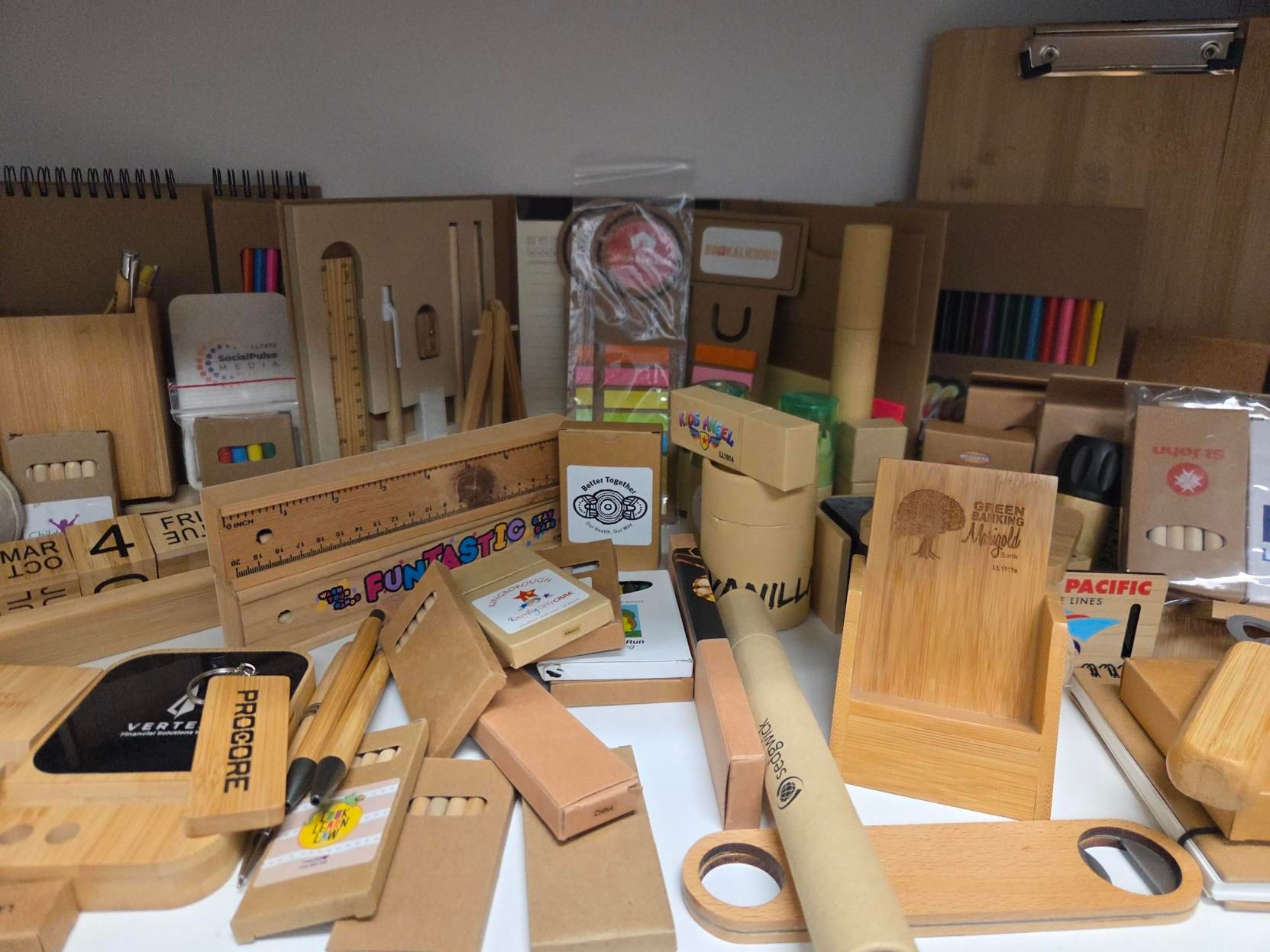
For example, our eco-friendly 5-piece writing set with case is a strong fit for schools, conference delegates, training sessions and office onboarding packs. It also gives marketers a more environmentally responsible stationery option without sacrificing practicality.
This is what we saw with our client, RxTro. They ordered 700 custom Beta Note Wallets and tote bags for their healthcare events. The products worked well for medical teams and conference delegates who needed practical items during the day, rather than another giveaway they’d forget about.
Keep The Claim Clean
This is the part marketers need to be careful with. If only one part of a product has an environmental benefit, don’t make the whole item sound perfect. In plain terms, don’t catfish clients with sustainability claims.
Keep the language plain and factual. Say “made with recycled cotton”, “organic cotton”, “reusable produce bag”, or “designed for repeated use”. This is also the approach we take in our Eco-Friendly Promotional Items range. Instead of relying on broad “green” language, we try to describe products in clearer terms, such as reusable, recycled, organic cotton, or bamboo.
A good sustainable merch strategy is not about choosing the most expensive item or chasing whatever looks trendy. It is about choosing products people will use, made from materials you can explain, with claims that hold up.
My Takeaway
After over 20 years of leading my company, Cubic Promote, my view is simple. Sustainable merch only works when it is useful, honest and relevant to the person receiving it. Marketers do not need to overcomplicate it. Choose products people will actually use, be clear about what makes them sustainable, and avoid making claims that sound better than the product itself.
Author bio: Charles Liu is the Founder of Cubic Promote, a recognised authority in Australia’s promotional products and uniforms industry.