

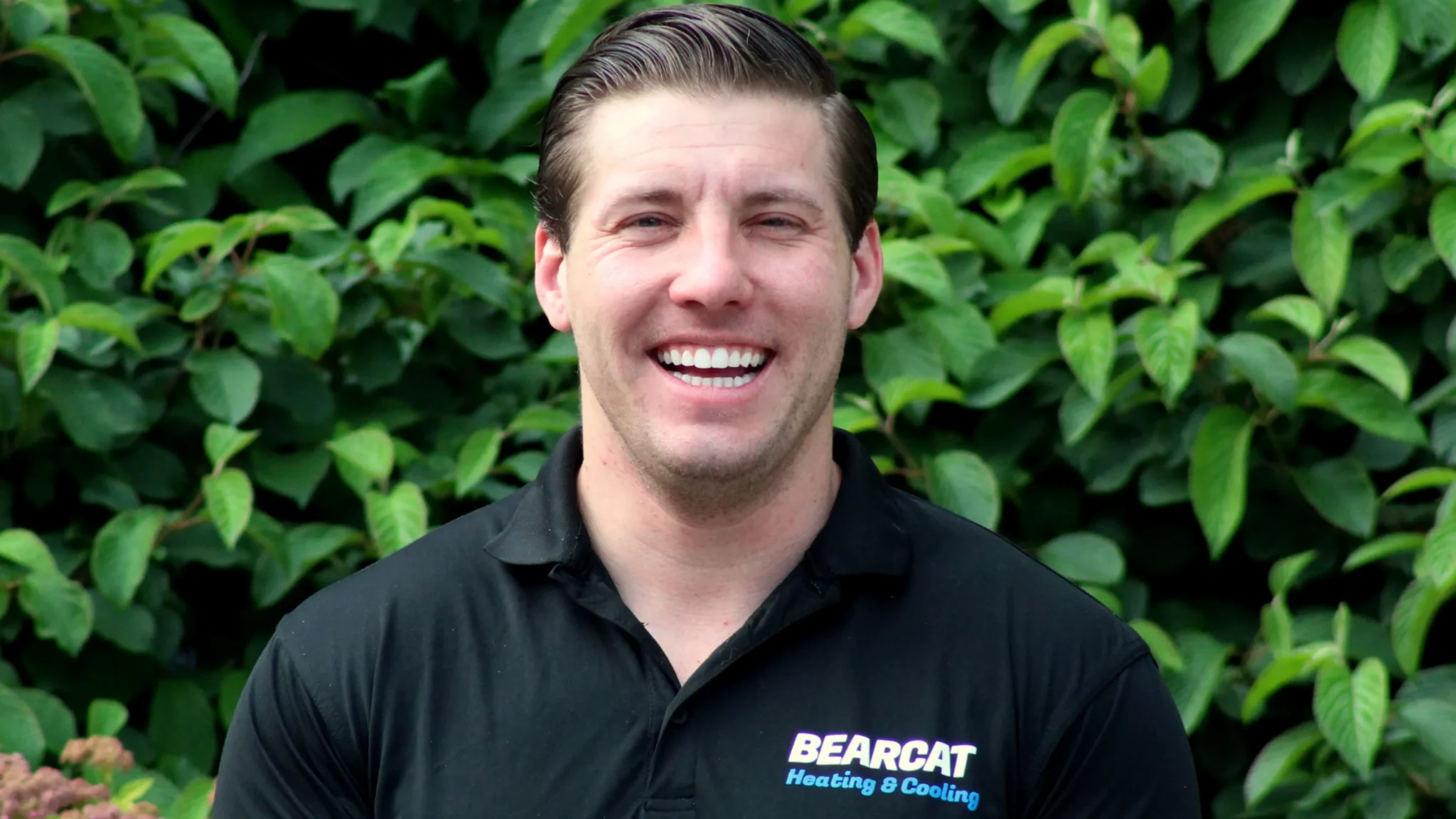
This interview is with Alexander Marsh MBA, CEO / Founder, Bearcat Heating and Cooling.
As CEO/Founder of Bearcat Heating and Cooling, how do you introduce your expertise and the core furnace, AC, and heat pump services your team leads?
How do we introduce our expertise? Easy.
Our management team brings 65+ years of combined experience across every corner of Bearcat Heating & Cooling — core furnace, AC, EFEM — all of it. That’s the foundation.
But here’s what actually sets us apart. As CEO, I didn’t come up only in the trades. I’ve built products and led teams across multiple industries, all obsessed with one thing: the end-user experience.
We took everything that obsession taught us and baked it straight into how we treat homeowners here in the Pacific Northwest — Spokane first.
What does that mean for you? No guessing. No games. Just honest estimates and straight answers, so you can make the right call for your family and your home with total confidence.
We’re not here to sell you a box and bounce. We’re here to take the customer journey to a place the trades have ignored for way too long.
That’s what this industry needs. That’s what our community deserves. And that’s exactly what Bearcat delivers.
What key experiences moved you from the fitness industry into leading multi-state home services and ultimately founding Bearcat in HVAC?
What moved me from fitness into home services and ultimately to founding Bearcat? Strangely enough, it’s a funny story.
I had a chance to run a plumbing company in Montana. I figured it would be a straightforward gig: grow it, scale it, move on. Instead, I fell in love—not with the business side, but with the people: true professionals who took real pride in their craft.
Over the years, the right opportunity found me. A partner and I picked up the pieces of another company that hadn’t made it—doors closed, the whole thing. Out of that, we decided to build something different: something true, honest, and wholesome that stood against everything wrong with this industry.
No “chuck in a truck” rolling up and throwing out a sky-high number just because your house looks expensive. I wanted fair. I wanted a team that cares about the customer, not just the logo on the truck.
We’re here for the community. We’re here to do what’s right every time, to the best of our ability. If there’s ever a way we can take care of friends, family, or a neighbor in a bind, I want to do that.
That’s exactly what Bearcat Heating & Cooling is built to do today and moving forward.
Working across Montana, Idaho, and Washington, how do you decide whether a homeowner is best served by a furnace, straight AC, a cold-climate heat pump, or a dual-fuel setup?
In my experience, every customer is different, and that range has gotten wild. With Airbnbs and the way people use their spaces now, no two situations look the same. So we never lead with a product. We lead with understanding.
It starts with a real conversation: What do you want? What are your goals? What do you expect from this home five, ten years down the road? From there, we give you a straight, realistic breakdown of what’s actually possible based on your home’s structure, how we can run the line set and the electrical, all of it.
And at the end of the day, it comes down to budget. The truth is, we can make almost anything happen for our customers. Some solutions are just a lot more expensive than others, and our job is to be honest about that so you can make the right call.
No pushing the priciest option. No one-size-fits-all. Just the right system for your home, your goals, and your budget.
When a system is failing, what data points or thresholds most reliably drive your repair-versus-replace recommendations?
When a system’s failing, I don’t believe in guesswork and I definitely don’t believe in scaring someone into a sale. The repair-versus-replace call comes down to real data and an honest read of the situation.
The first number I look at is age. Once a furnace or AC pushes past 12–15 years, the math starts shifting. From there, it’s the cost of the repair against the value of the system: my rule of thumb is if a fix runs more than a third of what a replacement costs, you’re usually throwing good money after bad.
- Age: Once a furnace or AC pushes past 12–15 years, the math starts shifting.
- Repair cost vs. replacement cost: If a fix runs more than a third of what a replacement costs, you’re usually throwing good money after bad.
- Repair pattern: One repair is a repair. Three service calls in two seasons is a system telling you something.
- Efficiency and operating cost: An older unit limping along on rising energy bills is costing you every single month, even when it’s “working.”
- Occupant and budget factors: We factor in you. How long are you staying in the home? Is it a rental or an Airbnb? What does your budget actually look like? A cold-climate heat pump might be the smart long-term play for one customer and overkill for the next.
At the end of the day, our job is to lay out the honest numbers and let you make the best decision for your family and your home. No pressure. No sky-high quote because your house looks nice. Just the truth and the right call for you.
What single change to your diagnostic or service process has most reduced callbacks at Bearcat?
The single biggest change? We slowed down at the start so we’d never have to come back.
It sounds backwards, but the thing that’s cut our callbacks the most is the upfront conversation and the full-system diagnostic before anyone touches a tool. Too many companies in the trades roll up, swap a part, collect a check, and bounce; then they’re back out two weeks later for something they should’ve caught the first time.
We flipped that. Our techs take the time to actually understand the home and the customer’s goals, then run a complete diagnostic on the whole system, not just the symptom that prompted the call. Nine times out of ten, the thing that brings you back later was already showing signs on that first visit. We just make sure we catch it then.
That one shift — diagnose the system, not just the complaint — means we’re fixing the real problem the first time, every time. Fewer surprises for the customer. Fewer trucks back in the driveway. And a whole lot more trust.
Because at the end of the day, the goal isn’t to be back at your house. It’s to do it right, do it once, and be the company you call and recommend.
How do you manage parts inventory and supplier relationships so your techs can complete most repairs on the first visit during peak season?
Peak season is where a lot of HVAC companies fall apart, and it almost always traces back to parts and relationships. We treat both like they make or break the customer experience, because they do.
We spend a tremendous amount of effort maintaining solid relationships with our local vendors and pushing for the lowest prices we can pass along. But the bigger philosophy is this: we work ahead. We’re proactive, not reactive. That means having parts on hand, technicians carrying the right tools, and the flexibility to adapt when a job throws a curveball.
It starts before we ever leave the shop. When we’re scheduling, we’re asking all the right questions so we show up prepared and arrive early. If we know a part might be out of stock, we already have a workaround. We have a game plan. We have contingencies in place. We’re not scrambling once we’re standing in your driveway.
And none of this is guesswork. We run live data tracking for our entire inventory, so we know exactly where every part is at any given moment. This isn’t a “go dig around the shop and hope” operation. It’s deliberate, it’s tracked, and it’s tight.
It all comes down to the same thing: respecting your time and doing it right the first time. Nobody wants to wait when their comfort is on the line, so we plan ahead, stock smart, and lean on partners who show up for us so we can show up for the community.
Within your 30/60/90 onboarding plan, what practice most quickly moves a new CSR or technician from knowledge to performance?
Within our 30/60/90, the thing that moves someone from “knows the material” to “actually performs” fastest is structured, real reps built on a foundation we never rush.
We approach onboarding through Bloom’s taxonomy. It’s not enough for a new CSR or tech to vaguely recognize something. We want them to articulate the key definitions, truly explain and understand what they’re working on, then actually apply it in the real world and ultimately get to a place where they can build and create on their own. Each of those is a step, and you can’t skip one:
- Articulate the key definitions
- Truly explain and understand what they’re working on
- Apply it in the real world
- Build and create on their own
That’s the mistake we see constantly in the trades: people move too fast or jump a stage, and the whole foundation cracks. So we slow it down on purpose. We have a game plan with clear expectations day in and day out, broken out week by week. Can someone move faster? Absolutely, and if they do, that’s fantastic. But that’s not the status quo, and we never assume that.
The other accelerator is mentorship and real feedback. We pair new hires with our veterans early: watch, then do, then get honest feedback on the spot. We review actual calls and jobs together: what went great, what we’d do differently, how we handle it the Bearcat way.
At the end of the day, our standard isn’t “did you learn it.” It’s “can you deliver the experience we promise.” A strong foundation, clear steps, and the right people in your corner — that’s how we turn knowledge into performance.
How do you use tools like HCP Voice and your CRM to shorten response times and strengthen quality control in real time?
Here’s the tightened version with the call-flow detail worked in (~1,450 characters):
For us, HCP Voice and our CRM aren’t just software; they’re how we keep our promise to respond fast and never let a customer slip through the cracks.
The biggest lever is the call flow itself. We map it out deliberately: Housecall Pro gives us options—AI, a live voice agent, or our own team—so the real question is who takes what and when. We define exactly when the system handles a call, when it hands off, and the precise point our scheduling department takes over and leads the charge. From there it’s clear what tasks need to be completed, what needs to be reviewed, and what gets scheduled. Nothing’s left to chance or “whoever happens to grab it.”
That structure is what shortens response times. Speed matters when a furnace dies in January. The company that answers and shows up first takes care of that family fastest. If we miss a call at our midday peak, we have a protocol to get right back to them—Not tomorrow. Now.
On quality control, live data changes everything. We can see response times, where calls are getting stuck, and how jobs move through the pipeline in real time, so we catch problems the same day instead of a week later when it’s already cost us a customer.
It all ties back to being proactive, not reactive. Clear hand-offs, fast callbacks, and live visibility add up to one thing the customer actually feels: a company that’s fast, organized, and genuinely on top of it.
For homeowners considering heat pumps in colder climates, what misconception do you correct most often before scoping a project?
The misconception I correct most often? “Heat pumps don’t work when it’s actually cold.”
I hear it constantly, and I understand why that old reputation was earned. But that’s not the technology we’re installing today. Modern cold-climate heat pumps are built for exactly this region. They pull heat from the air and keep your home comfortable well below freezing, in temperatures that would have stumped a heat pump ten or fifteen years ago. So the first thing I do is separate the outdated reputation from what the equipment actually does now.
The flip side is I won’t oversell it either. A heat pump is the right call for a lot of homes in the Pacific Northwest, but not every home, and not every budget. That’s why we scope honestly. Sometimes the smart play is a dual setup: the heat pump carries the load efficiently most of the year, and a furnace backs it up on the coldest stretches. Other times a customer’s home, structure, or goals point a different direction entirely.
So before we scope anything, we clear the air on both sides—the myth that they don’t work, and the idea that one solution fits everyone.
Thanks for sharing your knowledge and expertise. Is there anything else you'd like to add?
If there’s one thing I’d want people to take away, it’s that Bearcat isn’t really about furnaces and AC units. Those are just the tools. What we’re actually building is a different kind of experience in a trade that’s earned a rough reputation: the “chuck in a truck” showing up, throwing out a sky-high number, and disappearing. We’re here to be the opposite of that.
We’re here for the community. We’re here to be fair, to be honest, and to give every homeowner the information they need to make the best decision for their family and their home, even when that decision isn’t the most expensive one on the table. That’s the standard, and it’s the same whether you’re a first-time customer or a friend, a neighbor, or family in a bind.
I’d also say none of this works without our team. We have 65+ years of combined experience and people who genuinely care about the customer, not just the logo on the truck; that’s the real engine behind everything we do.
So if you’re in the Spokane market and you’ve ever felt talked down to or talked into something by an HVAC company, give us a shot. I think you’ll feel the difference. That’s the whole point.