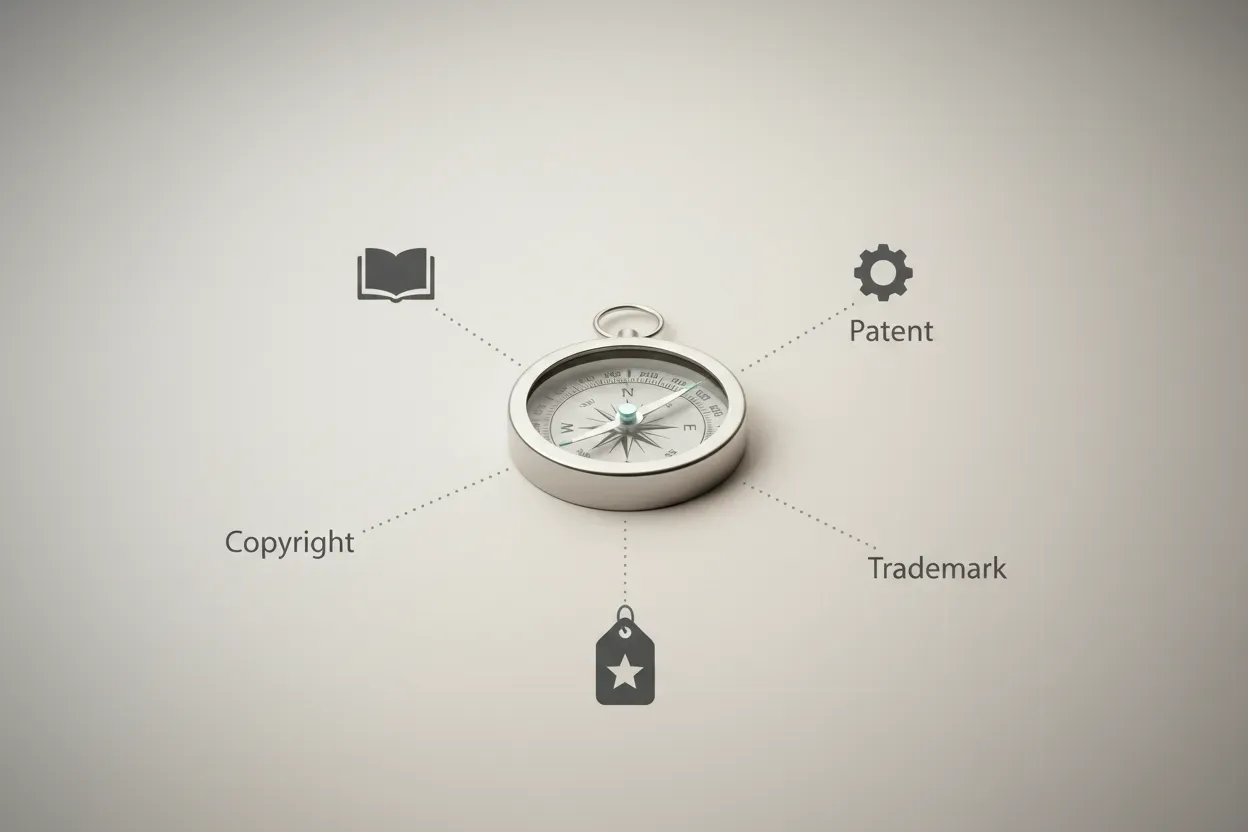
15 Factors That Influence IP Protection Decisions for Startup Innovations
Protecting intellectual property can make or break a startup, yet founders often struggle to decide which innovations deserve legal safeguards and which do not. We asked fifteen startup leaders and IP specialists to share the key factors that shaped their protection strategies. Their answers reveal practical frameworks ranging from budget constraints to customer perception, offering concrete guidance for entrepreneurs facing similar choices.
- Ask What Theft Would Damage
- Lean into Brand and Secrecy
- Let Budget Decide Your IP Path
- Focus Early on Name Recognition
- Trademark Concepts for Search Attribution
- Keep Creative Options Open
- Favor Enforceable Market-Aligned Safeguards
- Prioritize Scalable Playbooks over Patents
- Preserve Course Ownership Block Copycats
- Secure Patents to Safeguard Investment
- Shield Core Advantage
- Start with Customer Perception
- Guard Reputation and Experience First
- Found Patents Too Custom to Claim
- Weighed Cost against Real Imitation Risk
Ask What Theft Would Damage
The decision wasn’t as complex as the legal literature makes it sound, and that simplicity was itself the lesson. Different types of IP protection solve different problems, and the most important factor isn’t which protection is most prestigious — it’s which one actually matches what you’re trying to protect.
For FasterDraft.com, the primary asset is the brand and the document library we’ve built. That pointed clearly toward trademark protection for the brand identity and copyright for the written content of the templates themselves. Copyright arises automatically upon creation of original written work, which meant our template content was protected from the moment it was drafted. Trademark required active registration, but it was the right investment because brand recognition in a crowded legal tech market is a long-term competitive asset worth protecting formally.
Patent protection, by contrast, didn’t apply in any meaningful way. Patents protect novel inventions and technical processes. Unless your startup has genuinely invented a new technical method — not just built a useful product — patent protection is often pursued more for signalling than for practical defence. I’ve seen early-stage founders spend significant money on patent applications that would be difficult to enforce and don’t reflect what their business actually needs to protect.
The single factor that influenced my decision most was asking a simple question: what would actually hurt the business if a competitor copied it? The answer was the brand and the content — not a technical process. That question cuts through the noise faster than any IP framework I’ve encountered, and it’s the first thing I’d recommend any founder ask before engaging an IP attorney.
Understanding what you’re protecting, before deciding how to protect it, saves both money and misdirected effort.

Lean into Brand and Secrecy
We leaned on trademark protection and trade-secret discipline rather than chasing patents on formulations. The decisive factor: in regulated DTC wellness, a competitor can tweak your formula and sidestep your patent in a quarter, but they can’t replicate the trust signal of a brand customers already associate with a specific clinical promise. Utility patents can help for a genuinely novel delivery system, but in our category the claims would’ve been narrow and easy to design around—and patents force public disclosure of the formula sheet, counterproductive when you control your own GMP facility and can keep the work internal. So we trademarked across both BASE and Happy V, kept formulation files inside the manufacturing wall, and put the legal budget into brand and education instead. Two years in, the brand mark gets infringed on Amazon more often than I expected—that’s what we actually spend enforcement dollars defending, not molecules.

Let Budget Decide Your IP Path
What are you actually protecting, the idea or the fact that you got there first? We spent last year going back and forth on patent versus trademark for a couple of our matching tools. Patents looked like the obvious move until we priced out what defending one costs. A filing you cannot afford to enforce is just a public blueprint with your name attached. Someone reads it and rebuilds the thing a little differently. Proving the copy is its own nightmare. We kept the mechanics as a trade secret nobody outside the team touches and trademarked the brand instead.
The thing that decided it was money. Legal protection only holds up when you can afford to chase someone, which early on you can’t. I still wonder what we left exposed.

Focus Early on Name Recognition
As soon as we launched SeoSets and other AI-based SEO tools, I realized that every great idea must be protected somehow. It seemed that patents, copyrights, trademarks – all of these terms were crucial once you knew something about them. However, very soon I understood that in a software start-up there is no money and time to protect everything equally.
We began to be more discerning and asked ourselves what really represented our business. One of the first decisions we made was in regard to the branding of SeoSets itself. Consumers are first going to recall a name before they understand its code. This is why trademark protection was the most important early decision we made.
The reality of developing software and AI components is quite different. The rate of change is too rapid. Our product keeps evolving at all times, and what works today might be completely different in a couple of months’ time. Copyright automatically secures our original code anyway, and in most cases, this approach sufficed. There were many ideas that seemed great on paper, but once they underwent a revision cycle with our users, they got so altered that any further protection was no longer feasible.
There were several mentions of patents, but the issue that repeatedly came up is straightforward. Does it even matter down the road, or is it one of the fast-changing features? If the item is easily replicable by competition, as the product evolves, then in many cases the effort did not justify itself as compared to adding product value.
The advice that I would give to another entrepreneur is simple – don’t start with legalities. Get to know what sets you apart from everything else. Consult an IP lawyer as necessary, but do not assume that everything must be protected. Stay focused on execution, since customers don’t care about patents; they just want the best solution to their problem.

Trademark Concepts for Search Attribution
As the founder of DIGITAL IVAN, I build website architectures and growth frameworks like our Revenue Website™ builds. When protecting these digital innovations, we prioritized trademark protection for our core methodologies and copyright for our specific website structures and copy.
The single most significant factor driving this decision was search and AI visibility. Because search engines and AI models crawl the web to identify authoritative brands, having a clear, trademarked concept ensures that AI search engines attribute our unique systems directly to us without brand dilution.
Many businesses build acceptable-looking websites but fail operationally because they rely on generic, copycat structures. Securing your unique authority-building content and frameworks on your own digital foundation is what ultimately gets your business found, trusted, and chosen online.
Keep Creative Options Open
With three decades designing custom exhibits for brands like Samsung, NASA, and Google, I’ve guided many startups on shielding their live-event innovations from copycats.
We selected trademark protection for the core visual identity and modular booth layouts because it safeguarded the recognizable brand storytelling that turns heads on the show floor. Copyright handled specific graphic elements when needed, while patents rarely fit our creative problem-solving approach.
The single biggest influence was keeping designs flexible for repeat use at events without locking into rigid technical claims that could limit future client adaptations.

Favor Enforceable Market-Aligned Safeguards
We treated each asset as a different type of value. If it was original writing or educational material, we saw copyright as the right choice. We used trademark when it involved our name, visual identity, and market recognition. We considered patents only when an idea was a truly new technical method with clear defense.
We focused most on enforceability when making the decision as a team. We avoided protection that looked strong on paper but was hard to defend in real use. We chose the route that matched how the work would be used and recognized in the market, across markets. We aimed for protection that worked in real situations over time.

Prioritize Scalable Playbooks over Patents
Having scaled multi-unit franchise brands like Orangetheory Fitness and now BARKology Wellness, protecting intellectual property is a step I’ve navigated closely to prepare concepts for expansion.
When launching BARKology, we chose to focus heavily on copyrighting our proprietary training playbooks and operational processes, rather than pursuing costly patents for our wellness therapies like PEMF and red light.
The single factor that influenced this most was franchise scalability. For a growing franchise, the true proprietary innovation is the highly replicable blueprint that ensures every pet gets the exact same royal treatment, making copyright the most agile tool to protect our system.

Preserve Course Ownership Block Copycats
As co-founder of INE, I’ve developed extensive training materials and scenario-based labs that set our platform apart in networking and cybersecurity education. This experience with original content creation positioned me to choose copyright protection for our courses and practice labs.
Copyright best covered the detailed structure of our hands-on exercises and learning paths without the high costs of patents.
One major factor was preserving ownership so these resources could continue reaching professionals worldwide through our platform while preventing unauthorized replication by competitors.
This approach kept our focus on delivering real-world readiness in areas like CCIE prep and OT security skills.

Secure Patents to Safeguard Investment
For our peptides to reach the market and to prevent anyone from using our intellectual property, we had to protect it from the start. We chose to patent our innovation first because we had invested thousands of dollars to create it.
The best we could do is hire an attorney to create a clause that could give us maximum protection. As a startup, we knew we were small, but having this legal support could compensate for that lack if someone or a big corporation decided to steal ownership of our product.
Losing intellectual rights to another business would mean the end of an entity we had worked hard to build, and it’s what pushed us to secure the rights to own our product.
To build our business, we had to lay a strong foundation by preparing the necessary documents to protect our product. This was a sign that it was the fruit of our work and that nobody had the right to use it as their own.

Shield Core Advantage
Protect the Asset That Creates the Most Business Value
The primary consideration when deciding between using patents, copyrights, and trademarks is identifying which type of IP will provide your company with its competitive advantage. Different types of intellectual property are designed to protect different types of valuable assets. Therefore, the first step should be determining if your company’s greatest value comes from a new product, an original work of art (e.g., music), or a unique brand.
As a general rule for startup companies, it can often be useful to take a practical view when choosing between these three options by focusing on the one that best protects the company’s long-term business objectives. For example, a business that has built a very strong brand may want to focus primarily on obtaining trademark protection, as this is likely to create the strongest barriers to entry into your market. On the other hand, businesses creating original software documentation or other creative materials may wish to obtain copyright protection for those works. And finally, businesses that develop innovative technological inventions may also want to determine if obtaining patent protection would help them to further their business interests.
By tying the form of IP protection you choose to use directly to your commercial strategy, future growth plans, and your current financial situation, you can more effectively leverage the cost of obtaining such protections for long-term economic benefits.

Start with Customer Perception
We did not start with legal categories. We started with customer perception. When people connect value to our name and our voice, trademark becomes essential because it protects the signal the market recognizes. Copyright fits when our edge shows in original writing, visuals, or frameworks, while patents apply only when the idea is truly novel and worth the process.
The biggest factor was whether the protection matched how the market experiences our business. We sometimes protect what feels clever internally instead of what creates trust externally. We wanted our legal strategy to mirror commercial reality. That meant we focused on what customers remember, what competitors may copy, and what will still matter later.

Guard Reputation and Experience First
For a software company, the first step is separating what is truly proprietary from what is simply part of running the business. In our case, the most important factor would be protecting the brand and the customer experience around the product, because trust matters a lot in a niche industry like marina management.
Patents can make sense for very specific technical inventions, but for many SaaS companies the bigger priority is protecting the name, the product identity, the code, and the way the platform is presented to customers. I would always start by asking what would actually damage the business if someone copied it.

Found Patents Too Custom to Claim
Patents offer the most powerful protection especially for technical processes and devices, but they’re also among the hardest forms of legal protection to get. It’s something we carefully reviewed when creating our business plan, since patenting techniques that make use of proprietary software platforms can be challenging. Ultimately, we found that our approach was a bit too custom to narrow down to a specific patentable process or technique.

Weighed Cost against Real Imitation Risk
The decision between patent, copyright and trademark was made based on what was to be protected. We did not have formulas that were the key factor in the beginning. Our brand and process were. First, trademark protection of our name and packaging, because it was what the customers could identify on the shelf.
Patents were more useful after we had a manufacturing process that really made a difference in production efficiency and that couldn’t be easily copied by others. The copyright issue was least important to us, and primarily applied to marketing materials and package design.
Cost versus risk was the most significant factor affecting this. It’s very costly and takes a long time to get a patent, so I didn’t bother with it until I felt like I had something that people would want to steal. The obvious first step was trademark, as retail brand confusion is a real, immediate danger.